a note on
Why We Bottle Romance in Love Notes Perfume
The intersection of olfactory memory and written romance reveals why fragrances designed around paper and ink hold such psychological power.
penned by Erdi Dogan

The Architecture of an Olfactory Letter
I remember watching my older brother in a double-wide trailer in rural Iowa, 1996, carefully spraying a cheap drugstore cologne over a folded piece of looseleaf paper before sealing it in an envelope. The damp paper warped slightly under the alcohol. He believed the scent would carry his exact intentions across county lines. Paper absorbs memory. The concept of a love notes perfume—a fragrance explicitly designed to evoke the intimacy of a handwritten letter—capitalizes on this very human impulse. Our olfactory bulb sits directly adjacent to the hippocampus, making scent the most efficient vehicle for nostalgia we possess.
Perfumers have spent decades trying to bottle the precise aroma of anticipation. A true love notes perfume often relies on specific chemical compounds to mimic ink, aged parchment, and the lingering warmth of human skin. Iso E Super provides a velvety, cedar-like backdrop. Aldehydes can introduce a sharp, metallic tang reminiscent of a fresh fountain pen nib. The result is rarely a loud, room-filling projection. These fragrances stay close to the wearer, demanding physical proximity to be understood.
The intersection of spiritual worth and romantic affection frequently surfaces in how we gift these intimate fragrances. Consider the quiet confidence required to wear a scent meant only for one other person. This mirrors the solitary reflection found in biblical texts addressing self-worth, where value is inherently personal rather than performative. You do not wear a letter-inspired perfume to announce your arrival at a crowded gala. You wear it to leave a trace of yourself on a borrowed sweater.
Formulating the Scent of Affection
Historical precedents for scented correspondence date back centuries. Victorian lovers tucked dried lavender into their folded letters to mask the harsh smell of the postal transit. The ritual transformed a mere exchange of information into a tangible, sensory experience. Modern fragrance houses attempt to reverse-engineer this exact historical process. They extract the emotional resonance of the sealed letter and distill it into a liquid format.
Let us examine the words of those who have studied this intersection of scent, memory, and human connection.
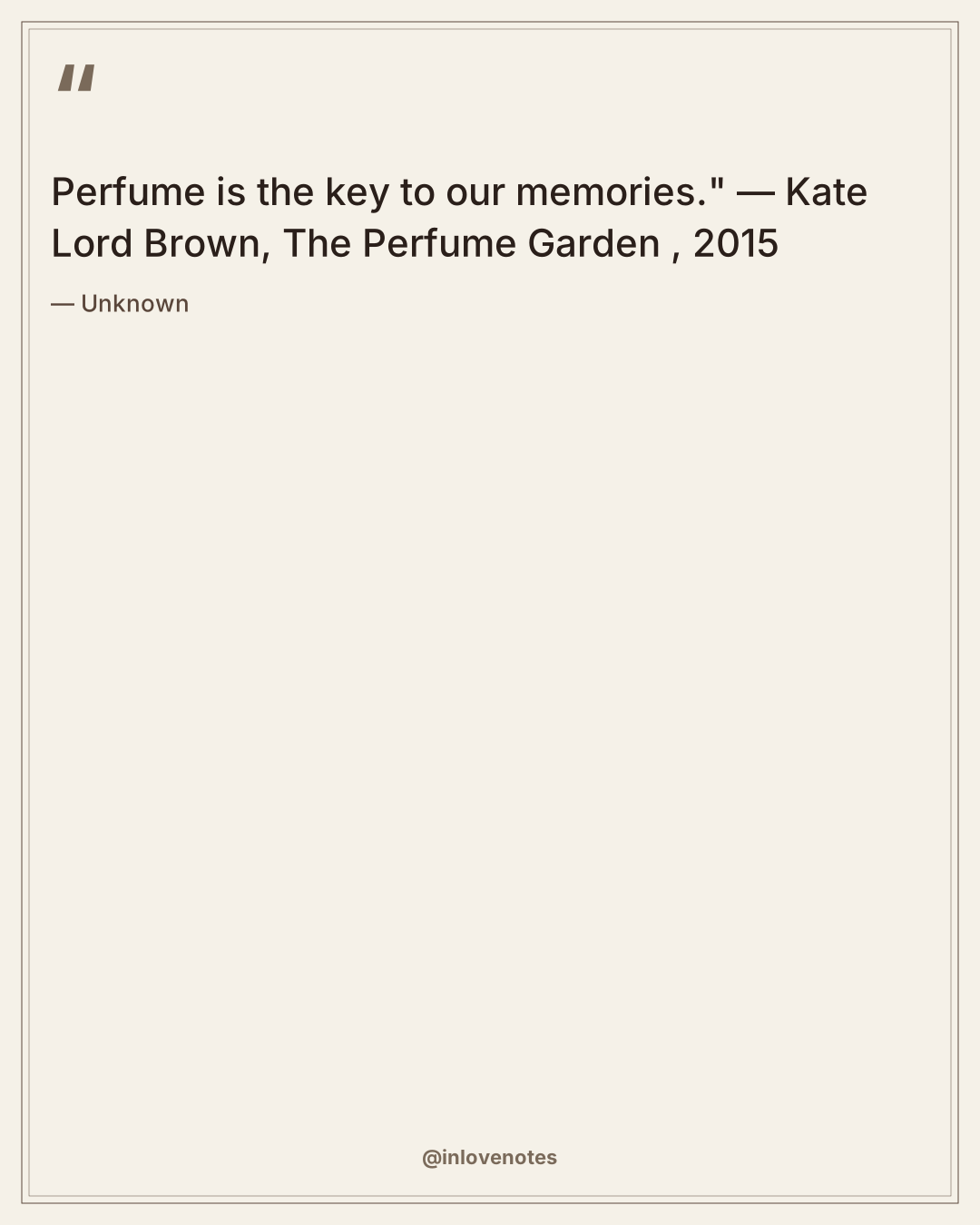
"Perfume is the key to our memories." — Kate Lord Brown, The Perfume Garden, 2015
This observation grounds the entire industry of narrative fragrance, where the primary goal is to trigger a specific past emotion.
"A woman's perfume tells more about her than her handwriting." — Christian Dior, Dior by Dior, 1956
Dior understood that olfactory signatures often bypass the conscious brain entirely, delivering a message before a single written word is read.
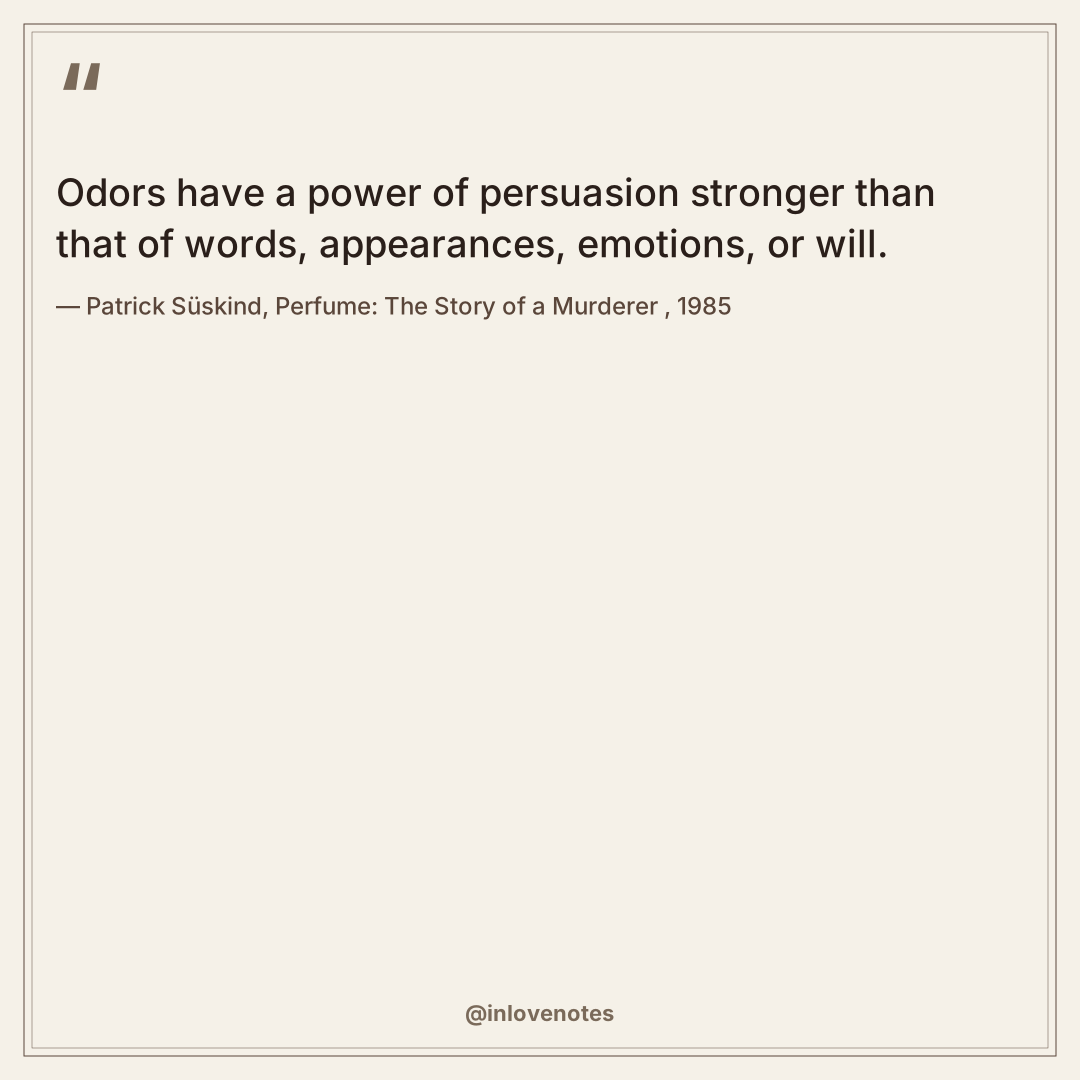
"Odors have a power of persuasion stronger than that of words, appearances, emotions, or will." — Patrick Süskind, Perfume: The Story of a Murderer, 1985
Süskind captures the terrifying and beautiful inevitability of scent, framing it as an invisible force that dictates human connection.
"Fragrance speaks the loudest on a quiet level." — Inspired by Marian Bendeth
Modern perfumers frequently cite this principle when designing intimate, skin-close scents meant to mimic the privacy of a sealed envelope.
Translating written affection into an olfactory profile requires a delicate balance of base and top notes. Vanilla and musk frequently serve as the foundation, representing the enduring nature of a committed relationship. Top notes of bergamot or pink pepper introduce the initial spark of attraction. The progression of the scent on the skin mimics the unfolding of a well-crafted narrative. The opening line grabs your attention, while the dry-down provides the lingering emotional resonance. This structural approach to fragrance mirrors the poetic pacing seen in romantic scriptural interpretations, where initial passion gives way to steadfast devotion.
A Few Honest Corrections
Common claim: Love notes perfume must smell strictly like paper and ink.
Closer to the evidence: While some niche houses create literal interpretations of stationery, most commercial fragrances using this naming convention focus on the emotional warmth of the sender. They utilize floral and musky accords to represent the human element rather than the physical medium.
Common claim: Scented letters are a modern marketing invention.
Closer to the evidence: The practice of perfuming correspondence dates back to the Renaissance, where wealthy merchants used ambergris and rose water to scent their heavy parchment. The modern perfume industry merely adapted an existing centuries-old communication ritual.
Common claim: These fragrances project heavily to attract attention.
Closer to the evidence: Fragrances themed around intimate correspondence are almost universally formulated as skin scents. Their sillage is intentionally restricted to a few inches, requiring the recipient to cross traditional boundaries of personal space to detect the notes.
Further reading
- Exploring the foundations of internal worth and personal reflection
- Tracing the roots of affection and devotion in historical texts
As you move into the quiet hours of the coming week, consider the invisible signatures you leave behind in your physical spaces. The lingering trace of a specific fragrance on a coat collar serves as an unwritten message to those who recognize it. Tomorrow morning, when you select a scent for the day, you are essentially drafting the first line of a letter that your environment will read long after you have left the room.