a note on
6 Italian Quotes for Love and Marriage During Quiet Ceremonies
Traditional Italian proverbs and literary excerpts frame marriage as a practical partnership rather than a fleeting romantic ideal.
penned by Erdi Dogan
Romance Requires Friction to Survive
True affection thrives on a little resistance. Watching my uncle in a cramped kitchen in Providence, Rhode Island, 1982, I realized that marriage operates mostly in the silence between arguments. He was stirring a massive aluminum pot of marinara while his wife critiqued his garlic-chopping technique from the hallway doorway. They were not reciting poetry to one another. They were living the reality of a shared life, which often resembles a territorial negotiation more than a fairy tale.
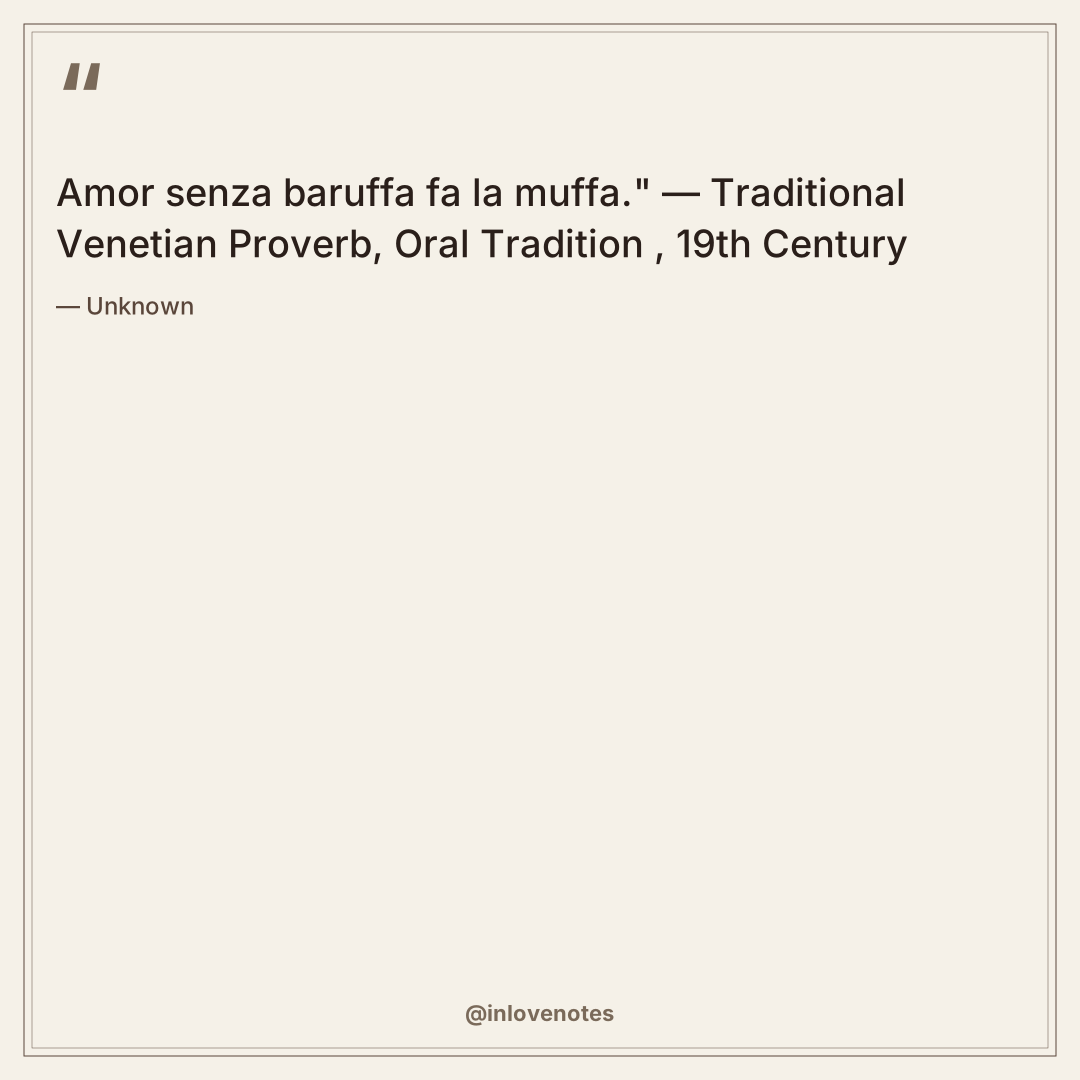
"Amor senza baruffa fa la muffa." — Traditional Venetian Proverb, Oral Tradition, 19th Century
This regional adage translates to "love without quarrels gets moldy," capturing the absolute necessity of conflict in maintaining a healthy, breathing partnership.
Couples often search for ancient expressions of deep loyalty when writing their vows for modern ceremonies. They want words that sound elevated and pristine. Yet the most enduring partnerships acknowledge that navigating the inevitable daily friction builds the strongest foundation for a house. Agrarian communities in southern Italy understood that a wedding was an economic merger designed to survive harsh winters and poor harvests.
"Tra moglie e marito non mettere il dito." — Traditional Italian Proverb, Folk Wisdom, 16th Century
Literally advising outsiders not to put a single finger between a husband and wife, this phrase highlights the impenetrable boundary of a married couple's private world.
Shared Memory Outlasts Initial Passion
The initial rush of romance eventually gives way to the steady, unglamorous rhythm of domesticity. We look for expressions that carry emotional weight to articulate this shift from breathless infatuation to quiet reliance.
"Non si ricordano i giorni, si ricordano gli attimi." — Cesare Pavese, Il mestiere di vivere, 1952
Pavese recorded this observation in his personal diary, suggesting that a lifetime together is measured in distinct flashes of connection rather than a continuous blur of calendar days.
When extended families gather to celebrate a union, you will often hear humorous toasts delivered at receptions to break the emotional tension of the day. Laughter serves as a necessary pressure valve in crowded banquet halls. But beneath the jokes about stubborn grooms and demanding brides lies a profound recognition of the sheer labor required to maintain a bond over decades.
"Amarsi e comprendersi, ecco la vera saggezza." — Grazia Deledda, Canne al vento, 1913
The Nobel laureate embedded this sentiment—"to love and understand each other, that is true wisdom"—into her stark novel about the harsh realities of rural Sardinian life.
People write profound declarations of commitment in anniversary cards, hoping to capture the magnitude of their shared history on a small piece of paper. Sometimes, bridging emotional distance through language requires stripping away the decorative adjectives entirely.
"L'amore è l'unica cosa che possiamo portare con noi quando andiamo." — Elsa Morante, La Storia, 1974
Morante's sweeping historical novel frames love as the sole enduring possession in a world defined by the brutal destruction of the Second World War.
"Ama il tuo sogno se pur ti tormenta." — Gabriele D'Annunzio, La Chimera, 1889
D'Annunzio demands that we "love your dream even if it torments you," a fitting mandate for the difficult, deeply rewarding work of a lifelong marriage.
Questions Readers Send In
How do regional dialects change these sayings?
Venetian and Neapolitan phrases often rely on local idioms that lose their rhyming cadence when translated into standard Italian vocabulary. The cultural weight remains intact even when the phonetic musicality disappears.
Are literary quotes appropriate for modern vows?
Excerpts from early twentieth-century authors provide a grounded alternative to contemporary internet poetry. They bring historical gravity to a modern ceremony held in a secular venue.
Why do so many Italian marriage proverbs focus on conflict?
Agrarian societies viewed marriage as a survival partnership where avoiding arguments was practically impossible. Acknowledging the friction normalized the daily struggle of rural life in the nineteenth century.