a note on
7 Italian Quotes for Love and Marriage in Modern Ceremonies
Centuries of Mediterranean literature offer quiet, profound language for couples seeking vows grounded in enduring devotion.
penned by Erdi Dogan

"L’amor che move il sole e l’altre stelle." — Dante Alighieri, Paradiso, 1320
The final line of the Divine Comedy anchors the entire medieval understanding of the universe in a single force. Translating cultural sentiments into modern wedding vows requires careful attention to the weight of the original words. I remember watching my uncle restore a cracked wooden frame in his garage workshop in Albuquerque, New Mexico, 1987. He worked in complete silence for hours, demonstrating a steady, unglamorous commitment that mirrored the way long-term partnerships actually function. Finding the right words to capture that kind of sustained effort often leads couples to look beyond their native languages. Italian literature provides a rich vocabulary for these moments of public commitment.
Vows Require More Than Simple Declarations
Couples standing at an altar face the impossible task of summarizing decades of future intentions in a few minutes. The pressure to sound profound often results in borrowed clichés that lack personal resonance. When you examine how ancient Romans phrased devotion, a pattern of stark realism emerges alongside the romance. This balance between the practical and the poetic is essential for vows that must survive the friction of daily life.
"L'amore è un'erba spontanea, non una pianta da giardino." — Ippolito Nievo, Le confessioni di un italiano, 1867
Nievo captures the wild, untamed nature of affection before it becomes institutionalized by marriage. His observation reminds couples that the initial spark cannot be perfectly manicured or controlled. Those seeking phrasing devotion in quiet ceremonies often gravitate toward this kind of grounded imagery. It acknowledges the unpredictable nature of human connection.
"Siamo angeli con un'ala sola, solo restando abbracciati possiamo volare." — Luciano De Crescenzo, Così parlò Bellavista, 1977
De Crescenzo frames partnership as a structural necessity rather than a mere emotional preference. The image of the single-winged angel shifts the focus from individual perfection to mutual reliance. This concept frequently appears in scriptural perspectives on enduring relationships, where two distinct entities merge to create a functional whole capable of weathering external pressures.
Poetry Offers a Blueprint for Lasting Devotion
Modern ceremonies frequently discard traditional liturgy in favor of personalized readings. This shift places a heavy burden on the chosen texts to carry the gravity of the occasion. Finding short sentiments for handwritten letters or spoken vows requires sifting through centuries of artistic output. The most effective selections often focus on the mechanics of staying together rather than the thrill of meeting.
"E ti vengo a cercare, con la scusa di doverti parlare." — Franco Battiato, Fisiognomica, 1988
Battiato distills the quiet, persistent effort of maintaining a connection into a single, relatable action. The lyric speaks to the deliberate choices partners make to bridge the physical and emotional gaps that naturally form over time. It is a subtle acknowledgment of the work required to keep a marriage vital.
"Sei nell'anima e lì ti lascio per sempre." — Gianna Nannini, Grazie, 2006
Nannini delivers a definitive statement of permanence that suits the absolute nature of wedding vows. The declaration leaves no room for hesitation or conditional clauses. When couples look for emotionally resonant expressions of care, they often need language that matches the definitive boundary they are crossing on their wedding day.
The Language of Commitment Defies Translation
Certain concepts lose their specific gravity when moved from Italian into English. The rhythm of the original phrasing carries an emotional weight that literal translations often flatten. Incorporating lighthearted moments during wedding toasts or solemn declarations during the ring exchange benefits from leaving the original language intact. The sound of the words themselves contributes to the atmosphere of the ceremony.
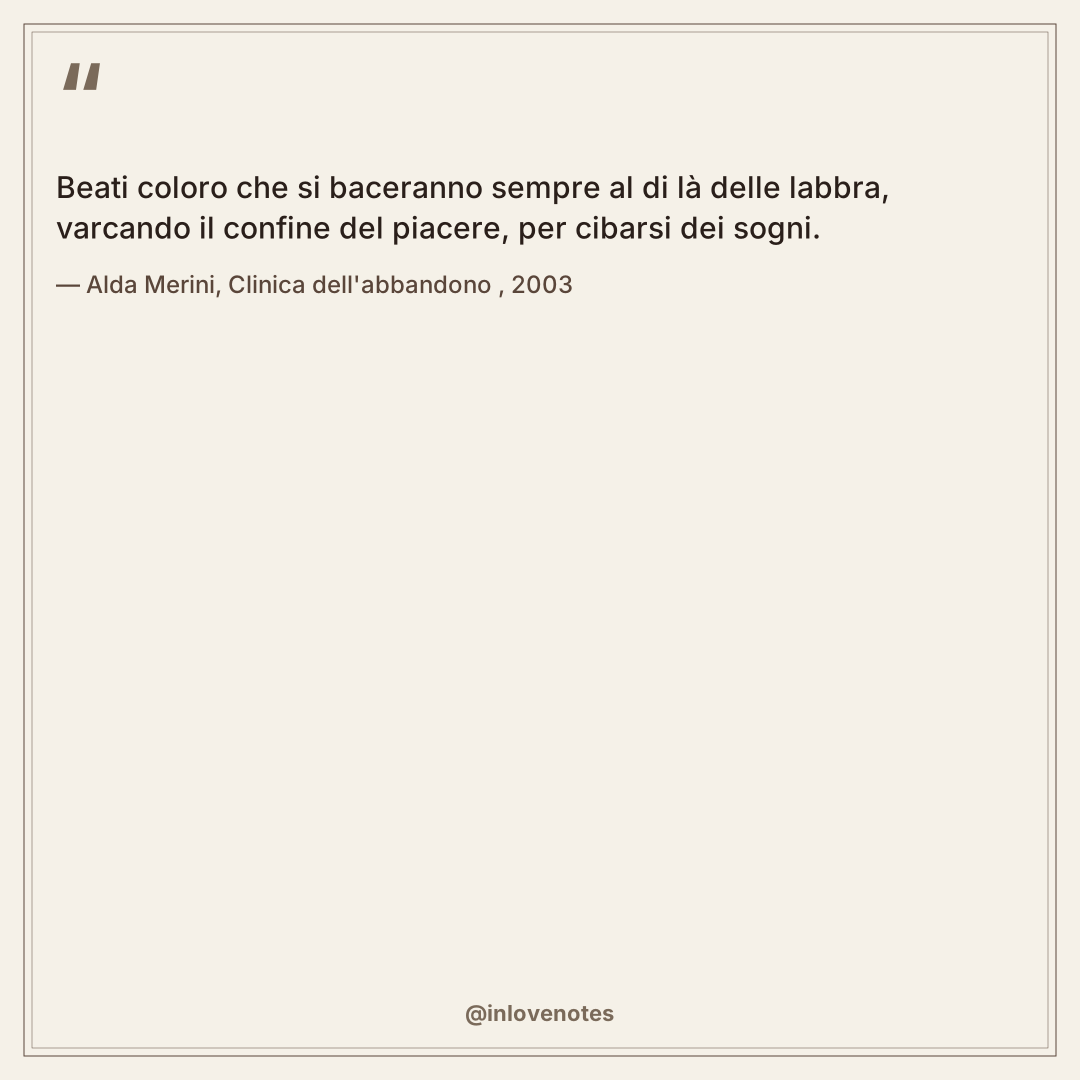
"Beati coloro che si baceranno sempre al di là delle labbra, varcando il confine del piacere, per cibarsi dei sogni." — Alda Merini, Clinica dell'abbandono, 2003
Merini pushes the concept of physical intimacy into the realm of shared psychological survival. Her poetry demands that couples look past the immediate physical connection toward the shared visions that will sustain them through decades of change. It is a rigorous standard for marriage.
"La misura dell'amore è amare senza misura." — Sant'Agostino, Sermones, 5th century
Augustine of Hippo provided this foundational paradox that continues to influence Italian thought on devotion. The instruction to abandon calculation entirely sits at the core of the marital contract. A successful partnership ultimately requires stepping away from the ledger of who owes what to whom, choosing instead to operate from a place of continuous generosity.
Questions Readers Send In
How do I incorporate a foreign language quote if my guests only speak English?
Print the original Italian alongside a careful English translation in your ceremony programs. You can also have the officiant read the English version immediately after you speak the Italian phrase, ensuring the meaning lands with the audience while preserving the intimacy of your chosen words.
Are these quotes appropriate for secular ceremonies?
Yes. While figures like Dante and Augustine wrote from deeply theological perspectives, their observations on human connection translate seamlessly into secular contexts. The focus remains on the mechanics of devotion, mutual support, and the psychological realities of binding two lives together.
Can I use a song lyric as a formal wedding vow?
Song lyrics often make excellent vows because they are designed to be spoken aloud with a natural cadence. Lines from songwriters like Battiato or Nannini carry the same emotional weight as traditional poetry when delivered with sincerity during the ring exchange.