a note on
Biblical Writers on Fatherhood: 12 Bible Verses About a Fathers Love for His Family from the Scriptures
Modern interpretations often flatten ancient paternal devotion into strict discipline, but these scriptures reveal deep affection and protective care.
penned by Erdi Dogan

Modern cultural memory tends to cast the ancient patriarch as a stoic, emotionally distant figure who dispensed harsh rules and divided land. People assume the historical record only captured legal obligations and rigid genealogies. That caricature misses the profound emotional reality vibrating beneath the surface of the texts.
These writers recorded men who wept over rebellion, rejoiced over wisdom, and prayed fiercely for their households. I remember my older brother in a high-desert ranch outside Taos, New Mexico, 1982, reading these passages aloud by kerosene light to his newborn daughter. He recognized a protective tenderness that completely ignores the passage of millennia. The men depicted here did not just manage their families as economic units. They loved them with an agonizing, beautiful intensity that still resonates today when we look at how specific scriptures shape Sunday traditions for modern families.
Why Do These Texts Emphasize Presence Over Provision?
Scripture repeatedly frames a father’s highest contribution not as material wealth, but as active instruction and relational proximity. Material inheritances fade or get squandered, but moral formation requires a man to be physically and emotionally engaged with his children. This demanding standard forced ancient fathers to intertwine their daily routines with their teaching.
"Your wife will be like a fruitful vine within your house; your children will be like olive shoots around your table." — Anonymous Psalmist, Book of Psalms 128:3, c. 500 BCE
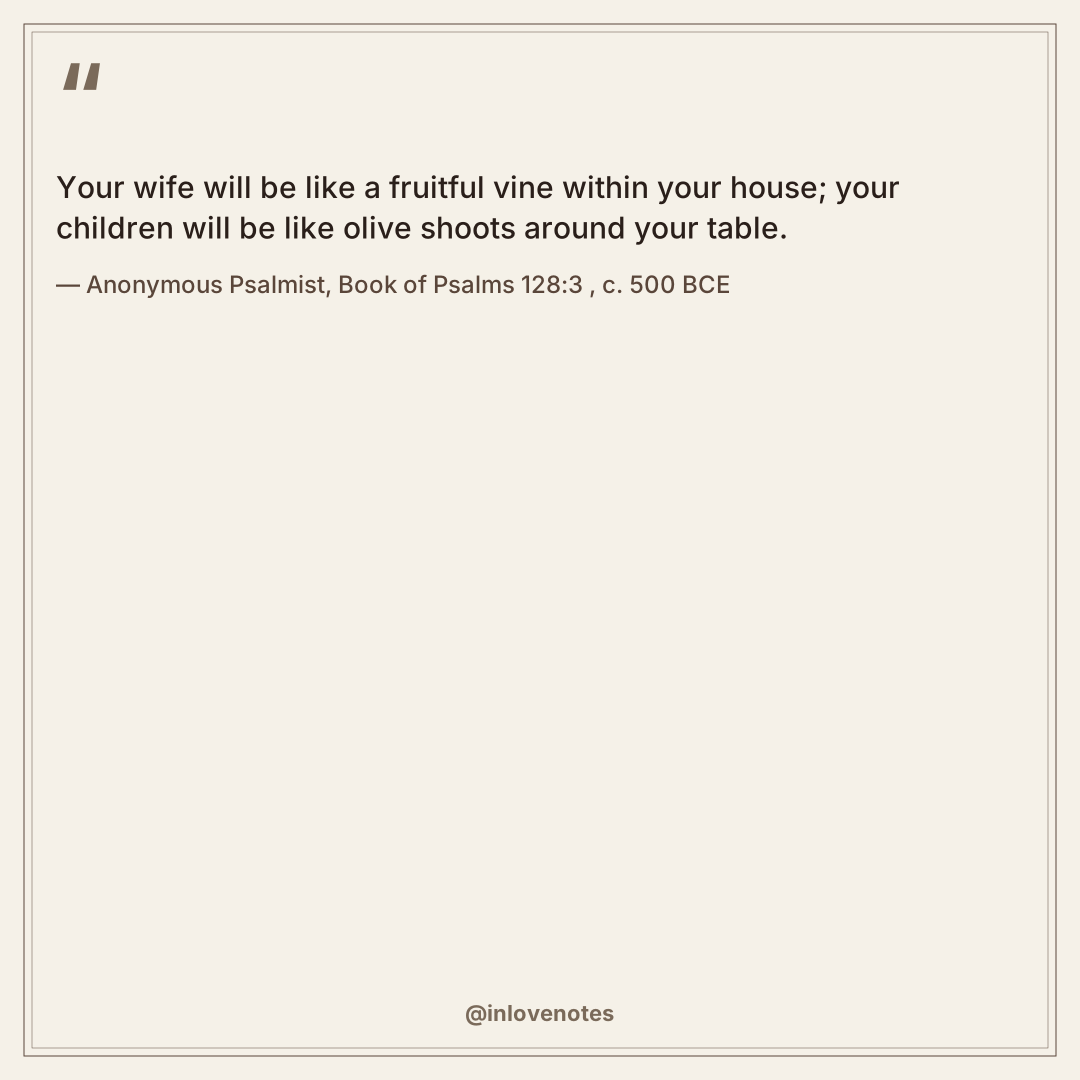
This agrarian imagery paints a picture of domestic tranquility where the father sits surrounded by the vibrant, growing life he actively cultivates.
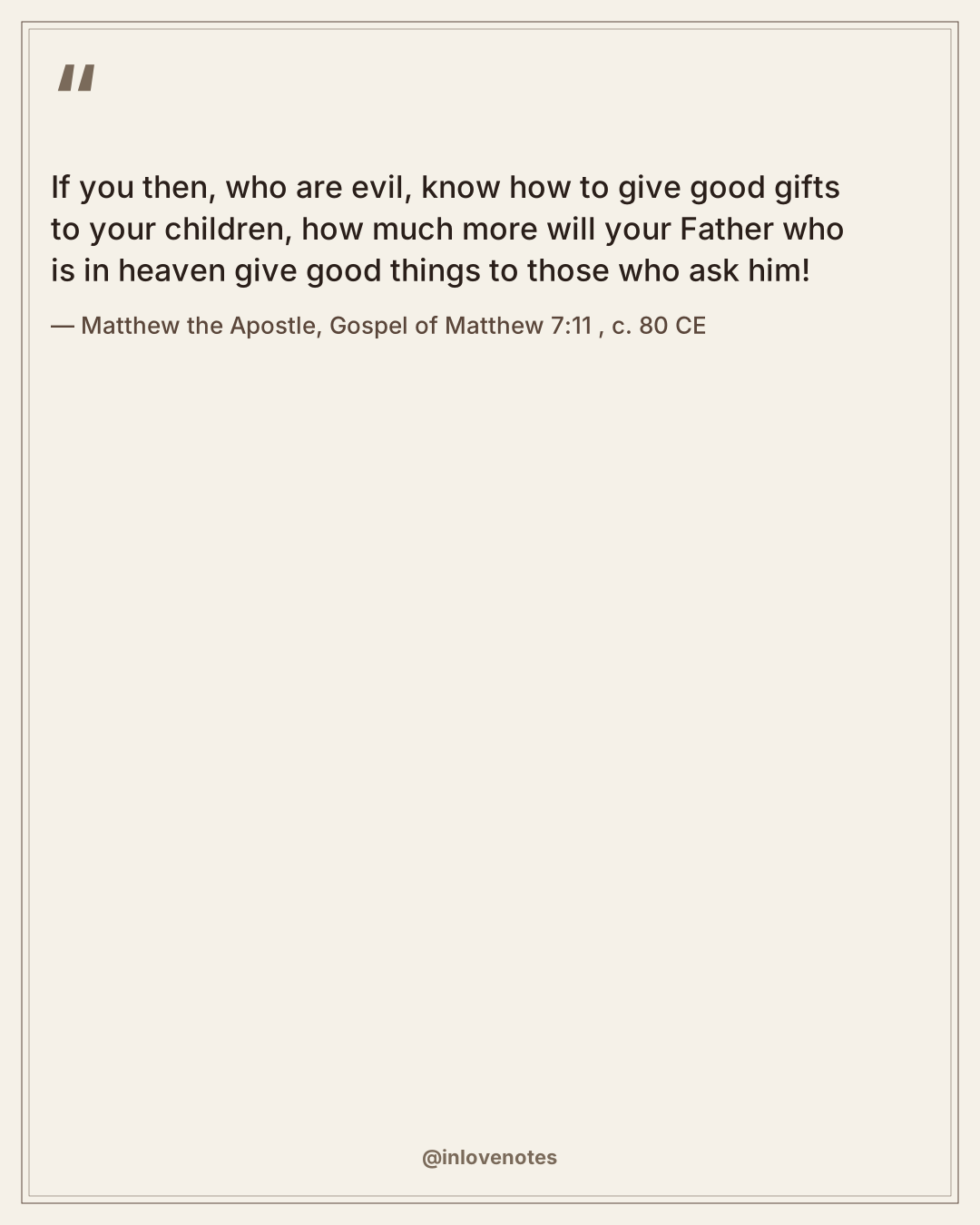
"Listen to your father who gave you life, and do not despise your mother when she is old." — Solomon, Book of Proverbs 23:22, c. 700 BCE
The wisdom literature places a massive premium on the lived experience of parents, demanding that children recognize the biological and emotional debt owed to those who raised them.
"When I was a son with my father, tender, the only one in the sight of my mother, he taught me and said to me, 'Let your heart hold fast my words; keep my commandments, and live.'" — Solomon, Book of Proverbs 4:3-4, c. 700 BCE
Here, the author pulls back the curtain on his own childhood, revealing a quiet, intimate moment of instruction that mirrors the legacy of spiritual inheritance passed down through generations.
"For children are not obligated to save up for their parents, but parents for their children." — Paul the Apostle, Second Epistle to the Corinthians 12:14, c. 56 CE
Though written in the context of church leadership, Paul uses the natural, self-sacrificing economic instinct of a father to explain his own devotion to the community.
How Did Ancient Fathers Express Vulnerability?
Far from hiding their emotions, biblical fathers routinely displayed devastating grief and overwhelming affection. They kissed their sons, wept publicly over their failures, and openly played favorites in ways that exposed their deepest attachments. This raw vulnerability shatters the myth of the unfeeling ancient patriarch.
"Joseph said to his father, 'They are my sons, whom God has given me here.' And he said, 'Bring them to me, please, that I may bless them.'" — Moses (Traditionally Attributed), Book of Genesis 48:9, c. 1400 BCE
An aging, nearly blind Jacob insists on physically touching and claiming his grandsons, refusing to let his physical decline rob him of this final familial connection.
"O my son Absalom, my son, my son Absalom! Would I had died instead of you, O Absalom, my son, my son!" — Anonymous Compiler, Second Book of Samuel 18:33, c. 550 BCE
David’s agonizing wail over his treacherous, defeated son remains one of the most piercing expressions of unconditional parental love in recorded history.
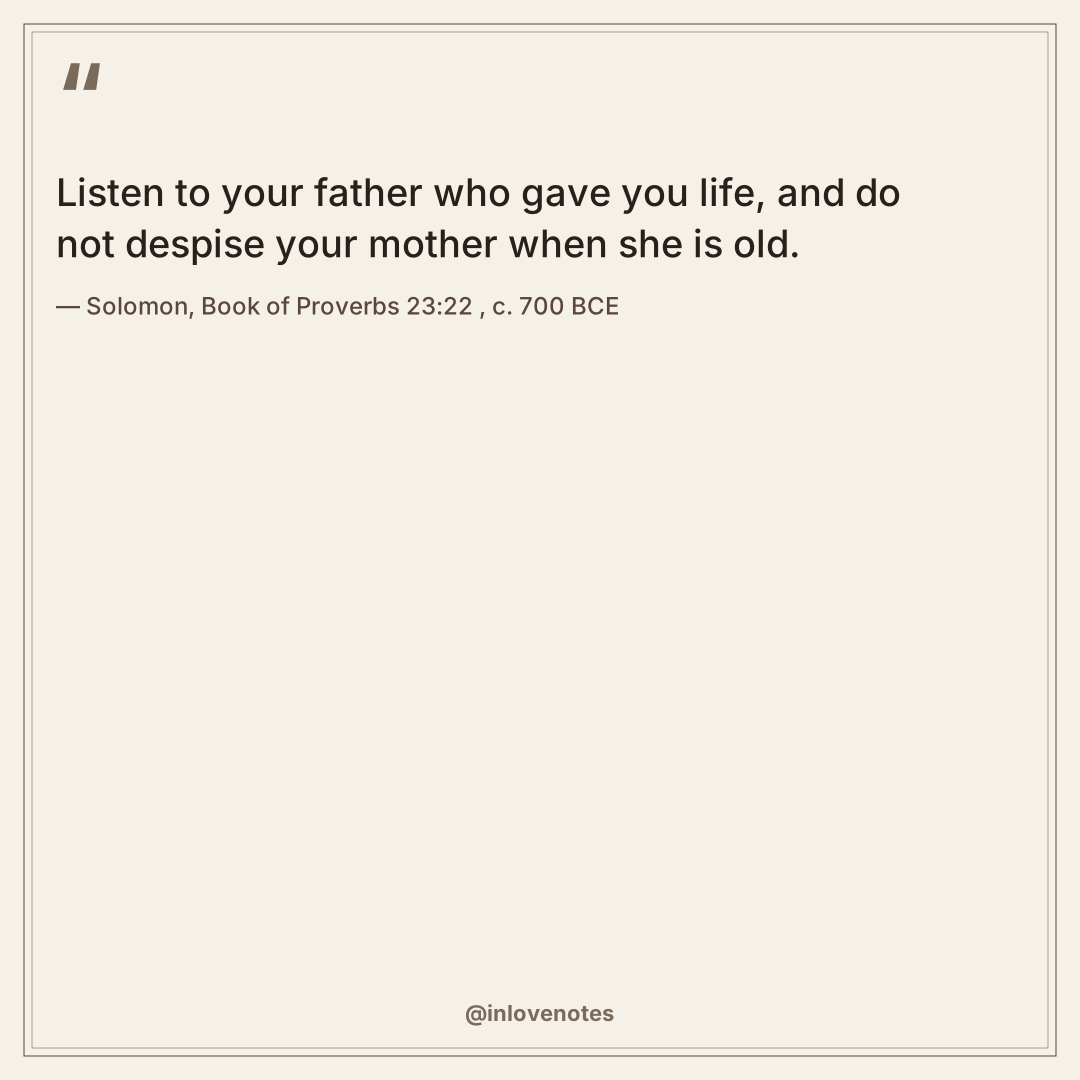
"Now Israel loved Joseph more than any other of his sons, because he was the son of his old age. And he made him a robe of many colors." — Moses (Traditionally Attributed), Book of Genesis 37:3, c. 1400 BCE
While this blatant favoritism sparked a catastrophic family betrayal, it highlights a father's desperate, flawed attempt to honor a deeply cherished child.
"Grant to Solomon my son a whole heart that he may keep your commandments, your testimonies, and your statutes..." — Ezra (Traditionally Attributed), First Book of Chronicles 29:19, c. 400 BCE
Before his death, David uses his public platform not to boast of his military conquests, but to plead with the divine for his son's moral fortitude, much like modern parents seek ancient words grounding modern parenting.
Where Do We See the Intersection of Divine and Earthly Fatherhood?
The texts frequently use the biological reality of human fatherhood to explain the incomprehensible nature of divine love. By pointing to the fierce, protective instincts of earthly dads, the writers provide a tangible anchor for theological concepts. It is a brilliant rhetorical move that elevates the mundane tasks of parenting.
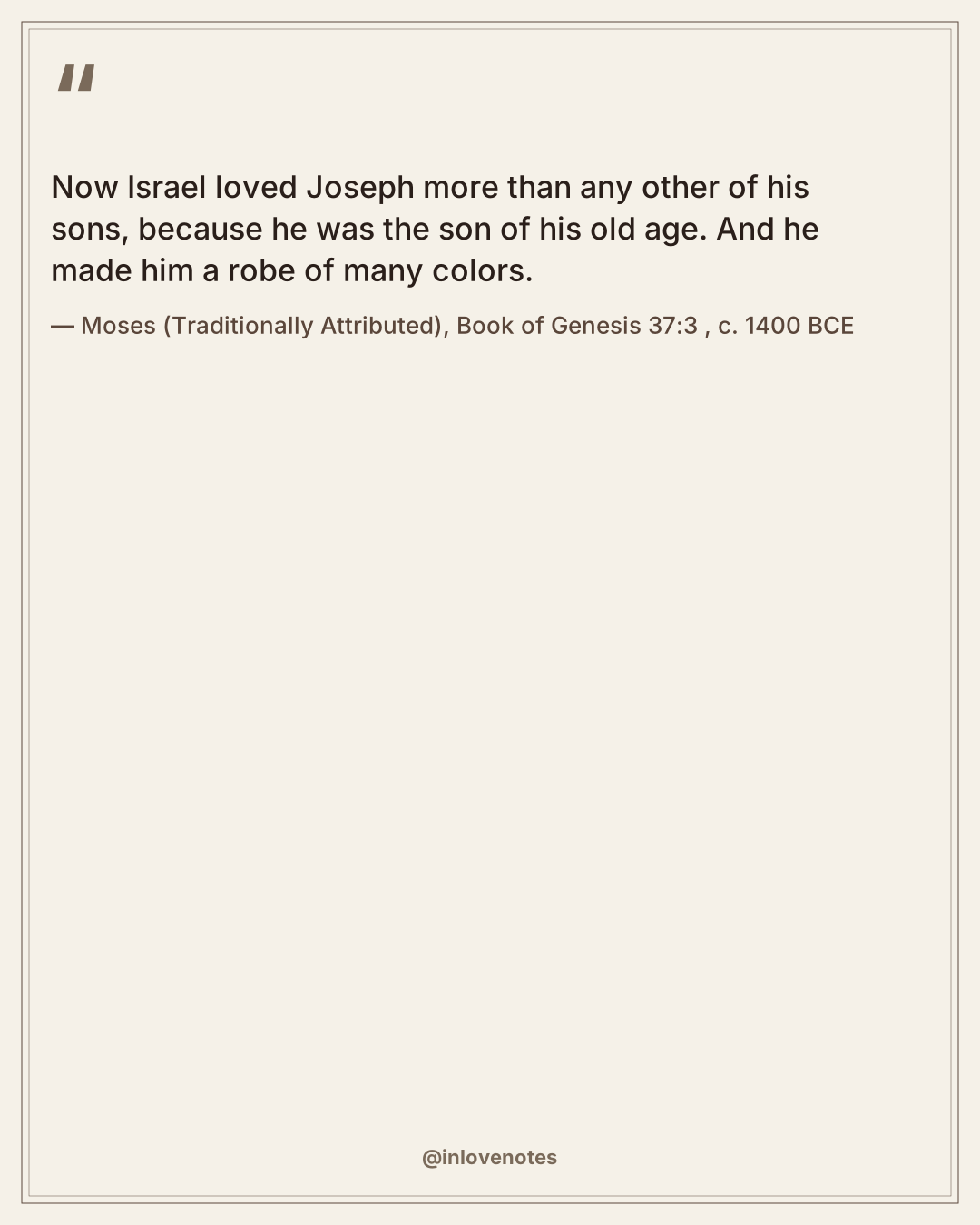
"If you then, who are evil, know how to give good gifts to your children, how much more will your Father who is in heaven give good things to those who ask him!" — Matthew the Apostle, Gospel of Matthew 7:11, c. 80 CE
Jesus leverages the undeniable reality that even deeply flawed human fathers instinctively desire to provide joy and security for their offspring.
"What father among you, if his son asks for a fish, will instead of a fish give him a serpent; or if he asks for an egg, will give him a scorpion?" — Luke the Evangelist, Gospel of Luke 11:11-12, c. 85 CE
This rhetorical question relies entirely on the audience's shared understanding of a father's protective nature, connecting it to the broader scope of scriptural affection.
"A foolish son is a grief to his father and bitterness to her who bore him." — Solomon, Book of Proverbs 17:25, c. 700 BCE
The emotional stakes of parenting are laid bare here, acknowledging that a father's love makes him incredibly susceptible to profound sorrow when a child falters.
"The father of a righteous child has great joy; a man who fathers a wise son rejoices in him." — Inspired by Solomon, Book of Proverbs 23:24
This paraphrase captures the sheer, unadulterated pride a father feels when witnessing his child's integrity, an emotion as potent as the desire for translating fleeting feelings into lasting memory.
Key Takeaways
- Biblical writers consistently portrayed fathers as emotionally invested figures rather than distant, unfeeling rule-makers.
- The scriptures elevate active, daily presence and moral instruction above the simple transfer of material wealth.
- Public displays of grief and affection by ancient patriarchs demonstrate a striking level of relational vulnerability.
- The biological instinct to protect and provide for children serves as the foundational metaphor for divine love in the New Testament.
- Wisdom literature acknowledges the intense emotional risk of fatherhood, where a child's choices directly impact the father's peace.