a note on
12 Italian Love Quotes With English Translation That Will Deepen Your Romance
Translation often strips the grit from European literature, leaving only the polished surface of a much deeper cultural history.
penned by Erdi Dogan

1990s–2000s: Contemporary Pop and Literature
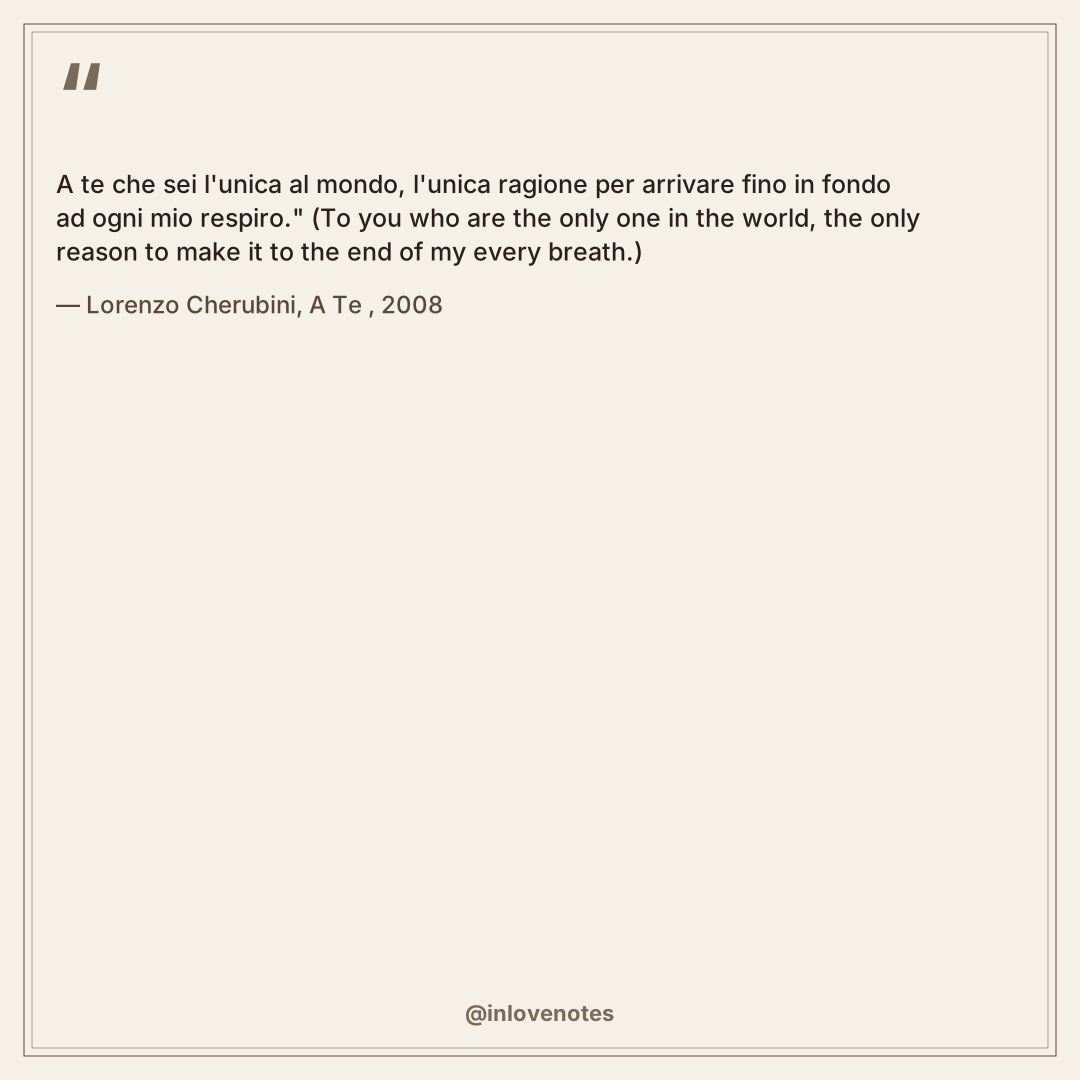
Modern Italian romance often strips away the grandiosity of older eras in favor of raw, immediate vulnerability. Songwriters and novelists working at the turn of the millennium focused heavily on the physical reality of presence and absence. The language became conversational but retained a poetic cadence."A te che sei l'unica al mondo, l'unica ragione per arrivare fino in fondo ad ogni mio respiro." (To you who are the only one in the world, the only reason to make it to the end of my every breath.) — Lorenzo Cherubini, A Te, 2008
Cherubini, performing under the stage name Jovanotti, wrote this dedication for his wife, cementing it as a defining modern anthem for Italian weddings.
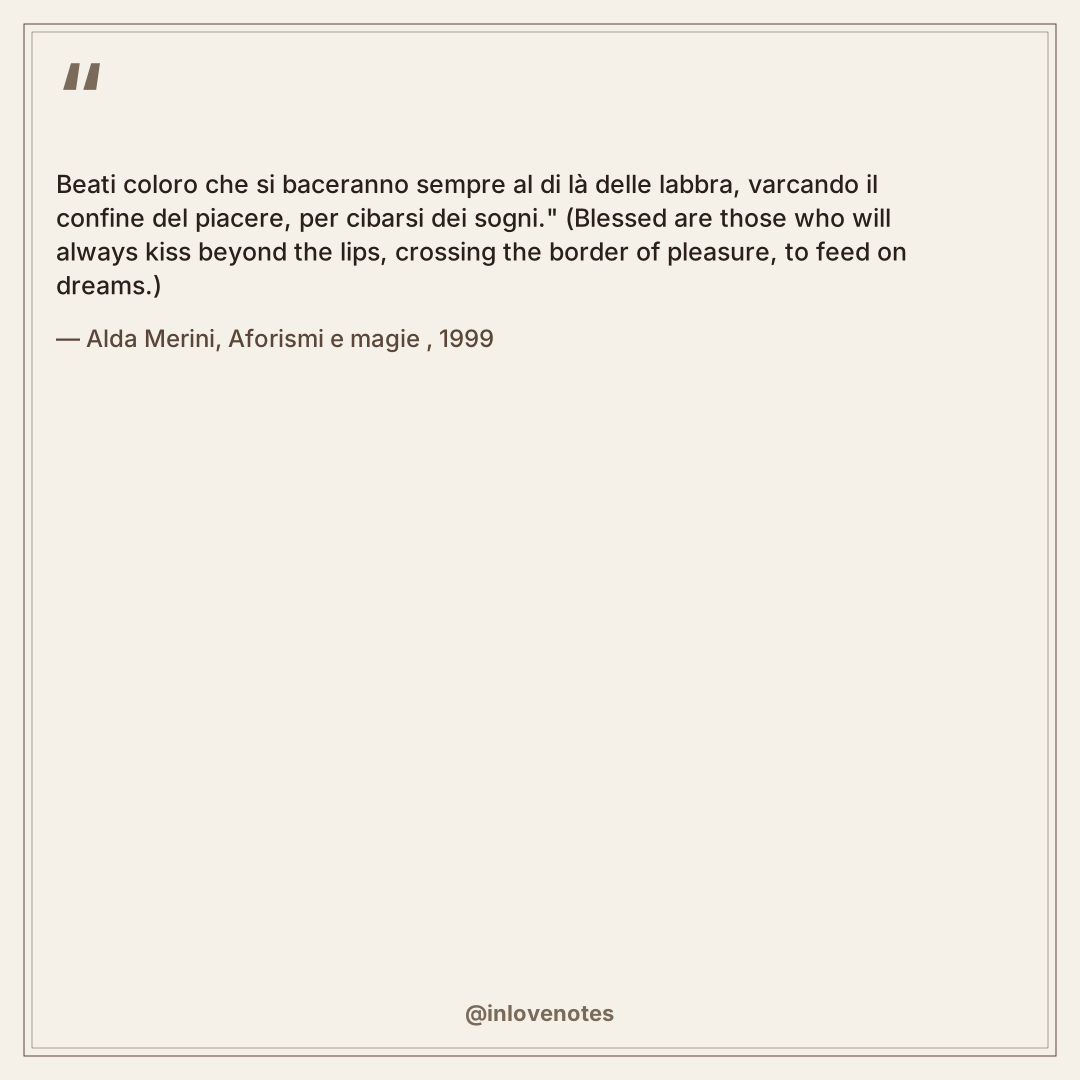
"Beati coloro che si baceranno sempre al di là delle labbra, varcando il confine del piacere, per cibarsi dei sogni." (Blessed are those who will always kiss beyond the lips, crossing the border of pleasure, to feed on dreams.) — Alda Merini, Aforismi e magie, 1999
Merini spent significant portions of her life in psychiatric care, and her poetry consistently frames intense emotional connection as a form of sacred salvation.
"Non si è mai lontani abbastanza per trovarsi." (One is never far enough away to find each other.) — Alessandro Baricco, Oceano Mare, 1993
Baricco uses the metaphor of the ocean in his landmark novel to explore how geographical distance rarely severs a true psychological tether.
Adjacent: what distant Italian poets write
1950s–1970s: Post-War Cinema and Poetry
Following the devastation of World War II, Italian artists sought to rebuild their cultural identity through Neorealism. Writers and filmmakers rejected artificial glamour. They documented love as a grounding force amidst economic ruin and social reconstruction. Romance in this era required resilience."L'amore è una cosa che ti fa esistere." (Love is a thing that makes you exist.) — Oriana Fallaci, Lettera a un bambino mai nato, 1975
Fallaci, a fierce war correspondent, delivered this sharp observation in a groundbreaking fictional monologue about bodily autonomy and maternal conflict.
"Tu sarai amata, il giorno in cui potrai mostrare la tua debolezza senza che l'altro se ne serva per affermare la sua forza." (You will be loved the day you can show your weakness without the other using it to assert their strength.) — Cesare Pavese, Il mestiere di vivere, 1952
Published posthumously, Pavese's diaries reveal a man constantly wrestling with the mechanics of vulnerability and the fear of emotional exploitation.
"Nel blu dipinto di blu, felice di stare quaggiù con te." (In the blue painted blue, happy to be down here with you.) — Domenico Modugno, Volare, 1958
While the chorus of this iconic song looks toward the sky, the grounded verses celebrate the simple, terrestrial joy of standing beside a specific person.
Adjacent: deepest declarations of affection
19th Century: Risorgimento Romantics
The 1800s in Italy were defined by the Risorgimento, the ideological and literary movement that ultimately unified the country. Writers from this period often equated romantic passion with patriotic fervor. Emotions were pitched at maximum intensity. Tragic longing became a hallmark of the era's literature."Due cose belle ha il mondo: amore e morte." (The world has two beautiful things: love and death.) — Giacomo Leopardi, Amore e Morte, 1832
Leopardi suffered from severe physical ailments throughout his short life, leading him to view deep affection and ultimate release as the only two pure experiences available to humanity.
"Oh, non ti chiedo d'amarmi come t'amo! Nessuno lo potrebbe." (Oh, I do not ask you to love me as I love you! No one could.) — Iginio Ugo Tarchetti, Fosca, 1869
Tarchetti belonged to the Scapigliatura movement, a bohemian literary circle that embraced dark, obsessive portrayals of romance over sanitized idealism.
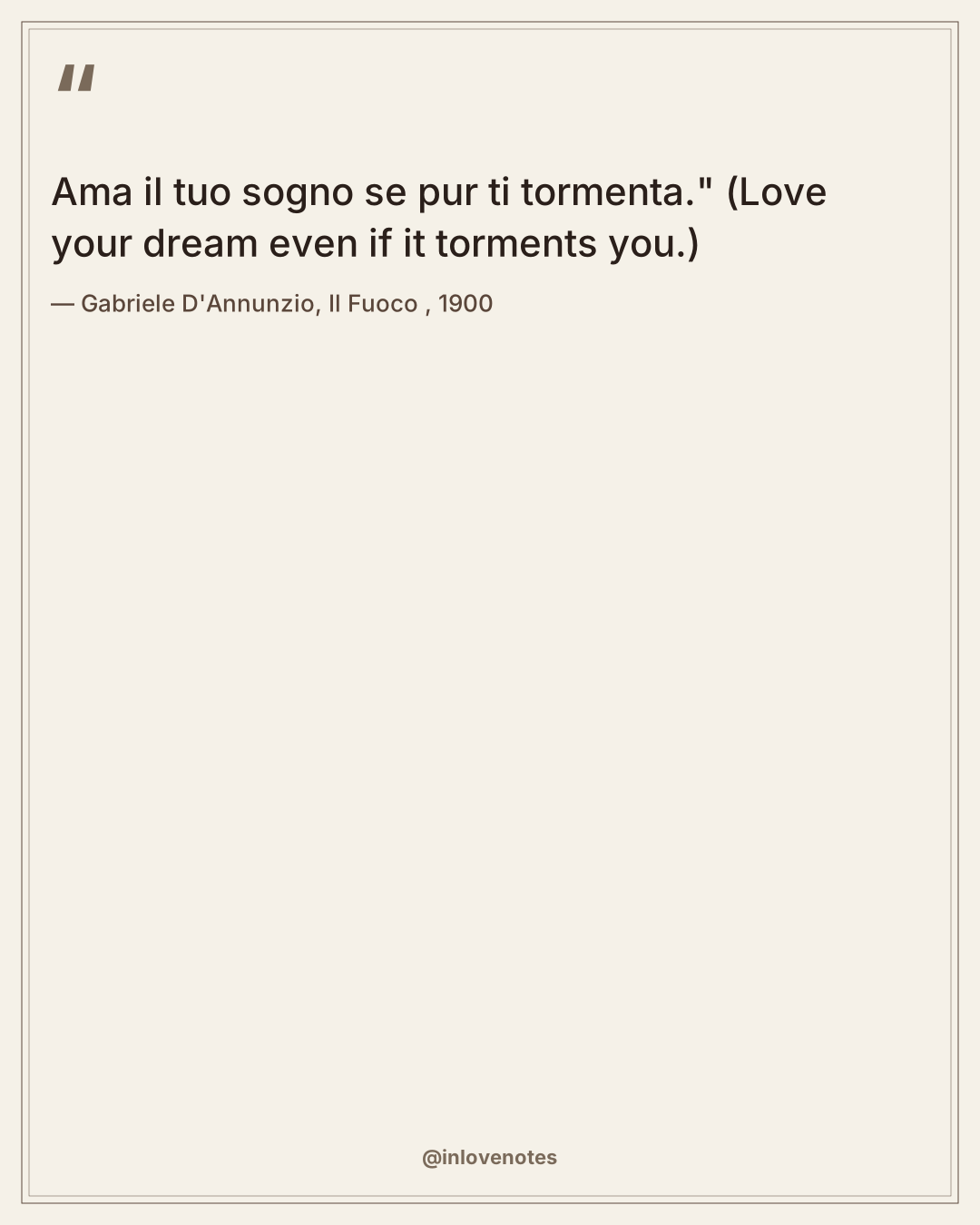
"Ama il tuo sogno se pur ti tormenta." (Love your dream even if it torments you.) — Gabriele D'Annunzio, Il Fuoco, 1900
D'Annunzio lived with theatrical extravagance, and his prose demanded that individuals embrace their passions regardless of the inevitable psychological cost.
Adjacent: using humor in Italian romance
14th–16th Century: The Renaissance Masters
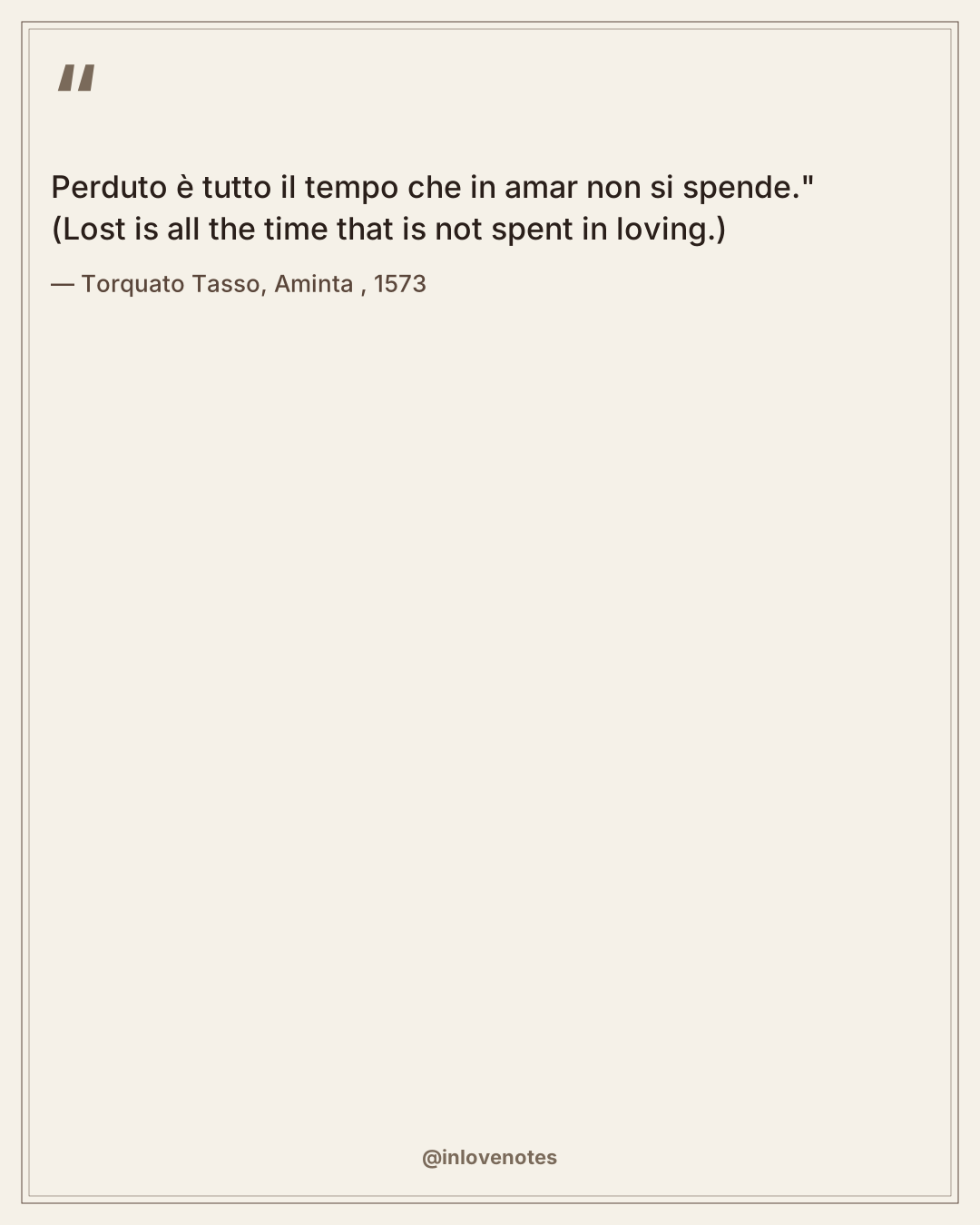
Before Italy existed as a unified political state, the Tuscan dialect established itself as the premier language of European literature. The Renaissance masters formalized the rules of romantic poetry. They elevated the object of their affection to divine status, blending religious devotion with earthly desire."Perduto è tutto il tempo che in amar non si spende." (Lost is all the time that is not spent in loving.) — Torquato Tasso, Aminta, 1573
Tasso wrote this pastoral drama for the court of Ferrara, capturing the Renaissance obsession with seizing fleeting moments of joy.
"Baciata bocca non perde ventura, anzi rinnuova come fa la luna." (A kissed mouth doesn't lose its fortune, rather it renews itself like the moon.) — Giovanni Boccaccio, Decameron, 1353
Boccaccio challenged the severe moral codes of the medieval period by celebrating physical affection as a natural, regenerating force of human nature.
"Benedetto sia 'l giorno, e 'l mese, e l'anno, e la stagione, e 'l tempo, e l'ora, e 'l punto..." (Blessed be the day, and the month, and the year, and the season, and the time, and the hour, and the exact moment...) — Francesco Petrarca, Canzoniere, 1374
Petrarch dedicated his life's work to Laura, a woman he saw only from a distance, establishing the template for unrequited devotion that influenced Western literature for the next five hundred years.
Adjacent: writing notes for her
Tracing these sentiments backward reveals a profound continuity in how humans articulate their attachments. The vocabulary shifts from the sacred poetry of Petrarch to the grounded diaries of Pavese, yet the core pursuit remains identical. People still reach for language to measure the distance between themselves and the ones they value most.Quick Reference
- Contemporary Italian quotes often emphasize the physical reality of presence, favoring conversational vulnerability over grand poetic structures.
- Post-war Neorealist writers documented affection as a necessary survival mechanism amidst severe economic and social reconstruction.
- Nineteenth-century Risorgimento authors frequently blended romantic longing with patriotic intensity, leaning heavily into tragic or fatalistic themes.
- Renaissance masters established the foundational templates of European romance, elevating the subjects of their poetry to near-divine status.
- Reading translated works alongside their original regional dialects preserves the historical friction that English adaptations frequently erase.