a note on
How Ancient Epistles Framed Self-Worth Long Before Therapy Culture
The letters of Paul and ancient Psalms offered a radical framework for individual value centuries before modern psychology entered the conversation.
penned by Erdi Dogan

The modern wellness industry often treats self-love as a recent invention. We buy guided journals and download meditation apps to convince ourselves of our own value. I remember sitting with my older sister in a cramped apartment in Austin, Texas, 2011, watching her meticulously write affirmations on neon sticky notes. It felt like a distinctly contemporary exercise. Yet the search for inherent worth traces back thousands of years across continents and cultures. Early biblical texts addressed human insecurity head-on without relying on the language of modern therapy. They offered a framework where personal value was not earned through productivity, but rather granted by design.
The Architecture of Creation
Understanding scriptural perspectives on personal value requires looking past the sheer scale of the text to find the intimate declarations hidden within.
"I praise you because I am fearfully and wonderfully made." — King David, Book of Psalms, c. 1000 BCE
This passage strips away the need for societal validation by rooting worth entirely in the deliberate act of creation itself.
"For we are God's handiwork, created in Christ Jesus to do good works." — The Apostle Paul, Epistle to the Ephesians, c. 62 CE
Paul shifts the focus from what a person lacks to what they were intentionally crafted to accomplish, a theme common in verses meant for quiet contemplation.
Grace Over Perfectionism
The ancient world placed heavy burdens on physical capability and social standing, but early Christian letters began mapping out a different metric for human dignity.
"Do you not know that your bodies are temples of the Holy Spirit, who is in you?" — The Apostle Paul, First Epistle to the Corinthians, c. 53 CE
Treating oneself with reverence becomes a physical mandate here, fundamentally elevating the human body above mere flesh and bone.
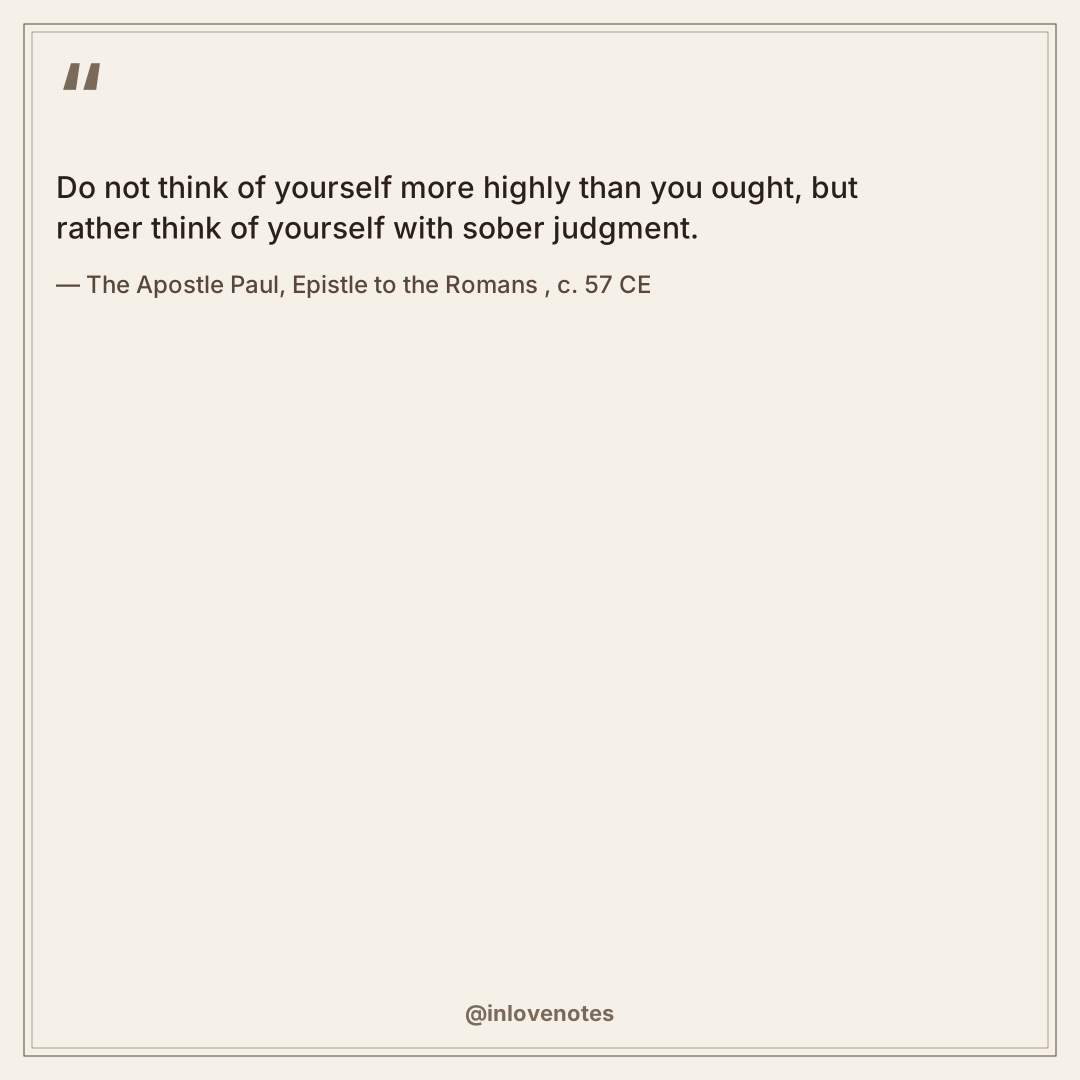
"Do not think of yourself more highly than you ought, but rather think of yourself with sober judgment." — The Apostle Paul, Epistle to the Romans, c. 57 CE
True self-respect demands honest self-assessment rather than inflated ego, establishing a healthy baseline that also appears in passages focused on spiritual endurance.
Further reading
- how scripture approaches maternal devotion
- lessons from the texts on spiritual stamina
- short scriptural lines for daily reflection
Common Questions, Straight Answers
Does the Bible explicitly use the phrase "self-love"?
The exact modern phrase does not appear in standard historical translations like the King James Version of 1611. The texts instead discuss concepts of inherent worth, dignity, and caring for oneself as a creation.
How do these ancient texts differ from modern affirmations?
Modern affirmations typically rely on the individual generating their own confidence through repetition. The epistles and psalms ground personal value in an external creator, removing the burden of having to prove one's own worth.
Ancient letters continue to shape how millions view their own reflection in the mirror today. They bypass the modern pressure to constantly optimize the self, settling instead for the quiet recognition that we are already complete.