a note on
The Bible on Endurance: 12 Quotes from the Old and New Testaments
Ancient texts offer a steady foundation when modern crises strip away our certainty, grounding us in the enduring connection between divine affection...
penned by Erdi Dogan

"Love is not a victory march, it's a cold and it's a broken hallelujah." — Leonard Cohen. Sitting with my aunt in a humid, second-floor apartment in New Orleans, Louisiana, 2006, I watched her trace the worn pages of a Bible that survived the floodwaters. The text she read did not promise an easy life or a quick resolution to the destruction outside her window. This piece follows a chronological arc through ancient scripture, tracing how early nomadic survival gave way to prophetic resilience and, eventually, the communal endurance of the first-century church. People often turn to the sacred texts of antiquity when their own vocabulary fails under the weight of grief or sudden hardship. The writers of these ancient documents understood that affection and fortitude are inextricably linked, demanding a physical and spiritual stamina that outlasts temporary circumstances.
The Early Narratives of Survival and Loyalty
The earliest biblical texts emerged from a context of physical vulnerability, where nomadic tribes navigated famine, warfare, and displacement. In these early accounts, devotion is rarely depicted as an abstract emotion. It functions as a survival mechanism, binding individuals together when environmental or political forces threaten to destroy their communities. The words spoken between leaders and followers, or between family members, establish a framework for mutual protection that mirrors the language families use to bless one another across generations.
"Be strong and courageous. Do not fear or be in dread of them, for it is the Lord your God who goes with you." — Moses (traditionally attributed), Book of Deuteronomy 31:6, c. 1400 BCE

Moses delivers this charge to Joshua and the Israelites as they prepare to enter Canaan, framing divine presence as the ultimate antidote to political and military terror.
"Where you go I will go, and where you lodge I will lodge. Your people shall be my people, and your God my God." — Ruth, Book of Ruth 1:16, c. 400 BCE
A young Moabite widow speaks these words to her mother-in-law, Naomi, choosing the harsh reality of refugee status over the safety of her homeland out of sheer relational loyalty.
Prophetic Voices Amidst National Collapse
Centuries later, the geopolitical landscape of the ancient Near East shifted violently, bringing siege and exile to the populations of Israel and Judah. The prophetic literature and poetic wisdom from this era reflect a profound existential crisis, moving far beyond sweet words exchanged during peaceful times to address the trauma of national destruction. Writers during the Babylonian exile had to reconcile their belief in a loving deity with the physical reality of their ruined cities. Their poetry insists that divine compassion remains active even in the rubble, offering a theological anchor that parallels the spiritual grounding provided by parental figures during a family crisis.
"God is our refuge and strength, a very present help in trouble." — Sons of Korah, Psalm 46:1, c. 1000 BCE
This liturgical song provided the ancient Israelites with a communal vocabulary for confidence during periods of intense national upheaval and natural disasters.
"Fear not, for I am with you; be not dismayed, for I am your God; I will strengthen you, I will help you." — Isaiah, Book of Isaiah 41:10, c. 700 BCE
The prophet Isaiah offers this reassurance to a population terrified by the advancing Assyrian empire, grounding their physical security in the specific promises of their covenant.
"The steadfast love of the Lord never ceases; his mercies never come to an end; they are new every morning." — Jeremiah (traditionally attributed), Book of Lamentations 3:22-23, c. 586 BCE
Composed while the author literally looked over the smoking ruins of Jerusalem, this passage forces a radical perspective shift from immediate devastation to enduring divine fidelity.
The First-Century Letters on Communal Endurance
As the timeline moves into the first century CE, the early Christian communities faced a different kind of pressure. Scattered across the Roman Empire, these small groups dealt with social ostracization, economic marginalization, and sporadic state-sponsored violence. The letters circulating among these house churches focused heavily on internal cohesion. The apostles wrote extensively about how recording genuine commitment on paper could bind distant believers together. They argued that suffering was not a sign of divine abandonment, but rather a crucible that refined their character and deepened their mutual reliance.
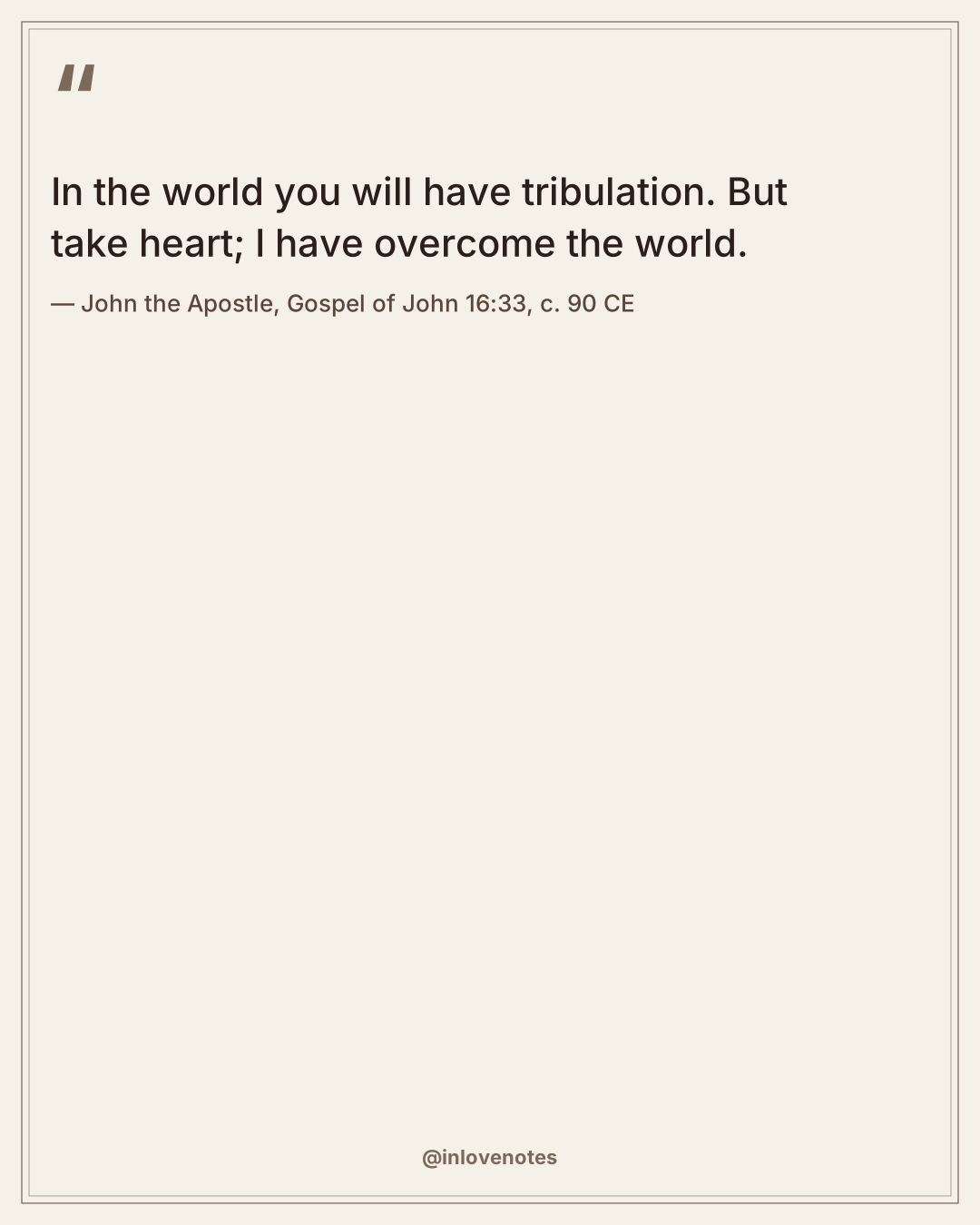
"In the world you will have tribulation. But take heart; I have overcome the world." — John the Apostle, Gospel of John 16:33, c. 90 CE
Jesus speaks these final words of preparation to his disciples just hours before his arrest, guaranteeing that hardship is an inevitable component of their impending mission.
"For I am sure that neither death nor life, nor angels nor rulers, nor things present nor things to come, nor powers, nor height nor depth, nor anything else in all creation, will be able to separate us from the love of God." — Paul the Apostle, Epistle to the Romans 8:38-39, c. 57 CE

Writing to a vulnerable minority population in the capital city of Rome, Paul constructs a comprehensive list of cosmic and political threats only to dismiss their ultimate authority.
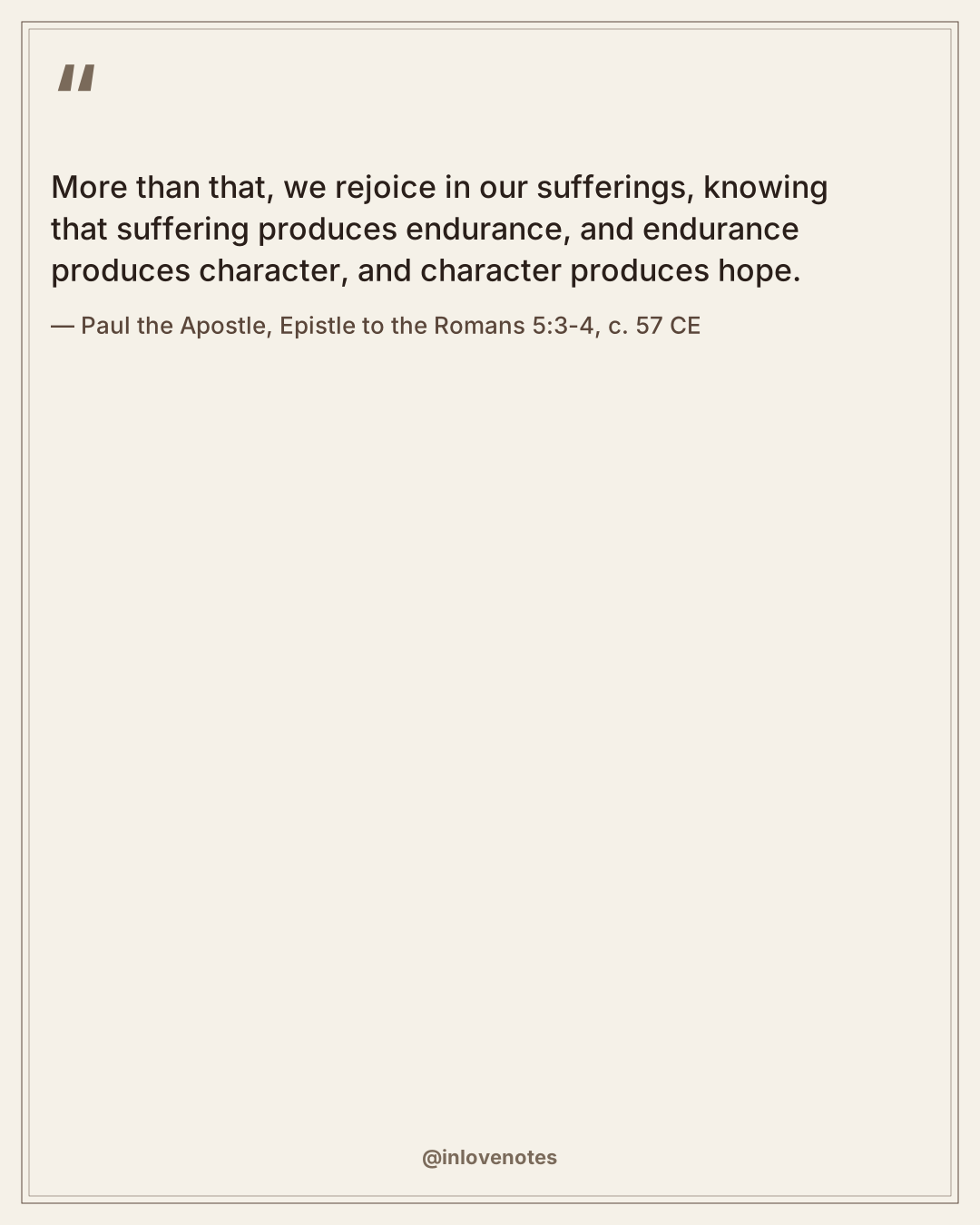
"More than that, we rejoice in our sufferings, knowing that suffering produces endurance, and endurance produces character, and character produces hope." — Paul the Apostle, Epistle to the Romans 5:3-4, c. 57 CE
This sequential logic reframes physical and social persecution as a necessary training ground for developing an unbreakable psychological and spiritual fortitude.
"Love bears all things, believes all things, hopes all things, endures all things." — Paul the Apostle, First Epistle to the Corinthians 13:7, c. 54 CE
Often misapplied to romantic weddings, this severe instruction was actually written to correct a deeply fractured and competitive church community in the wealthy port city of Corinth.
"My grace is sufficient for you, for my power is made perfect in weakness." — Paul the Apostle, Second Epistle to the Corinthians 12:9, c. 55 CE
Paul recounts his own unanswered prayers for physical healing, concluding that his chronic vulnerability serves as the exact conduit for divine strength.
"Above all, keep loving one another earnestly, since love covers a multitude of sins." — Peter the Apostle, First Epistle of Peter 4:8, c. 60 CE
Peter advises believers scattered across Asia Minor that their survival depends entirely on their willingness to forgive the inevitable frictions that arise within a persecuted group.
"There is no fear in love, but perfect love casts out fear." — John the Apostle, First Epistle of John 4:18, c. 95 CE
Addressing a late first-century community plagued by false teachings and internal division, John identifies terror as the primary obstacle to genuine spiritual maturity.
The progression from the dusty roads of Moab to the crowded house churches of Rome reveals a consistent theological argument about human fragility. The writers of these texts did not view hardship as an anomaly to be avoided, but as the exact environment where genuine affection proves its durability. When we examine the physical artifacts of affection we preserve, we often find that the most meaningful records of devotion were forged during periods of intense personal or communal strain. The ancient words continue to resonate because they acknowledge the reality of the darkness while refusing to concede the final outcome to despair.
Questions Readers Send In
Why do the Epistles focus so heavily on suffering?
The first-century authors were writing to marginalized communities facing active suppression from both local authorities and the broader Roman cultural establishment. Their letters provided a theological framework that gave meaning to the social and economic losses their readers experienced daily.
Is the Book of Ruth considered a text about romantic love or survival?
Historically, scholars view Ruth primarily as a narrative of covenant loyalty (hesed) and economic survival rather than modern romance. The bond between Ruth and Naomi demonstrates how mutual commitment functioned as a critical safety net for vulnerable widows in the ancient Near East.
How did the Babylonian exile change the biblical language of strength?
Before the exile, strength was often associated with military victory and territorial security under the Davidic monarchy. After the destruction of Jerusalem in 586 BCE, the prophetic literature redefined strength as spiritual endurance, focusing on God's presence with the people in their displacement rather than their political dominance.