a note on
Why Ancient Scripture Still Anchors the Modern Mother
The quiet endurance required of modern motherhood often finds its strongest validation in ancient texts written millennia before the digital age.
penned by Erdi Dogan

What happens when the daily demands of raising a child outpace your emotional reserves? Where do you look when the modern advice economy feels too loud and contradictory?
I remember watching my aunt rock a colicky infant in a sweltering Houston apartment in 1993, a worn paperback Psalms resting on the armrest. She was not looking for a parenting hack or a psychological framework. She needed a reminder that exhaustion is a human constant, not a personal failure. The texts she read were not manuals, but rather anchors connecting her to a broader tradition of scriptural reflections on devotion. These ancient words offer a specific kind of relief because they do not demand optimization. They simply acknowledge the heavy, invisible labor of sustaining another human life.
The Architecture of Endurance
Maternal fatigue operates on a different frequency than ordinary tiredness. It is a compounding physical and mental deficit that rarely affords a true recovery period. When women seek encouraging verses for moms, they are usually hunting for language that validates this specific depletion. First-century writers understood the mechanics of spiritual and physical exhaustion deeply. They lived in a harsh agrarian society where survival required relentless daily effort.
"Come to me, all you who are weary and burdened, and I will give you rest." — Matthew the Apostle, The Gospel of Matthew 11:28, c. 80 CE
This passage shifts the burden of strength away from the individual, offering a theological permission slip to stop performing competence.
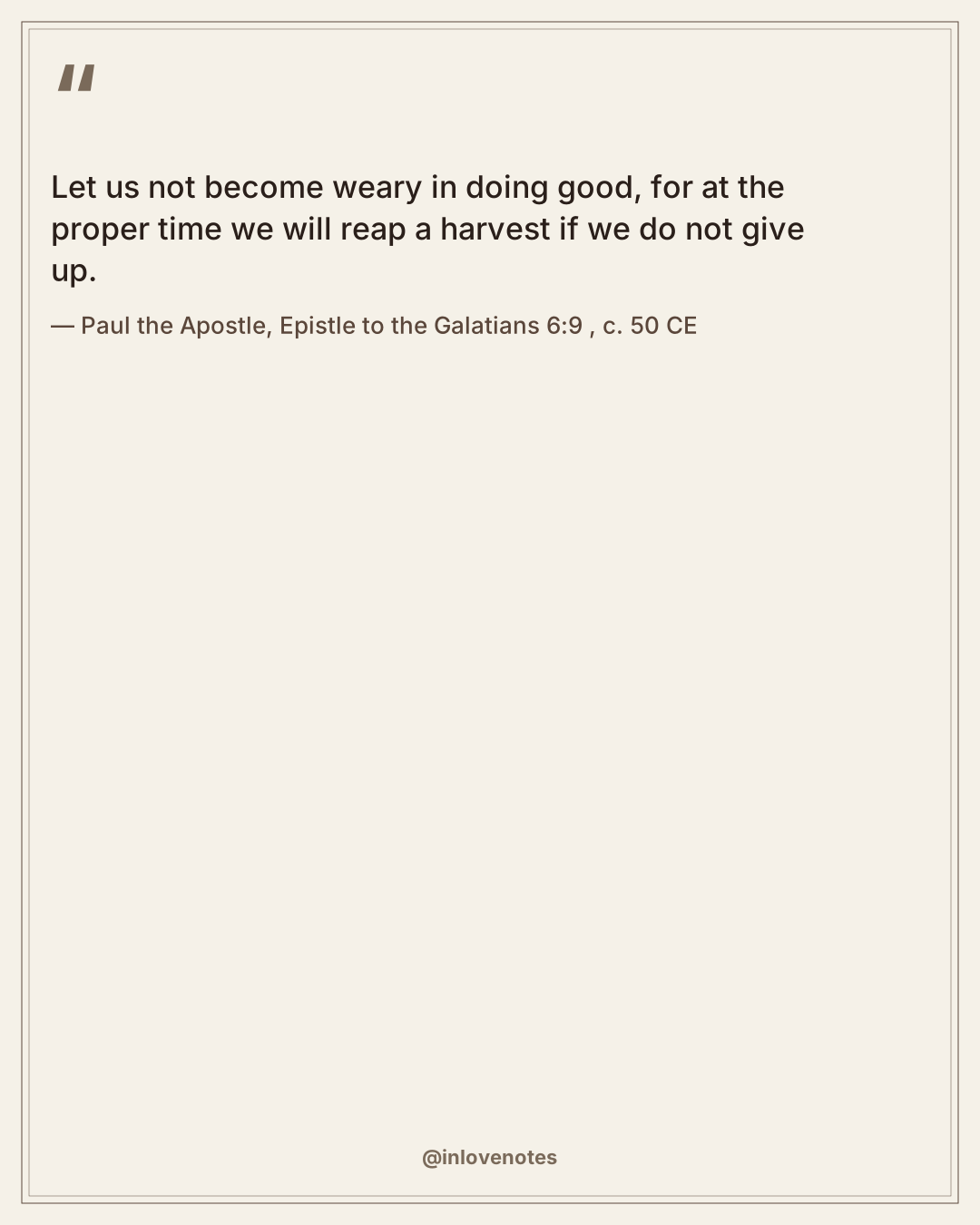
"Let us not become weary in doing good, for at the proper time we will reap a harvest if we do not give up." — Paul the Apostle, Epistle to the Galatians 6:9, c. 50 CE
Paul wrote these words to a struggling early community in Asia Minor, establishing a direct link between present endurance and future stability. His framing mirrors the delayed gratification inherent in raising children. If you want to understand how ancient writers framed spiritual stamina, you have to look at how they treated the concept of waiting. The harvest is never immediate.
Validation in the Quiet Hours
The deepest anxieties of motherhood often surface at 3:00 AM. In a quiet house, the sheer scale of responsibility becomes undeniable. A child's vulnerability forces a parent to confront their own limitations. The biblical text addresses this inadequacy directly, framing human weakness not as a flaw to be eradicated, but as the exact location where grace operates.
"My grace is sufficient for you, for my power is made perfect in weakness." — Paul the Apostle, Second Epistle to the Corinthians 12:9, c. 55 CE
This counterintuitive logic dismantles the modern pressure to be a flawless caregiver.
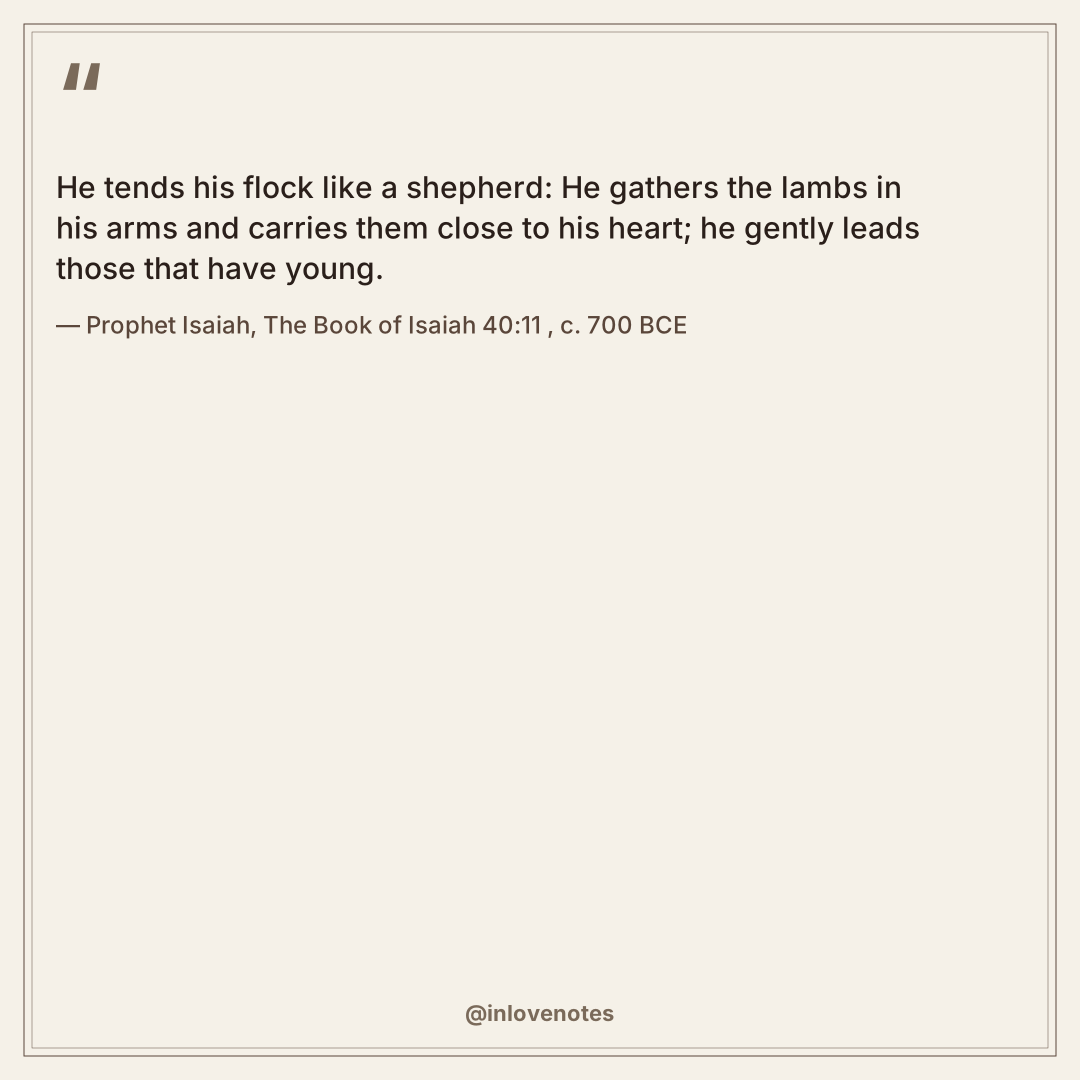
"He tends his flock like a shepherd: He gathers the lambs in his arms and carries them close to his heart; he gently leads those that have young." — Prophet Isaiah, The Book of Isaiah 40:11, c. 700 BCE
Isaiah specifically singles out those caring for the young as requiring gentle leadership, a rare and explicit acknowledgment of parental vulnerability in ancient literature. This kind of scripture meant for solitary contemplation provides a necessary counter-narrative to the isolation of early motherhood. You are seen by the text.
Releasing the Illusion of Control
To love a child is to live with a persistent, low-grade terror regarding their safety. The world is entirely unpredictable. Ancient mothers faced infant mortality rates that would paralyze a modern parent, yet they still had to function. The Psalms offer a vocabulary for this specific brand of fear, providing a mechanism to transfer anxiety from the human mind to a divine caretaker.
"I sought the Lord, and he answered me; he delivered me from all my fears." — King David, The Book of Psalms 34:4, c. 1000 BCE
David composed this after narrowly escaping a foreign king, but the psychological mechanism of transferring acute terror remains universally applicable.
"The Lord is my strength and my shield; my heart trusts in him, and he helps me." — King David, The Book of Psalms 28:7, c. 1000 BCE
A shield is a defensive tool meant to absorb blows the bearer cannot dodge. Unlike literary reflections on maternal anxiety that merely describe the worry, these verses demand an active relinquishing of control. The text insists that you cannot protect your children from everything, but you are not guarding them alone.
What to Carry Forward
- Ancient texts validate exhaustion rather than demanding immediate self-improvement.
- The concept of delayed harvest reframes the repetitive, invisible tasks of daily caregiving.
- Acknowledging personal weakness is treated as a spiritual asset rather than a maternal failure.
- Specific passages explicitly recognize the unique vulnerability of those caring for the young.
- Transferring anxiety to a divine figure serves as a practical psychological defense mechanism against the unpredictability of the world.
Further reading
- examining the specific passages that highlight maternal figures
- how early church leaders understood human bonds
- the theological framework of paternal blessings
The enduring utility of these verses lies in their refusal to romanticize the work. They offer a sturdy, unsentimental framework for surviving the long days and the longer nights of raising a child.