a note on
10 Short Love Quotes for Instagram Feeds and Digital Archives
Crafting the perfect caption often requires stepping away from trending audio to find words that actually mean something real.
penned by Erdi Dogan

Documenting Devotion in a Digital Grid
Scrolling through a modern visual feed feels entirely different than flipping through the fading polaroids my next-door neighbor kept in her carpeted family room in suburban Cleveland back in 1996. The medium changed completely. The human urge to document affection remains exactly the same. Social media platforms demand brevity, often at the expense of actual substance, rewarding quick hits over sustained reflection. Yet a few chosen syllables can still cut through the noise of algorithmically sorted updates and sponsored posts, leaving a genuine mark on your grid. When you want to post a photograph of a significant memory, you often need words that ground your scrolling habit rather than add to the temporary clutter.
Classic Literary Captions
"You are my heart, my life, my one and only thought." — Arthur Conan Doyle, The White Company, 1891
Conan Doyle is primarily known for clinical detective work, yet this historical novel contains a stark, singular declaration of total focus.
"I like not only to be loved, but to be told that I am loved." — George Eliot, Letter to Mrs. Burne-Jones, 1875
Mary Ann Evans, writing under her famous pen name, captured the very modern desire for documented affection that drives so many digital posts today.
"My heart is and always will be yours." — Jane Austen, Sense and Sensibility, 1811
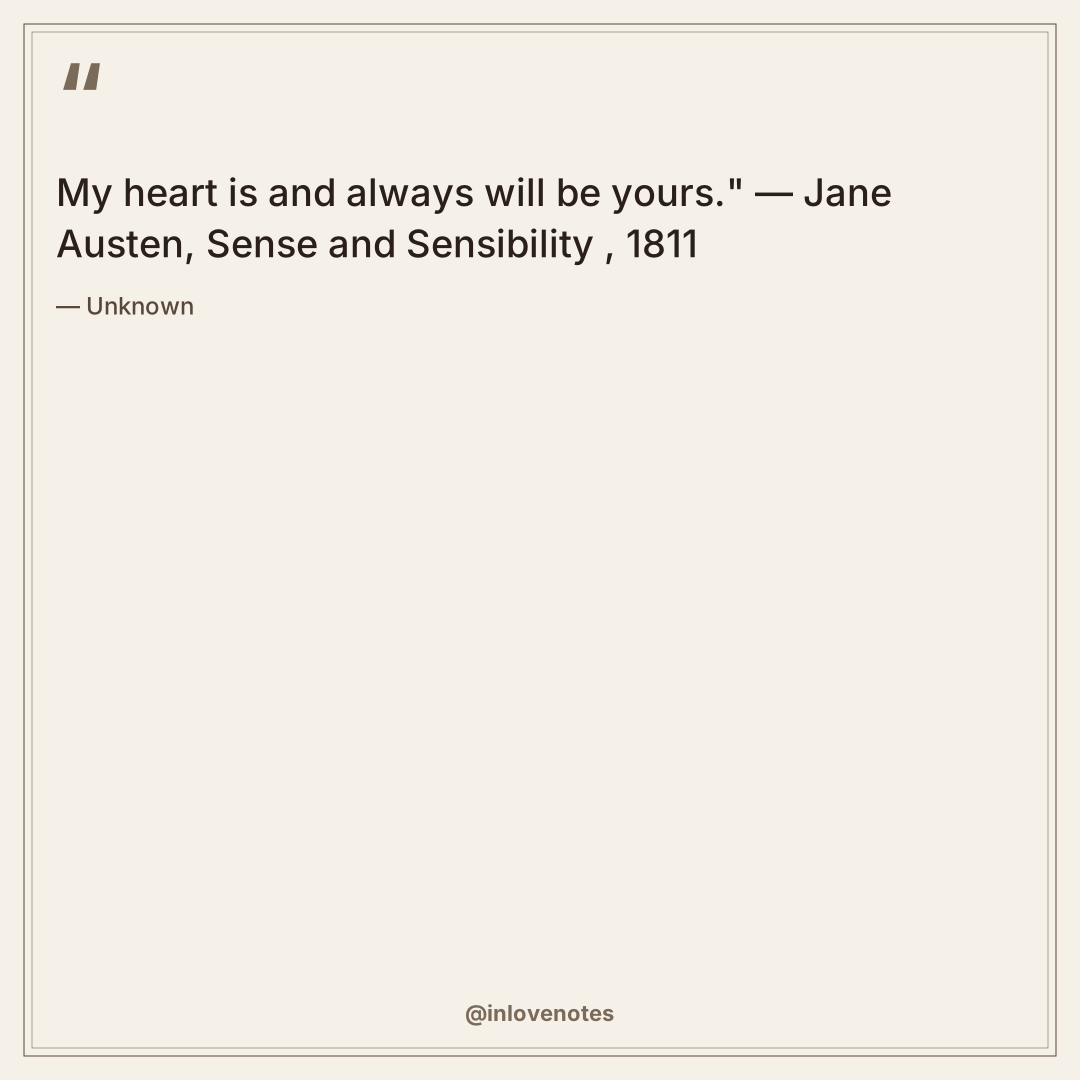
If you prefer phrases drawn from classical literature, Edward Ferrars delivering this line remains the gold standard for understated devotion.
"I love her and that is the beginning and end of everything." — F. Scott Fitzgerald, Letter to Ludlow Fowler, 1924
Fitzgerald wrote these words to a close friend regarding his wife Zelda, stripping away his usual ornate jazz-age prose for something completely absolute.
Brief and Grounding Lines
"We loved with a love that was more than love." — Edgar Allan Poe, Annabel Lee, 1849
Poe published this poem shortly after his young wife died, turning a tragic early loss into a rhythmic testament to enduring connection.
"If I know what love is, it is because of you." — Hermann Hesse, Narcissus and Goldmund, 1930
This English translation of the German philosophical novelist works beautifully for quiet anniversaries at home when grand public gestures feel entirely unnecessary.
"To love and be loved is to feel the sun from both sides." — David Viscott, How to Live with Another Person, 1974
The late psychiatrist built his career on untangling complex relationships, yet his most widely cited insight reads exactly like pure poetry.
Modern Affection
"I love you right up to the moon—and back." — Sam McBratney, Guess How Much I Love You, 1994
Originally written for a children's picture book, this exact phrasing has migrated into adult wedding vows and daily text threads across the globe.
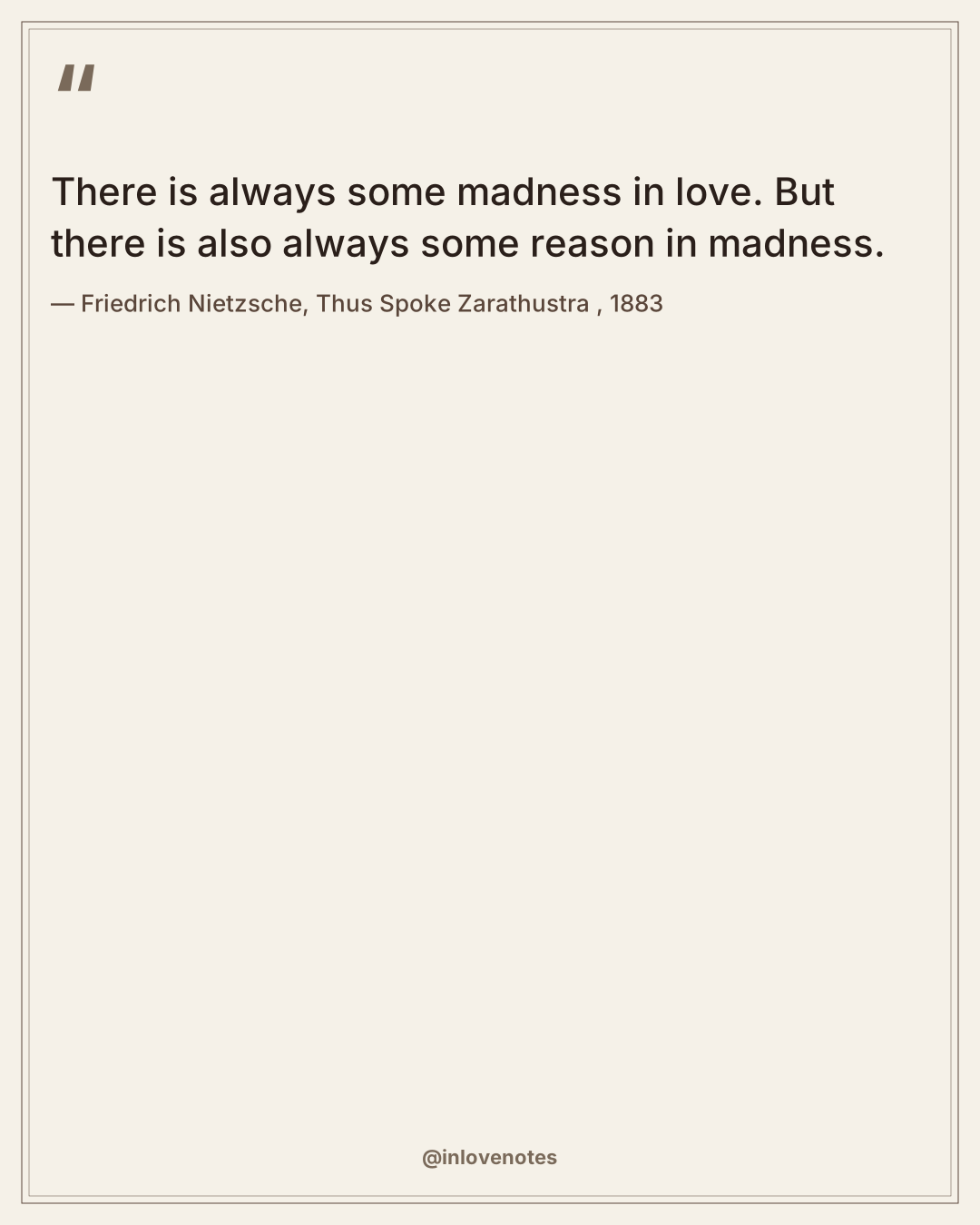
"There is always some madness in love. But there is also always some reason in madness." — Friedrich Nietzsche, Thus Spoke Zarathustra, 1883
Finding deep love messages in the heavy philosophical work of a famed nihilist is unexpected, which makes this specific passage an ideal, slightly subversive caption.
"Yours is the light by which my spirit's born." — E.E. Cummings, You Are Tired (I Think), 1920s
Cummings broke every established rule of formal punctuation to build a distinct visual rhythm, proving that carefully chosen words can anchor a restless mind. Type one of these lines into your notes app right now, before the day gets away from you.
Common Questions, Straight Answers
How long should an Instagram caption be?
The platform truncates captions after 125 characters on the main feed. Keeping your chosen text under this limit ensures your entire quote remains visible without forcing anyone to tap a button for more context.
Should I credit the author in the caption?
Yes, placing the author's name at the very end of the text adds necessary literary weight. You can use a simple em dash before their name to separate the attribution cleanly from the main sentiment.
Do literary quotes perform well on visual apps?
When you pair a striking personal memory with a carefully sourced line from a nineteenth-century novelist, you create a digital artifact that actually means something. Authenticity cuts through the noise.