a note on
15 Deep Love Quotes for Letters and Quiet Anniversaries
The language of enduring affection shifts from early infatuation to lifelong partnership across these fifteen historical and literary reflections.
penned by Erdi Dogan

"To love another person is to see the face of God." Victor Hugo placed this immense theological weight on human connection near the end of Les Misérables, anchoring an abstract concept to something entirely tangible — and the line has been read aloud at weddings ever since. The language we use to describe devotion follows a distinct chronological arc, moving from the sudden strike of early infatuation through the settled routines of a shared life. We do not speak of a fiftieth anniversary using the same frantic vocabulary that defines a first date. Tracing this evolution through literature reveals exactly how our understanding of partnership matures over decades.
The Sudden Strike of Early Infatuation
When affection first takes hold, the vocabulary leans heavily on disruption and inevitability. Writers across centuries frame this initial phase not as a conscious choice, but as a sudden atmospheric shift that alters the trajectory of two lives. If you are currently drafting your own deep love messages for a new relationship, these historical observations capture that initial gravity perfectly. The focus remains entirely on the shock of recognition.
"Whatever our souls are made of, his and mine are the same." — Emily Brontë, Wuthering Heights, 1847
Brontë assigned this fierce declaration to Catherine Earnshaw, establishing a benchmark for gothic romance that treats human connection as an elemental force rather than a polite social arrangement.
"I loved her against reason, against promise, against peace, against hope, against happiness, against all discouragement that could be." — Charles Dickens, Great Expectations, 1861
Through the character of Pip, Dickens perfectly articulated the irrational momentum of early infatuation, where logic completely fails to halt the progression of feeling.
"He stepped down, trying not to look long at her, as if she were the sun, yet he saw her, like the sun, even without looking." — Leo Tolstoy, Anna Karenina, 1877
Tolstoy captured the physical disorientation of new attraction by comparing Levin's awareness of Kitty to a blinding celestial body dominating a crowded Russian ice rink.
"I seem to have loved you in numberless forms, numberless times, in life after life, in age after age forever." — Rabindranath Tagore, Unending Love, 1890
The Bengali polymath framed romantic destiny as a recurring historical event, suggesting that true connection transcends a single biological lifetime.
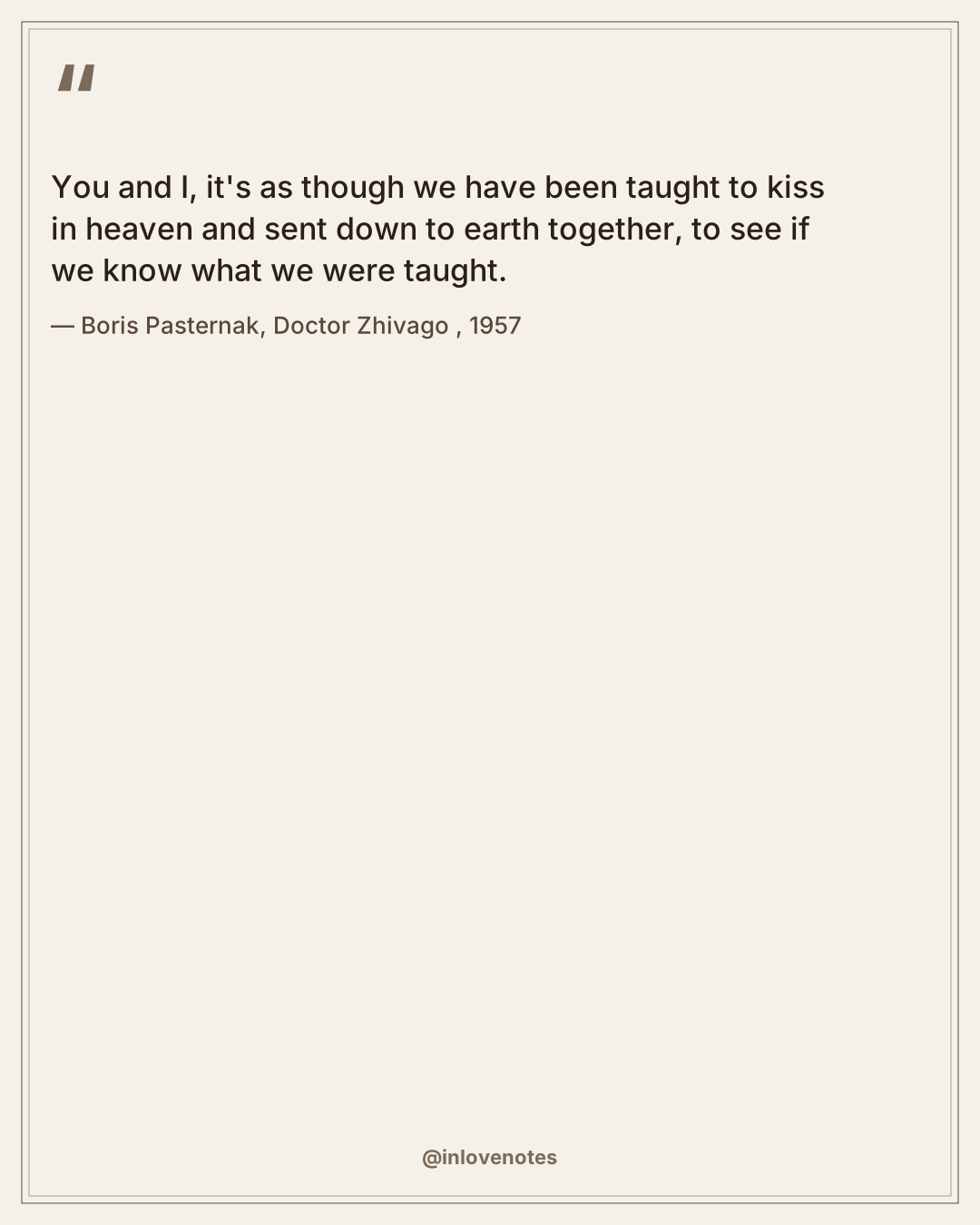
"You and I, it's as though we have been taught to kiss in heaven and sent down to earth together, to see if we know what we were taught." — Boris Pasternak, Doctor Zhivago, 1957
Set against the brutal backdrop of the Russian Revolution, Pasternak's dialogue elevates physical intimacy to a divine curriculum mastered long before birth.
The Deepening Architecture of Middle Devotion
As the initial adrenaline of discovery fades, the literature of affection shifts toward deliberate choice and sustained effort. This middle period requires a different kind of articulation, moving away from breathless poetry toward grounded reality. Readers exploring brief sentiments for handwritten correspondence often find this era provides the most honest material. It is fascinating to see how satirists viewed romantic devotion during these years of routine, where humor often becomes a vital survival mechanism for long-term partners.
"Love is a temporary madness, it erupts like volcanoes and then subsides. And when it subsides, you have to make a decision." — Louis de Bernières, Captain Corelli's Mandolin, 1994
Dr. Iannis delivers this pragmatic advice to his daughter Pelagia, stripping away the illusion that the volcanic phase of romance can be sustained indefinitely without structural support.
"I would rather share one lifetime with you than face all the ages of this world alone." — J.R.R. Tolkien, The Fellowship of the Ring, 1954
Tolkien embedded this profound declaration of mortality and sacrifice into the mythology of Middle-earth, as Arwen chooses a finite human existence over eternal isolation.
"The minute I heard my first love story, I started looking for you, not knowing how blind that was." — Rumi, The Illuminated Rumi, translated 1997
The 13th-century Persian poet recognized that we often search for a preconceived narrative of romance before realizing that true connection defies our anxious expectations.
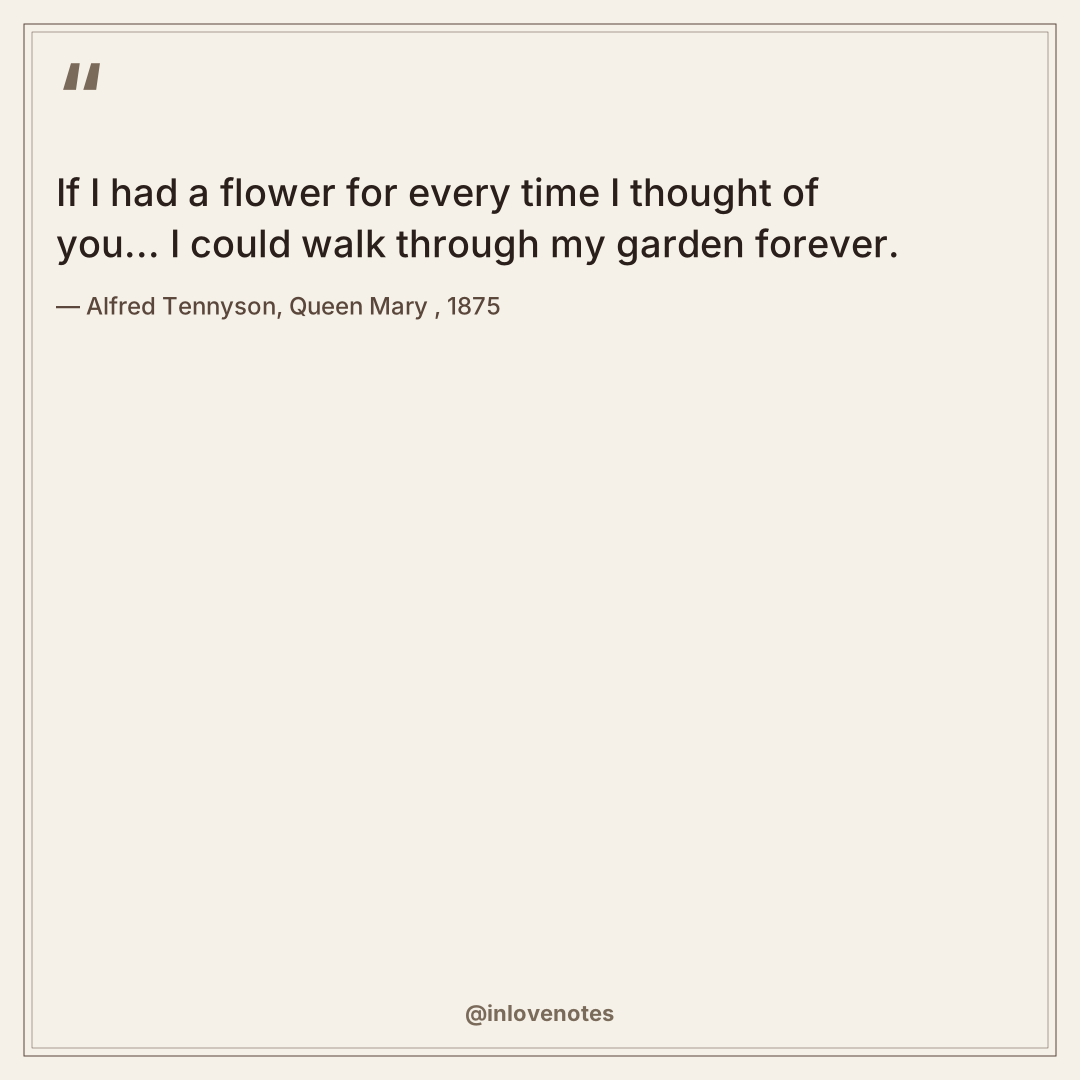
"If I had a flower for every time I thought of you... I could walk through my garden forever." — Alfred Tennyson, Queen Mary, 1875
Tennyson quantified devotion through the slow, steady accumulation of botanical growth, turning fleeting daily thoughts into a permanent physical landscape.
"What greater thing is there for two human souls, than to feel that they are joined for life." — George Eliot, Adam Bede, 1859
Writing under a male pseudonym, Mary Ann Evans championed the quiet dignity of rural partnerships, emphasizing the profound security found in absolute mutual reliance.
The Enduring Partnership of Later Years
The final phase of romantic expression strips away the decorative metaphors entirely. What remains is a stark, profound acknowledgment of shared history and mutual survival. Much like how Renaissance thinkers framed existence around lasting legacy, these later quotes focus on the accumulation of time rather than the spark of inception. Anyone tasked with writing meaningful love notes for her on a milestone anniversary can borrow from this well of enduring certainty.
"Grow old along with me! The best is yet to be." — Robert Browning, Rabbi Ben Ezra, 1864
Browning opened his philosophical poem with this direct invitation, aggressively rejecting the Victorian anxiety about aging by framing the later years as the ultimate destination of a shared life.
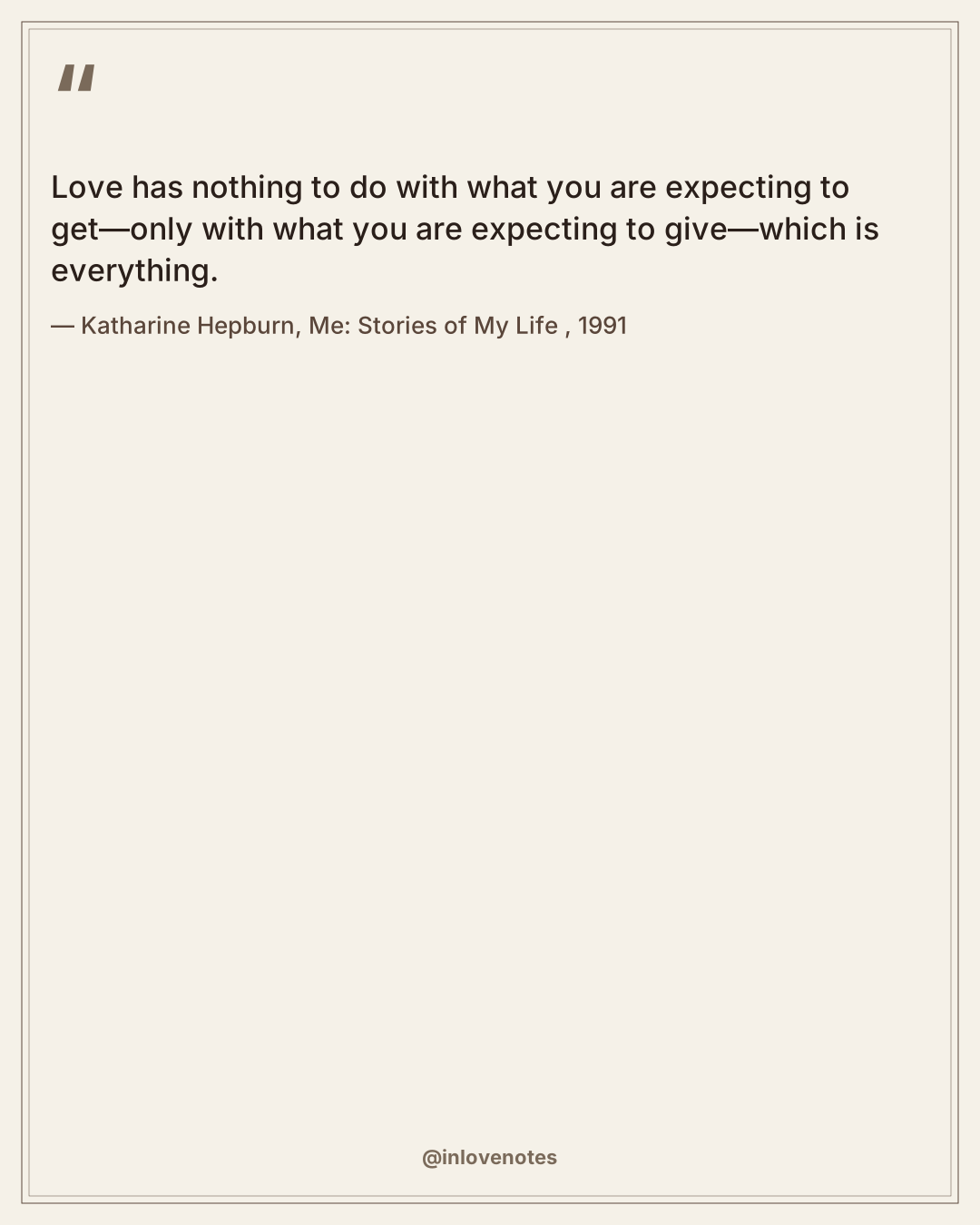
"Love has nothing to do with what you are expecting to get—only with what you are expecting to give—which is everything." — Katharine Hepburn, Me: Stories of My Life, 1991
Reflecting on her decades-long, complicated partnership with Spencer Tracy, the Hollywood icon reduced romance to an absolute surrender of transactional expectations.
"To get the full value of joy you must have someone to divide it with." — Mark Twain, Following the Equator, 1897
Written during a grueling global lecture tour, Twain's travelogue observation highlights how isolation fundamentally dilutes the human experience of happiness.
"Every heart sings a song, incomplete, until another heart whispers back." — Plato, Symposium, c. 385 BC
This ancient Greek philosophical text laid the foundation for the concept of soulmates, proposing that humans wander in a state of acoustic incompletion until they find their exact harmonic match.
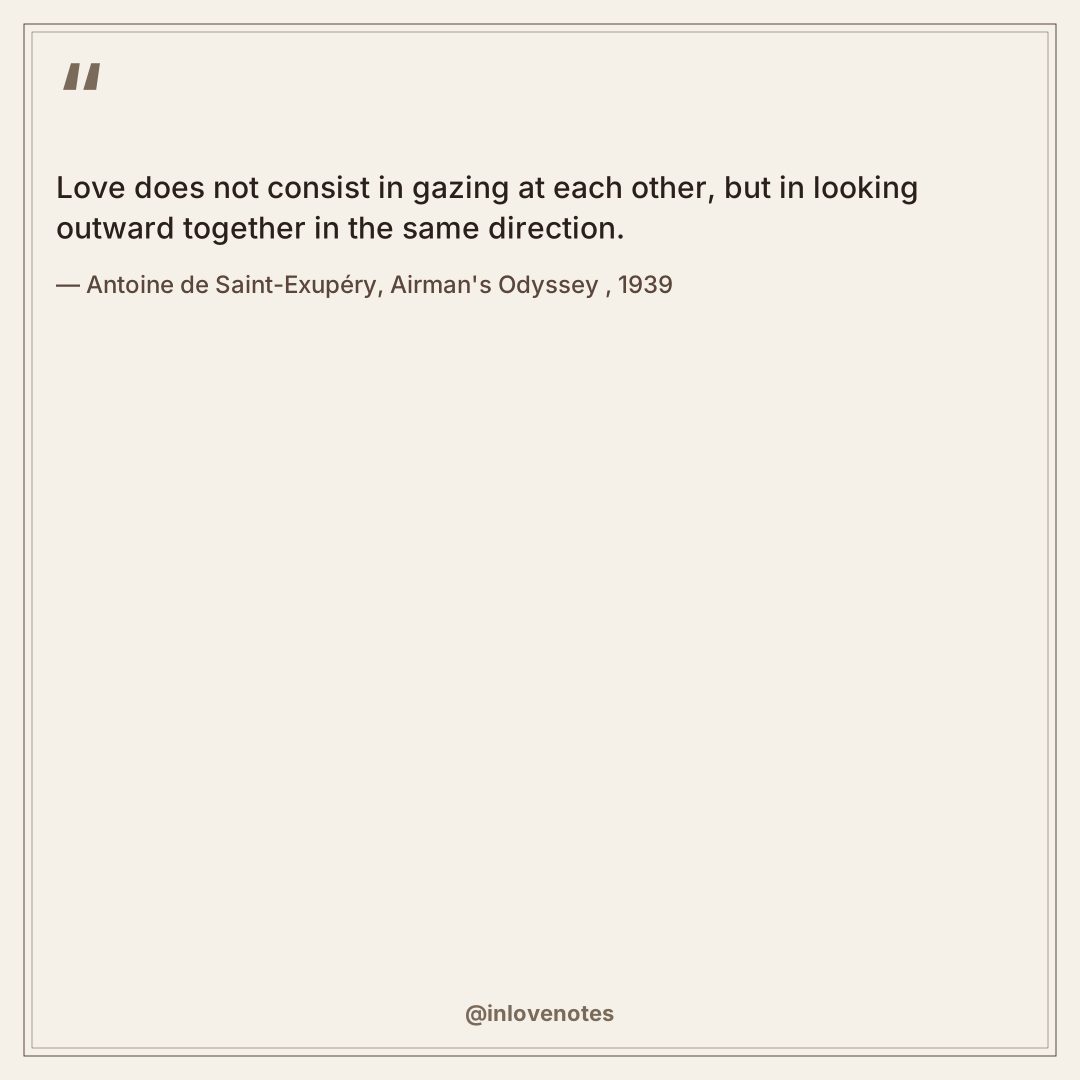
"Love does not consist in gazing at each other, but in looking outward together in the same direction." — Antoine de Saint-Exupéry, Airman's Odyssey, 1939
The pioneering French aviator drew this conclusion from his experiences flying mail routes across the Sahara, realizing that true partnership requires a shared horizon rather than constant mutual scrutiny.
Questions Readers Send In
How do I choose the right quote for a wedding anniversary?
Match the sentiment to the specific decade of your marriage. A first anniversary aligns well with the breathless poetry of Brontë or Dickens, while a twentieth anniversary benefits from the grounded, structural realism of de Bernières or Saint-Exupéry.
Are these historical quotes appropriate for modern vows?
Yes, provided you weave them naturally into your own contemporary language. Taking a single line from George Eliot and expanding upon it with details from your own relationship prevents the ceremony from sounding like an academic literature lecture.
Why do so many classic authors focus on the pain of romance?
Conflict drives narrative momentum. Novelists like Tolstoy and Dickens understood that a perfectly peaceful relationship offers very little dramatic tension, so they frequently explored devotion through the lens of immense external obstacles and internal suffering.
Returning to Victor Hugo's assertion that loving another reveals the divine, we see this truth reflected across every stage of the timeline. Whether navigating the blinding sun of a Russian ice rink or looking outward together toward a shared horizon, these writers prove that our most profound human connections remain our most reliable anchors.