a note on
Italians on Existence: 12 Quotes from Renaissance Texts to Modern Cinema
Centuries of Mediterranean philosophy reveal a pragmatic approach to hardship and joy, tracing a clear lineage from classical essays to modern film.
penned by Erdi Dogan

People often assume Italian philosophy is entirely wrapped up in hedonism. The popular caricature suggests a nation exclusively occupied by long lunches under olive trees, endless carafes of table wine, and a carefree dismissal of reality's harder edges. That picturesque fantasy ignores the deep vein of stoicism running through the culture's history. This collection follows a chronological arc, tracing how Italian perspectives on life evolved from the stern realism of the early republics through the unified nation's literary boom, landing finally in the gritty resilience of modern cinema. I first noticed this tension watching my stepmother in a second-floor walkup in Queens, New York, 2017, as she casually referenced Leopardi while scrubbing a scorched espresso pot. She understood that enduring joy requires a firm grasp on harsh realities.
Early Renaissance Realism (1300s–1500s)
The dawn of the Renaissance demanded acute political and social awareness from its citizens. Scholars and diplomats navigating the treacherous waters of city-state politics rarely had time for idle romanticism, focusing instead on practical survival and moral fortitude. This pragmatism shaped their worldview entirely. While modern readers might seek out humorous observations about courtship, the writers of this era were primarily concerned with the mechanics of power, the fleeting nature of time, and the baseline requirements for a dignified existence.
"It is not titles that honor men, but men that honor titles." — Niccolò Machiavelli, Discourses on Livy, 1531
Machiavelli wrote this political treatise to emphasize civic virtue over inherited nobility, arguing that a person's actions dictate their true worth in society.
"Five great enemies to peace inhabit with us: namely, avarice, ambition, envy, anger, and pride." — Francesco Petrarch, Letters on Familiar Matters, 1350
Petrarch spent much of his life traveling across Europe, and his vast correspondence often detailed the internal psychological battles that destroy human contentment.
"To have compassion for those who suffer is a human quality." — Giovanni Boccaccio, The Decameron, 1353
Opening his masterpiece with this simple truth, Boccaccio set a tone of profound empathy for a society attempting to rebuild itself following the devastation of the Black Death.
"As a well-spent day brings happy sleep, so a life well spent brings happy death." — Leonardo da Vinci, Notebooks, 1518
The polymath recorded this reflection toward the end of his life, linking daily diligent effort directly to ultimate spiritual peace.
The Risorgimento and Literary Awakening (1800s–Early 1900s)
As the peninsula fought for unification, a new wave of writers turned their attention to the struggles of the common individual. The grand political treatises gave way to intimate novels and poetry that examined rural poverty, existential dread, and the quiet dignity of enduring difficult circumstances. When readers today look for brief romantic phrases from Naples, they are often tapping into the emotional reservoir built during this turbulent transitional period. The literature from this era reflects a nation trying to define its collective soul.
"Patience is the most heroic of the virtues, precisely because it lacks all appearance of heroism." — Giacomo Leopardi, Zibaldone, 1823
Leopardi, plagued by chronic illness and isolation, filled his philosophical diary with observations on how quietly bearing suffering constitutes the highest form of bravery.
"One of the greatest consolations of this life is friendship." — Alessandro Manzoni, The Betrothed, 1827
In his definitive historical novel, Manzoni highlighted human connection as the primary defense against systemic injustice and historical upheaval.
"Life is full of strange absurdities, which, strangely enough, do not even need to appear plausible." — Luigi Pirandello, Six Characters in Search of an Author, 1921
The Nobel laureate used his groundbreaking theatrical work to dismantle the illusion of objective truth, suggesting that lived reality is often more bizarre than fiction.
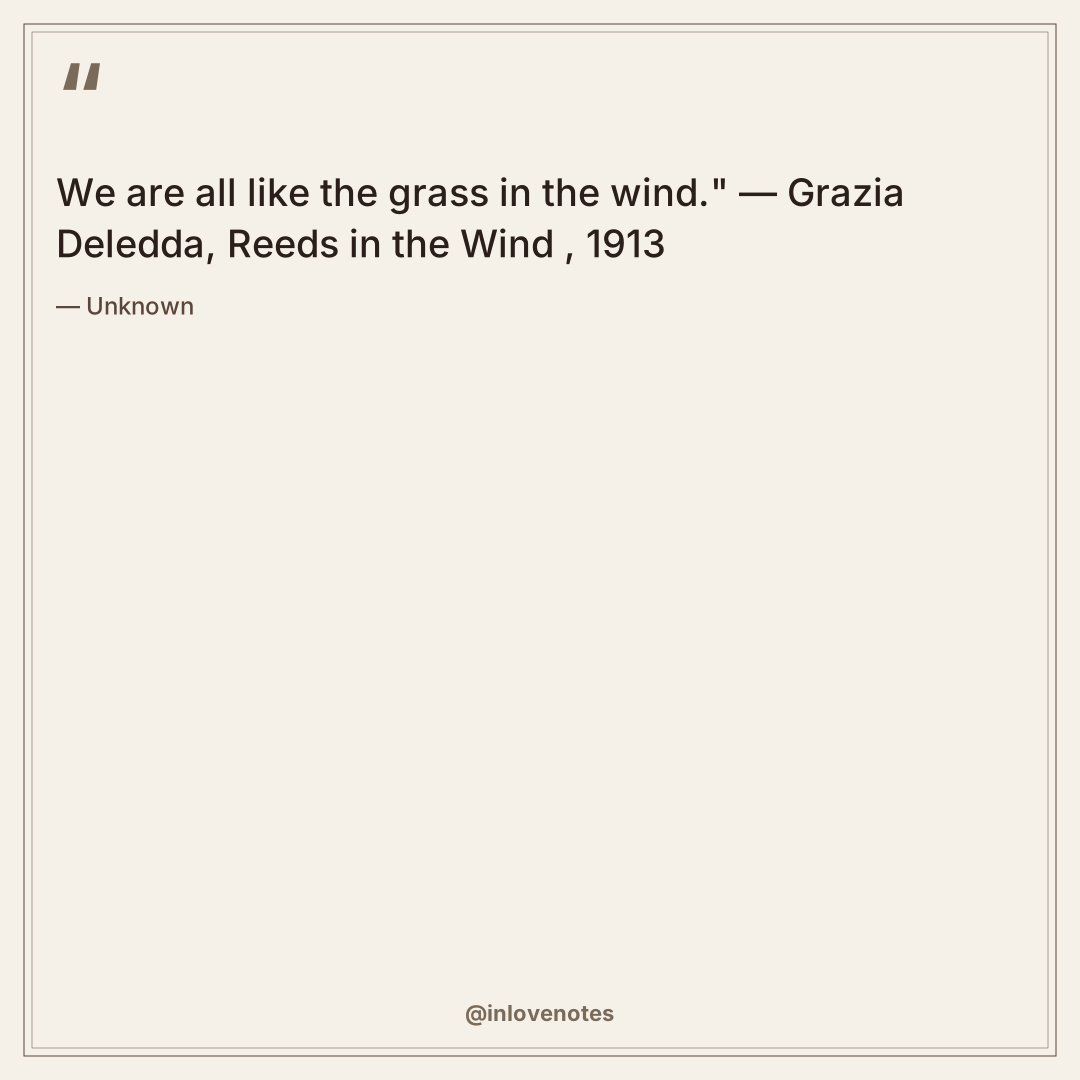
"We are all like the grass in the wind." — Grazia Deledda, Reeds in the Wind, 1913
Drawing on the harsh, beautiful landscapes of her native Sardinia, Deledda captured the vulnerability of human beings bending to the forces of fate.
Post-War Arts and Modern Reflection (1940s–Present)
Following the devastation of the Second World War, Italian cinema and literature exploded with a raw, unfiltered look at contemporary existence. Directors and novelists stripped away the remaining romantic illusions to examine alienation, urban decay, and the complex nature of modern relationships. Unlike the vows spoken during contemporary weddings, which lean toward optimism, mid-century art embraced ambiguity. These creators sought a new vocabulary for a fractured world, producing works that remain starkly relevant today.
"You have to live spherically—in many directions." — Federico Fellini, Fellini on Fellini, 1976
The legendary director rejected linear narratives both in his films and in his personal philosophy, advocating for a life open to chaotic, multidimensional experiences.
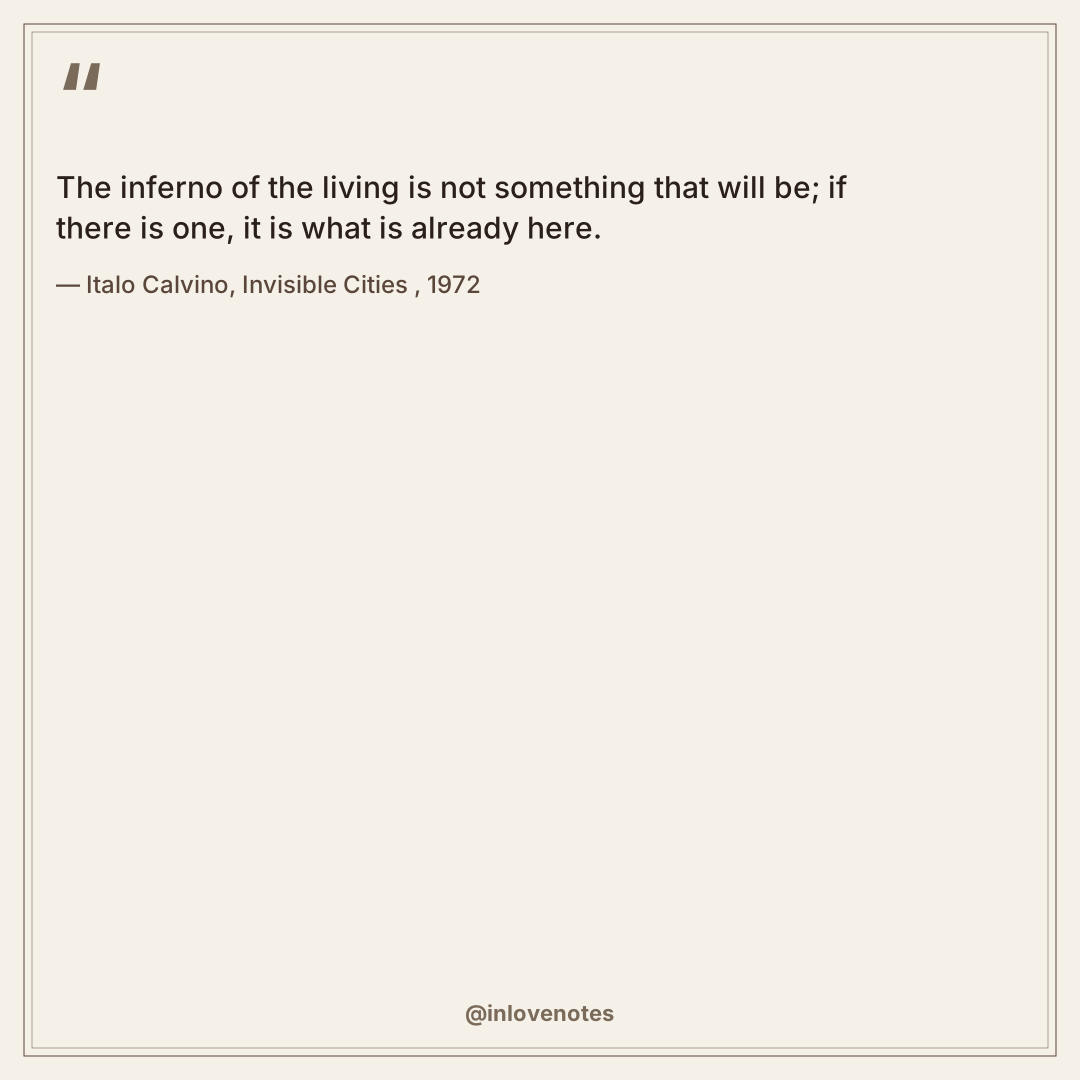
"The inferno of the living is not something that will be; if there is one, it is what is already here." — Italo Calvino, Invisible Cities, 1972
Calvino used the fictionalized travels of Marco Polo to describe the psychological hellscapes we construct in our modern, disconnected urban environments.
"There is a fountain of youth: it is your mind, your talents, the creativity you bring to your life." — Sophia Loren, Women and Beauty, 1984
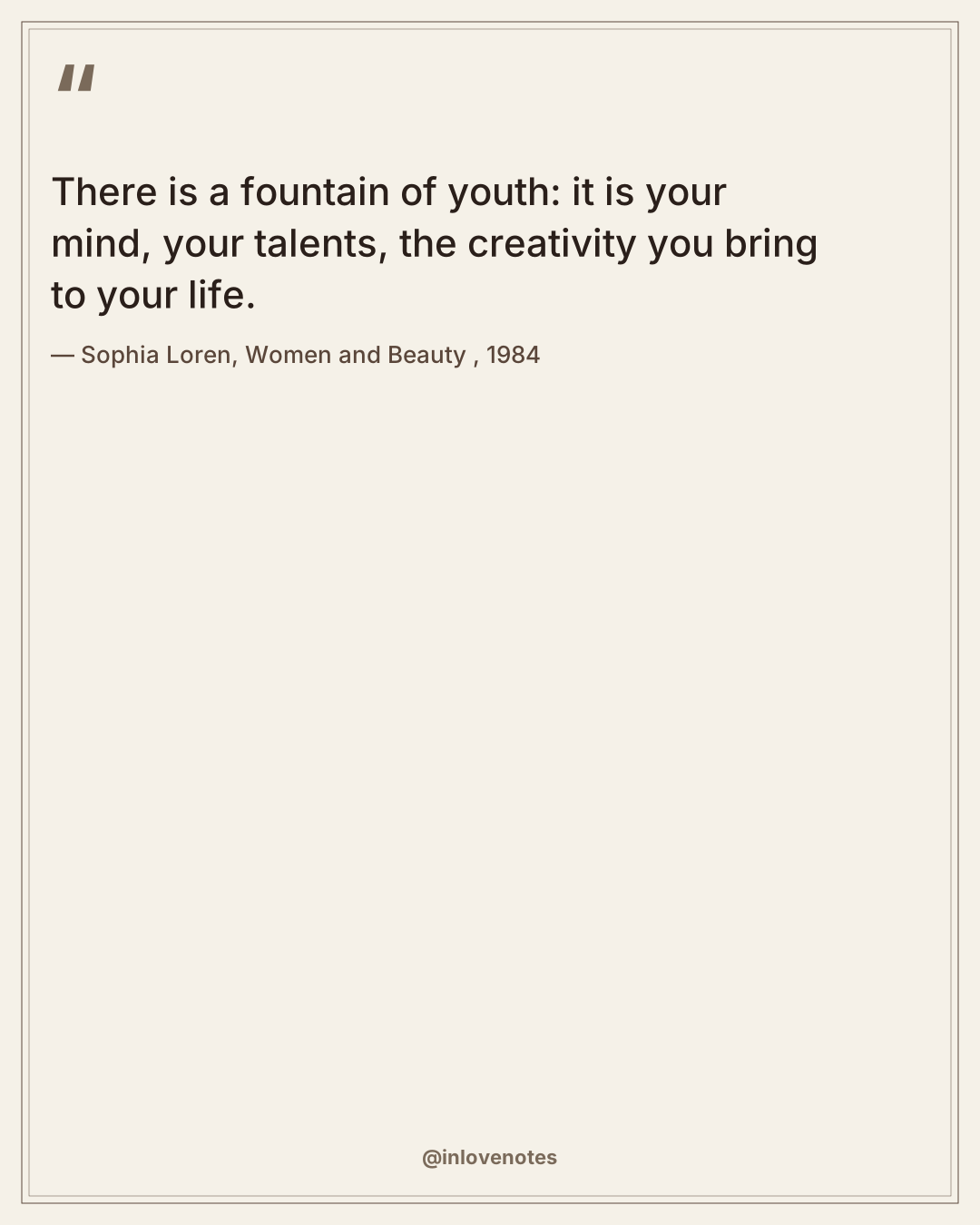
Reflecting on decades in the international spotlight, the iconic actress dismissed superficial anti-aging metrics in favor of continuous intellectual engagement.
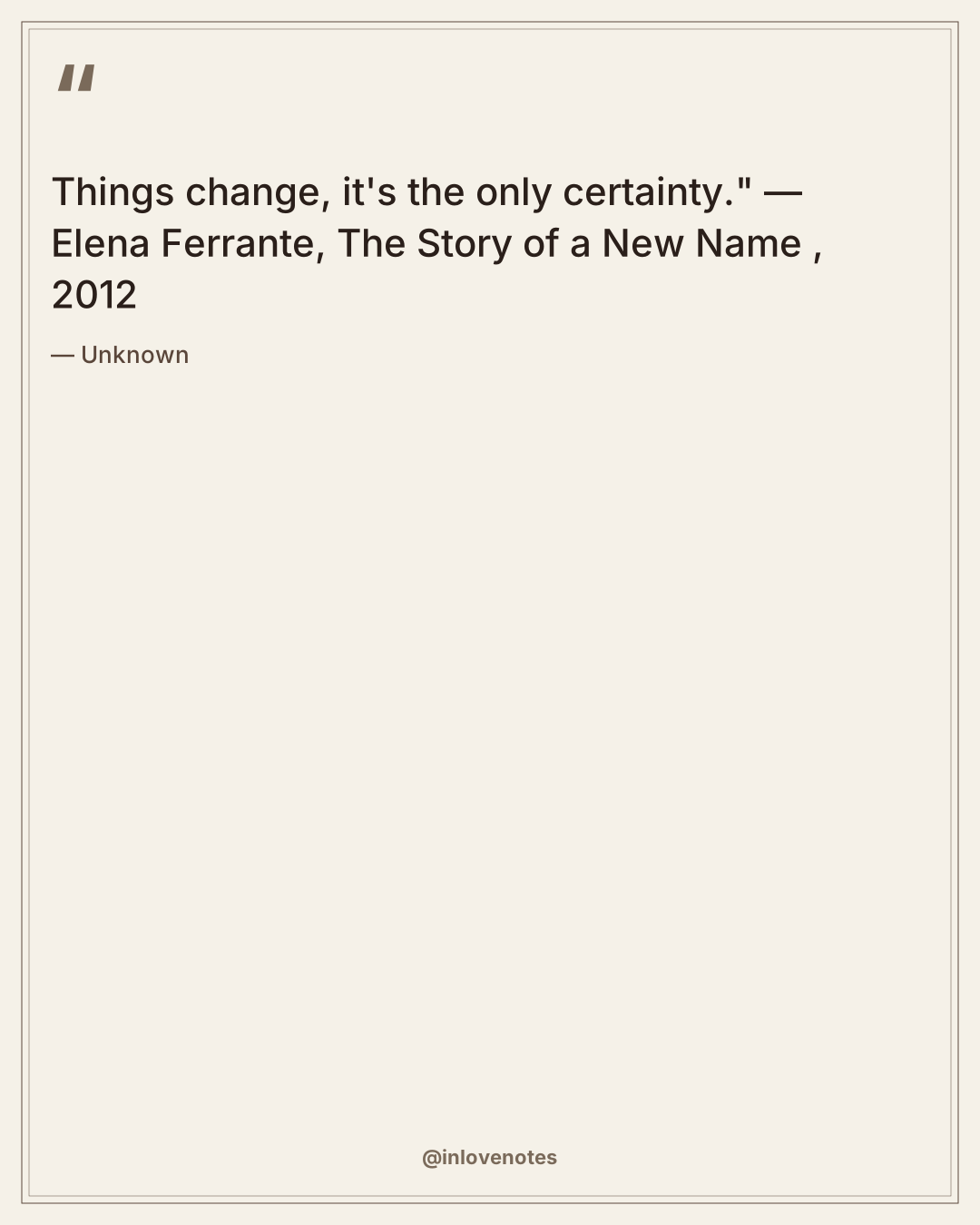
"Things change, it's the only certainty." — Elena Ferrante, The Story of a New Name, 2012
Through her brutal and brilliant Neapolitan novels, Ferrante anchors her characters' volatile lives in the unavoidable truth of constant transformation.
Tracing these thoughts across centuries reveals a culture that refuses to look away from the darkness, yet still manages to find light in the endurance of the human spirit. The words do not offer easy comforts or magical solutions to the grind of daily survival. They instead provide a sturdy framework for standing upright when the ground shifts, reminding us that generations before have navigated the same unpredictable storms. Reading them offers a quiet solidarity.
Key Takeaways
- Renaissance thinkers prioritized civic duty and practical virtue over abstract romantic ideals.
- Nineteenth-century writers viewed quiet patience and steadfast friendship as the ultimate defenses against historical turmoil.
- Modern Italian artists frequently embrace absurdity and non-linear living as necessary responses to a chaotic world.
- Across all eras, the culture's literary voices maintain a profound skepticism of superficial appearances.