a note on
How Has Devotion Evolved in Literature? 6 Quotes on Love
Tracing how authors describe affection reveals a chronological shift from sweeping Victorian declarations to the quiet realism of modern literature.
penned by Erdi Dogan

Tracing how writers document affection reveals a distinct chronological shift from grand romantic declarations to grounded realism. Sitting with my aunt in a second-floor walkup in Queens, New York, 1982, I watched her trace the fading ink of old letters stored in a shoebox. She understood that language changes across decades. The phrasing we use to describe our attachments mirrors the specific anxieties and hopes of the era we happen to occupy. We will track this literary progression through three distinct historical eras.
The Early Romantics and Grand Declarations
The Romantics dreamed big. Writers like Emily Brontë viewed deep connection as an inescapable fusion of two completely distinct identities fighting for space on the harsh Yorkshire moors.
"Whatever our souls are made of, his and mine are the same." — Emily Brontë, Wuthering Heights, 1847
Brontë assigns a nearly supernatural permanence to Catherine and Heathcliff's bond.
Related — a broader look at this philosophy is found in how Italian thinkers handled existential romance.
Victor Hugo preferred to frame this emotion as the ultimate justification for human existence itself. His massive narratives frequently pause to elevate human connection above politics or poverty.
"To love or have loved, that is enough. Ask nothing further." — Victor Hugo, Les Misérables, 1862
Hugo inserts this sweeping declaration directly into the grueling political landscape of nineteenth-century France.
A longer take on this lives in our archives covering profound historical letters.
The Modernists and Quiet Realism
The twentieth century brought brutal wars. Authors shifted their focus away from sweeping cosmic destinies toward mutual survival and the harsh psychological realities of maintaining intimacy during a global crisis.
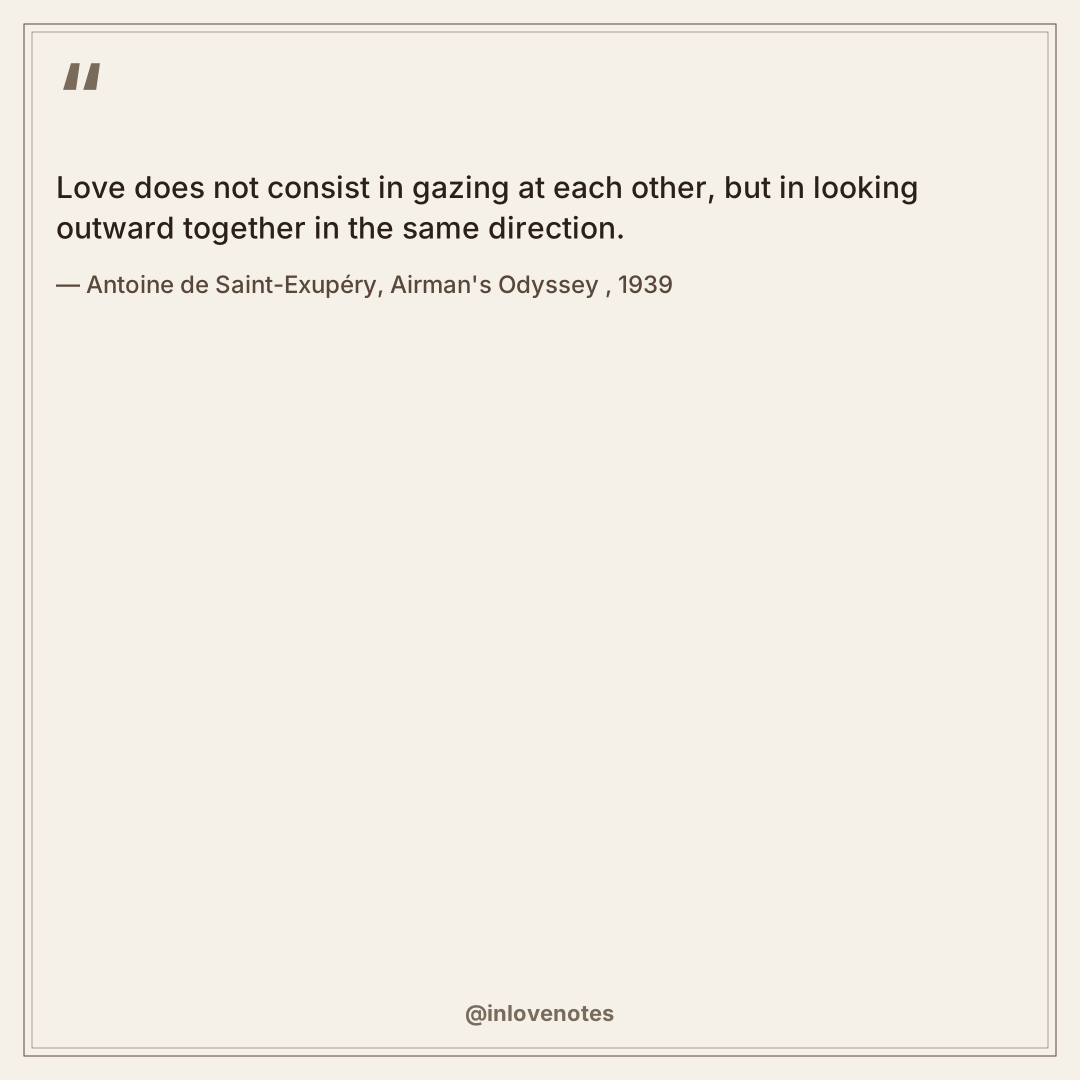
"Love does not consist in gazing at each other, but in looking outward together in the same direction." — Antoine de Saint-Exupéry, Airman's Odyssey, 1939
Writing on the brink of global conflict, Saint-Exupéry grounds romance in shared purpose rather than mere infatuation.
For the counterpoint, read how humorists puncture the seriousness of devotion.
Later in the century, activists and essayists began examining the emotional armor required to survive in an unequal society. James Baldwin articulated the terrifying vulnerability required to truly connect with another person.
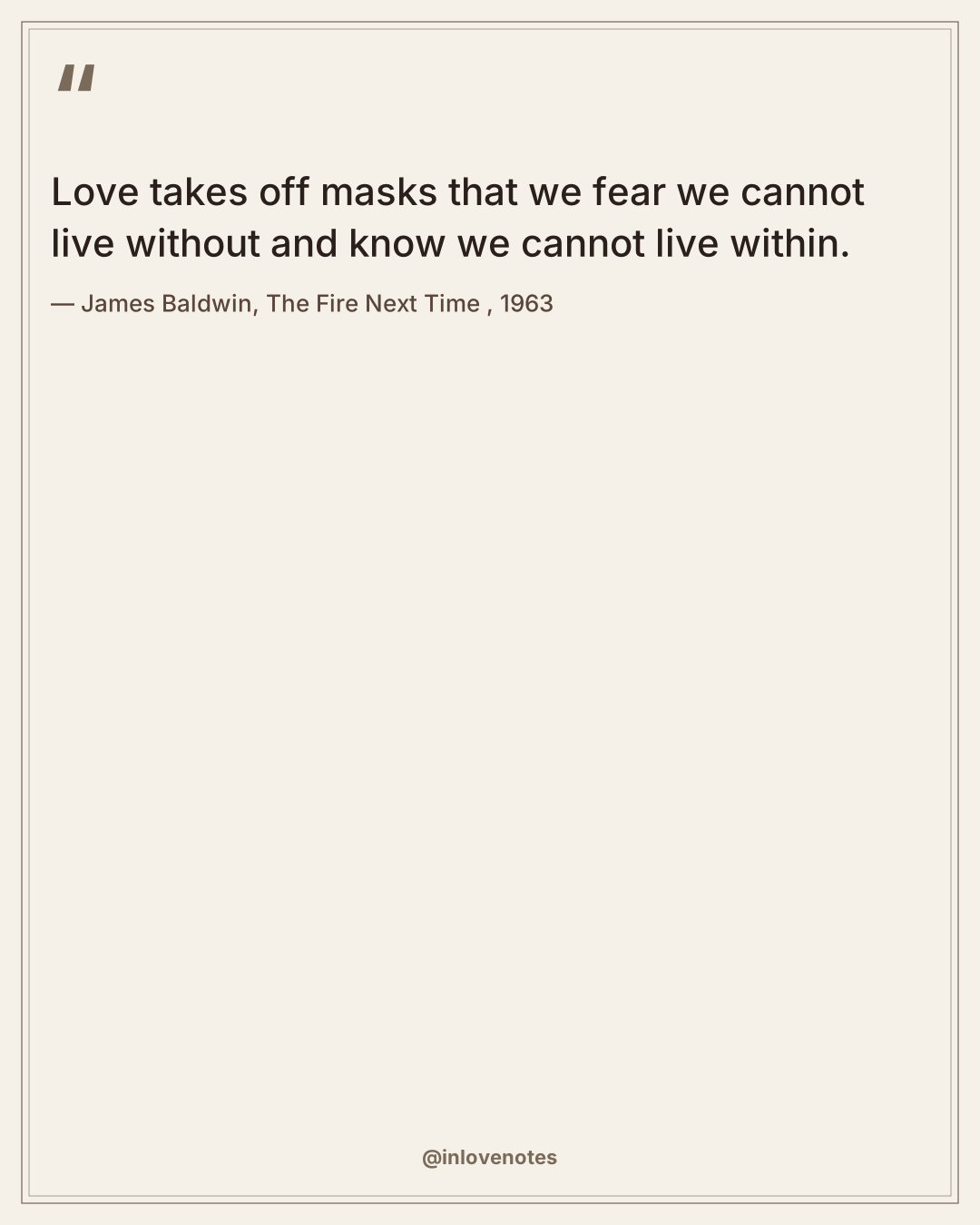
"Love takes off masks that we fear we cannot live without and know we cannot live within." — James Baldwin, The Fire Next Time, 1963
Baldwin demands rigorous honesty from his readers during the height of the American civil rights movement.
This gets argued with in scriptural perspectives on valuing yourself first.
Contemporary Voices on Daily Partnership
Grief occupies the center now. Modern literature often treats intimacy as a fragile, ongoing negotiation rather than a fixed, permanent destiny handed down by some benevolent universe looking out for us.
"A single person is missing for you, and the whole world is empty." — Joan Didion, The Year of Magical Thinking, 2005
Didion captures the absolute devastation of losing her husband John Gregory Dunne after forty years of marriage.
Further reading on this vulnerability resides in collections that explore emotional endurance.
Haruki Murakami approaches connection through the lens of psychological fragmentation and existential longing. His characters rarely experience simple joy.
"Anyone who falls in love is searching for the missing pieces of themselves." — Haruki Murakami, Kafka on the Shore, 2002
Murakami suggests that romance is fundamentally a quest for internal completion rather than external validation.
Additional context on internal stability sits in modern reflections on personal worth.
Common Questions, Straight Answers
Why do nineteenth-century authors sound so dramatic?
Victorian literature emerged during the Romantic movement, which actively rejected Enlightenment rationalism. Writers prioritized intense, overwhelming emotion as the highest possible form of human experience.
Did modernists abandon romance entirely?
They stripped away the supernatural elements to focus on practical partnership. Two devastating world wars forced authors to view affection as a mechanism for mutual survival.
How does contemporary literature handle devotion?
Modern writers focus heavily on the intersection of intimacy, grief, and personal identity. Contemporary narratives treat partnership as a daily choice requiring constant maintenance rather than a cosmic decree.