a note on
12 A Father's Love Bible Study Quotes for Group Leaders
The tension between unconditional grace and structural discipline forms the core of biblical fatherhood.
penned by Erdi Dogan

The Architecture of Biblical Paternal Discipline
Modern interpretations of scripture often reduce paternal affection to mere sentimentality, stripping away the robust architecture of discipline that anchors ancient texts. We tend to read ancient promises through a contemporary lens of unconditional affirmation. This reading obscures the reality that biblical fatherhood was primarily concerned with moral formation and generational survival rather than momentary emotional validation. I first understood this distinction watching my uncle at a folding table in a church basement in Grand Rapids, Michigan, 1993, as he methodically diagrammed the prodigal son's return. He drew harsh, jagged lines to represent the son's rebellion, contrasting them with the sturdy, immovable foundation of the father's estate. The father in that parable did not chase his son into the famine; he waited at the boundary of the property, maintaining the structure of the household until the boy was ready to return. A closer examination of biblical depictions of paternal care reveals a fierce commitment to instruction that often required temporary discomfort for the sake of long-term character development.
Discipline in these ancient texts functions not as a punitive measure, but as a protective boundary. The writers of the wisdom literature understood that a world without structure is inherently dangerous for a developing mind. When we explore our inherent need for stable foundations, we see that the ancient biblical model demanded active intervention. A father's love was measured by his willingness to correct, to guide, and to sometimes stand in direct opposition to his child's immediate desires. The friction between a child's will and a father's instruction was viewed as the forge where wisdom was manufactured. This tension also surfaces in the lasting weight of paternal affection.
Grace as an Active, Corrective Force
There is a distinct difference between passive tolerance and active grace within the scriptural narrative. Passive tolerance ignores the flaw, while active grace addresses the fracture to ensure structural integrity. Ancient readers would have found the modern concept of a hands-off, endlessly accommodating father figure entirely alien. In the agrarian societies of the ancient Near East, a father's failure to train a child could result in literal starvation for the family unit in subsequent years. Thus, love was inextricably linked to rigorous preparation for an unforgiving world. We see echoes of this demanding love in the quiet strength required of parents across all biblical narratives.
When group leaders facilitate discussions on these passages, the focus must shift from how the verses make us feel to what they demand of us. The text requires a fundamental reorientation of how we define love itself. It is a love that builds fortresses rather than soft beds. For those leading discussions, having access to scriptural passages that steady the weary can provide a necessary anchor when the conversation veers into difficult territory regarding discipline and boundaries.
12 Verses and Quotes for Deep Study
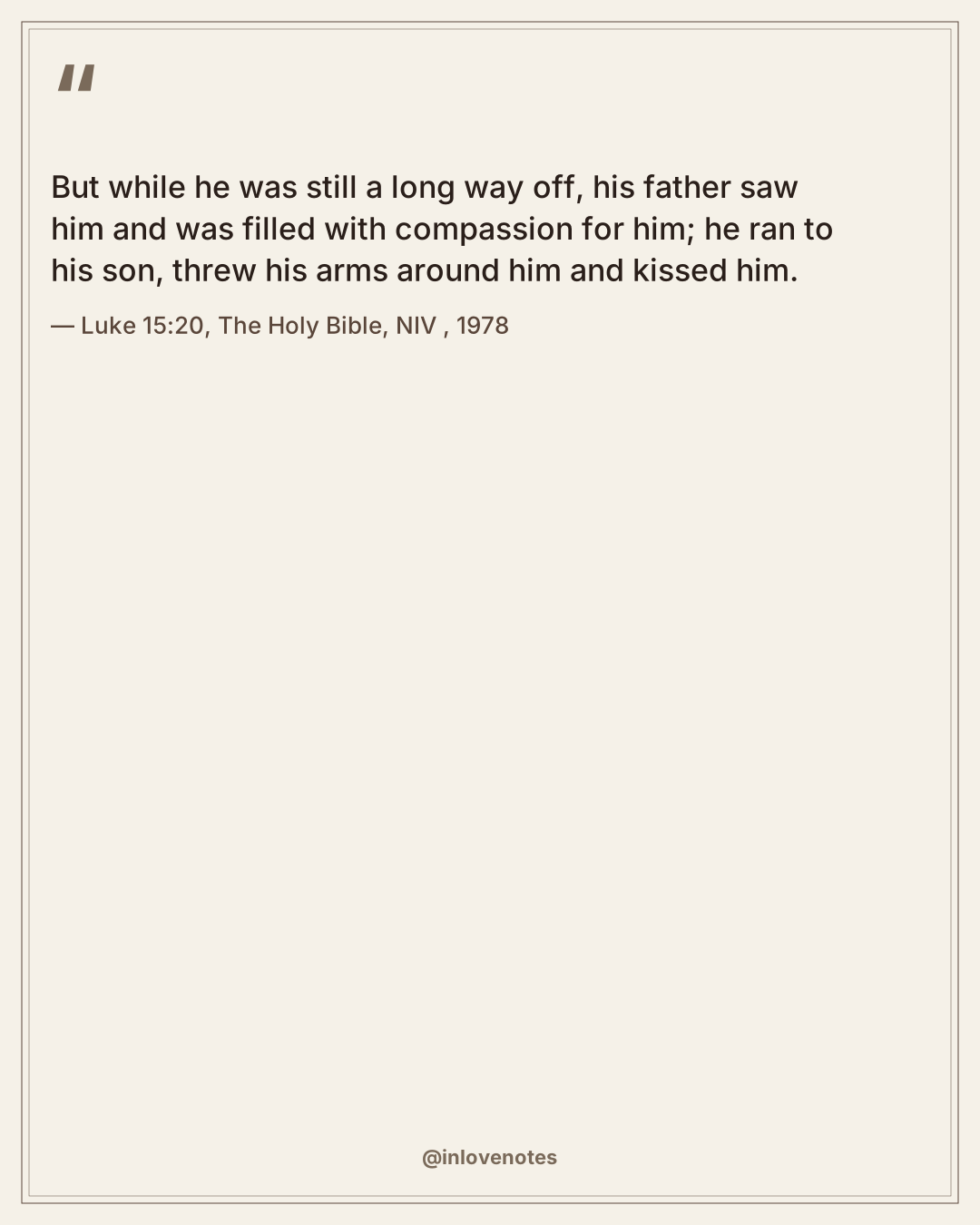
"He will turn the hearts of the fathers to their children, and the hearts of the children to their fathers." — Malachi 4:6, The Holy Bible, ESV, 2001
This concluding prophecy of the Old Testament frames generational reconciliation as the ultimate marker of divine restoration.
"The Lord disciplines the one he loves, and he chastens everyone he accepts as his son." — Hebrews 12:6, The Holy Bible, NIV, 1978
The author of Hebrews links divine acceptance directly to the willingness to endure difficult, formative correction.
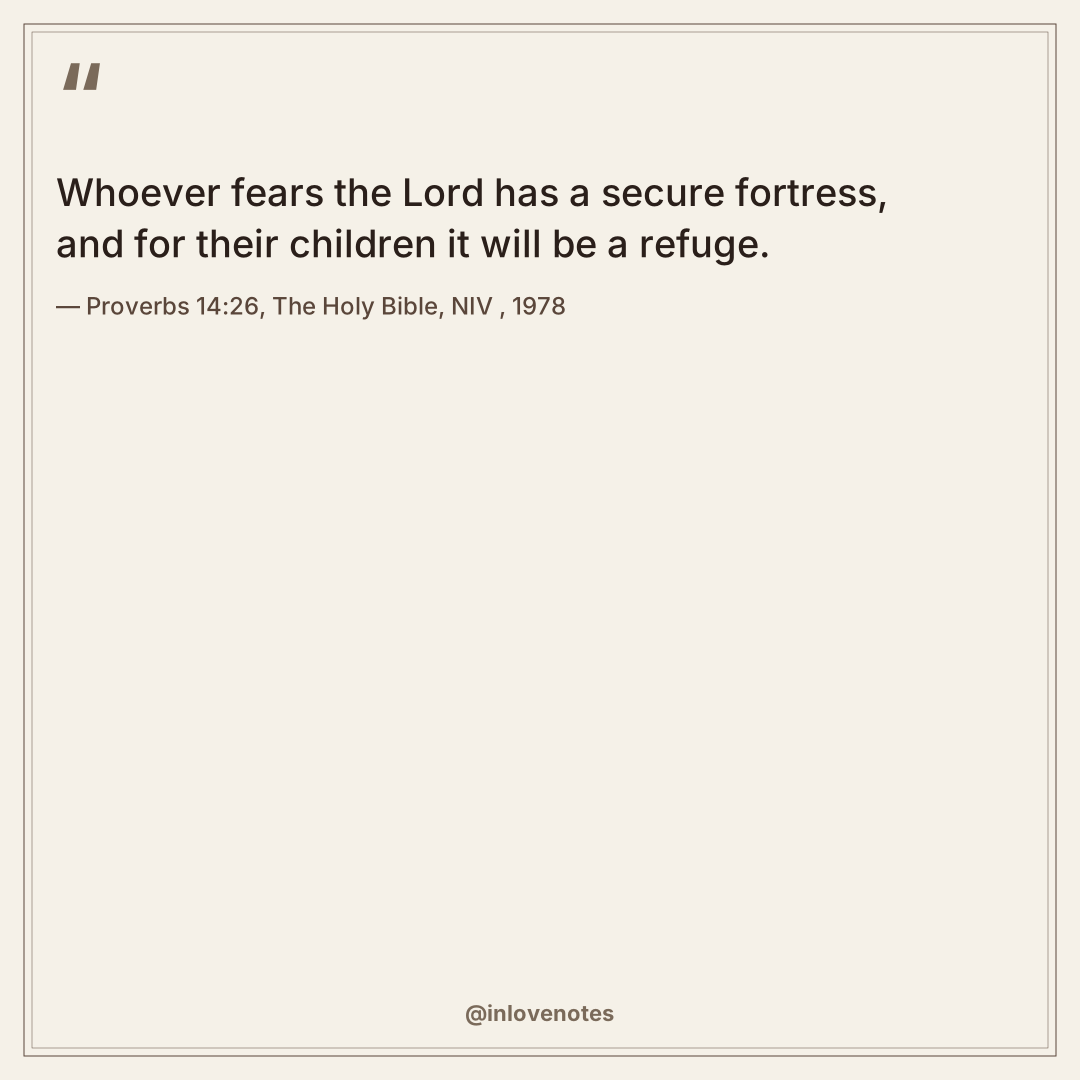
"Whoever fears the Lord has a secure fortress, and for their children it will be a refuge." — Proverbs 14:26, The Holy Bible, NIV, 1978
Solomon establishes that a parent's reverence for the divine creates a tangible, protective perimeter around their descendants.
"A good man leaves an inheritance to his children's children." — Proverbs 13:22, The Holy Bible, NKJV, 1982
This proverb expands the timeline of paternal responsibility far beyond a single generation, demanding a multi-generational vision.
"I will be a father to him, and he shall be a son to me. When he commits iniquity, I will discipline him with the rod of men." — 2 Samuel 7:14, The Holy Bible, ESV, 2001
The Davidic covenant explicitly pairs the promise of enduring relationship with the certainty of earthly consequence.
"Endure hardship as discipline; God is treating you as his children. For what children are not disciplined by their father?" — Hebrews 12:7, The Holy Bible, NIV, 1978
This rhetorical question forces the reader to accept that a lack of discipline is actually evidence of parental neglect.
"Which of you, if your son asks for bread, will give him a stone?" — Matthew 7:9, The Holy Bible, NIV, 1978
Christ uses the baseline of human paternal provision to argue for the overwhelming generosity of the divine.
"Children's children are a crown to the aged, and parents are the pride of their children." — Proverbs 17:6, The Holy Bible, NIV, 1978
The wisdom literature beautifully illustrates the reciprocal honor that exists within a well-ordered, disciplined family structure.
"Yet you, Lord, are our Father. We are the clay, you are the potter; we are all the work of your hand." — Isaiah 64:8, The Holy Bible, NIV, 1978
Isaiah utilizes the metaphor of the potter to emphasize that the father's role is to mold, press, and shape the raw material of a life.
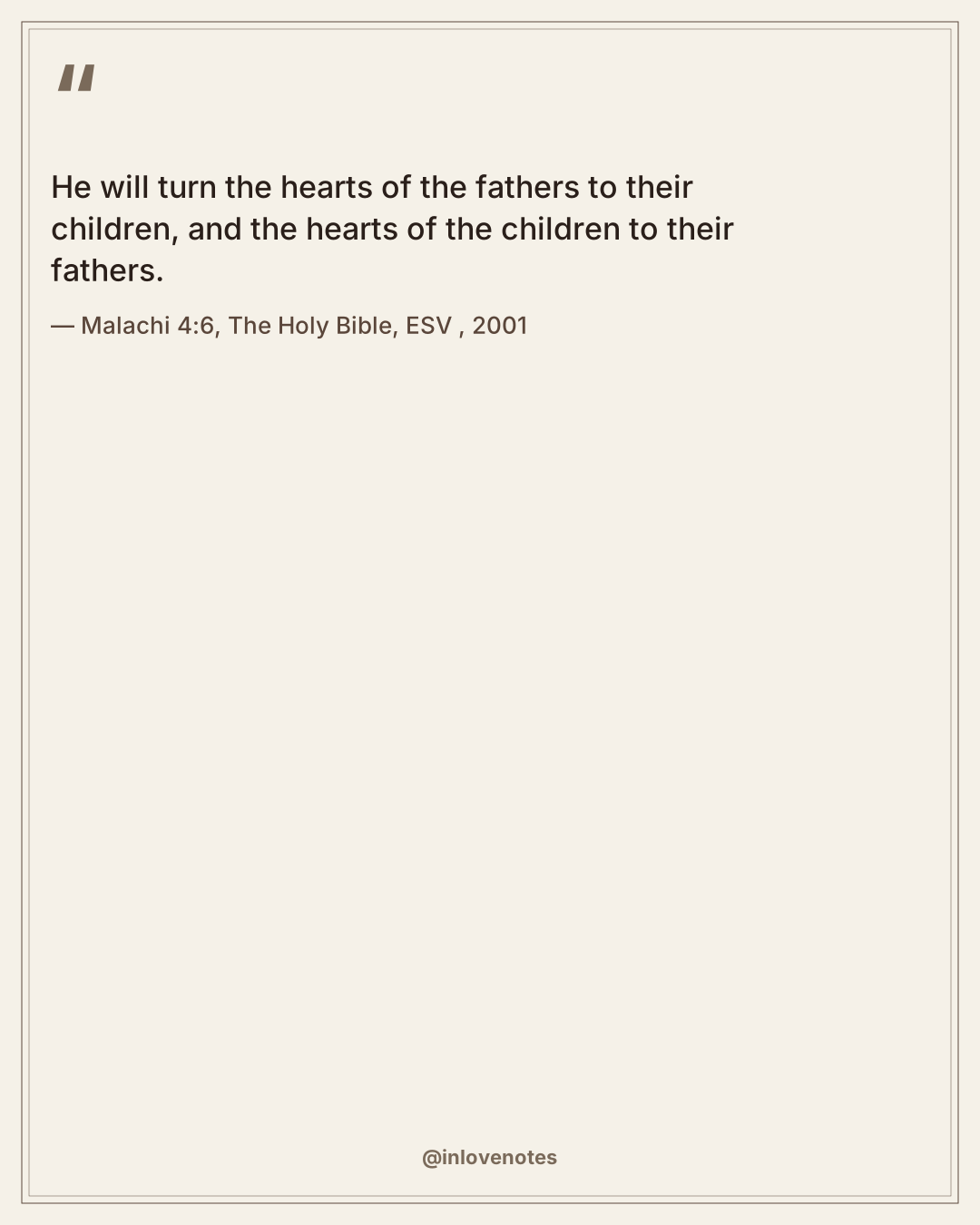
"But while he was still a long way off, his father saw him and was filled with compassion for him; he ran to his son, threw his arms around him and kissed him." — Luke 15:20, The Holy Bible, NIV, 1978
The prodigal's father maintains the boundaries of the estate but breaks all cultural protocols of dignity by running to welcome the repentant son.
"See what great love the Father has lavished on us, that we should be called children of God!" — 1 John 3:1, The Holy Bible, NIV, 1978
John marvels at the legal and relational reality of adoption into a divine lineage despite human failure.
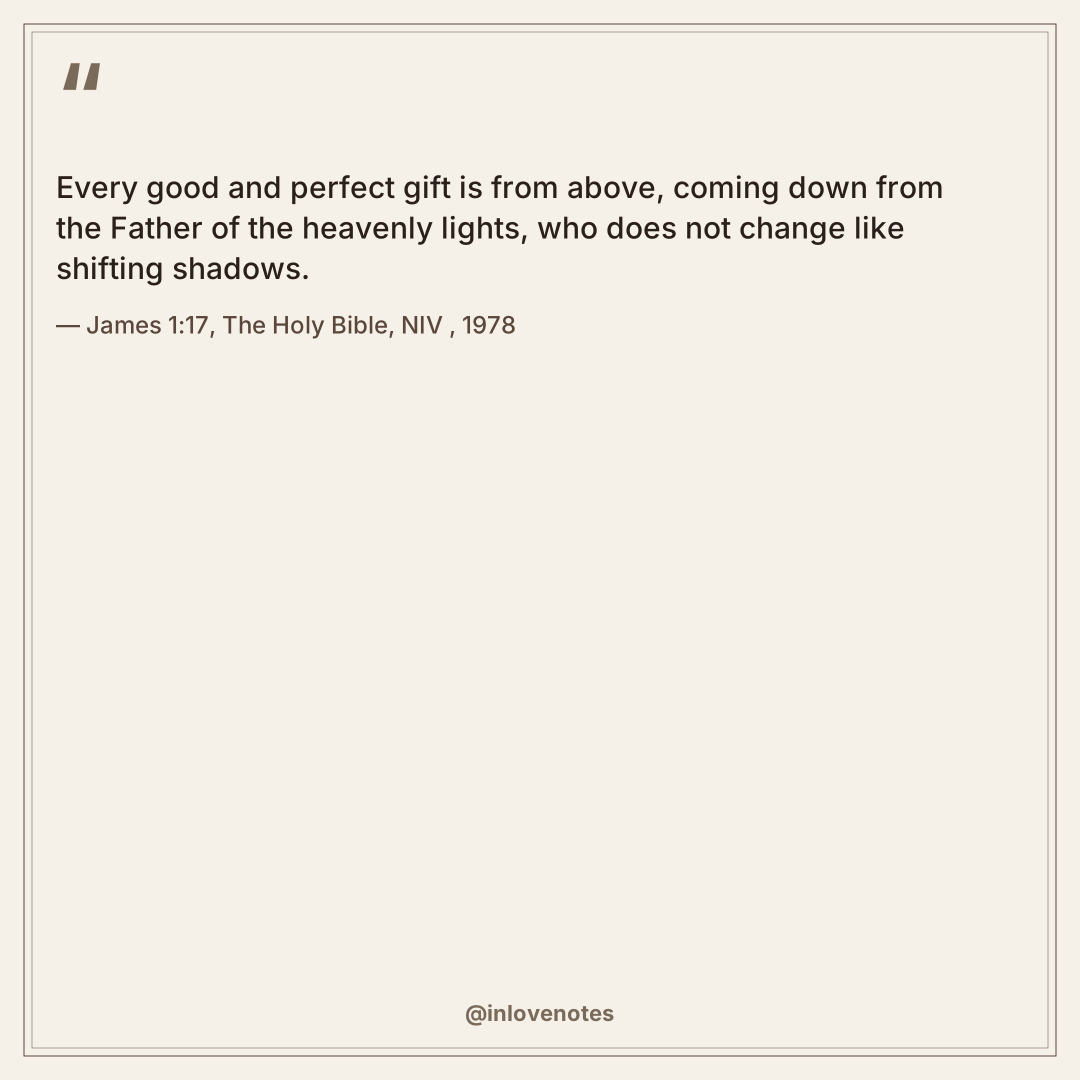
"Every good and perfect gift is from above, coming down from the Father of the heavenly lights, who does not change like shifting shadows." — James 1:17, The Holy Bible, NIV, 1978
James contrasts the unpredictable nature of human circumstances with the absolute reliability of divine paternal provision.
Notes for the Fridge
- Biblical fatherhood prioritizes moral formation over temporary emotional comfort.
- Discipline in scripture is depicted as a protective boundary, not a punitive weapon.
- The ancient text views a lack of correction as evidence of neglect, not tolerance.
- Generational stability requires a father to hold firm boundaries while remaining ready to forgive.
- True grace actively addresses failure rather than passively ignoring it.