a note on
How Cute Love Notes for a Girlfriend Became Quiet Rebellion
The impulse to leave a folded piece of paper on a kitchen counter reveals a deep psychological need for tangible affection in a screen-dominated world.
penned by Erdi Dogan

What compels a person to hunt down a working pen at 6:00 AM just to leave a scribbled thought on the coffee maker? Why does a physical scrap of paper carry more emotional weight than a perfectly timed text message? The answer lies in the friction of the act itself. I first noticed this phenomenon while helping my older sister move out of a cramped apartment in Wicker Park, Chicago, back in 2014. She kept a shoebox entirely filled with grocery receipts and torn envelopes, each bearing a single rushed sentence from her partner. A text vanishes into the scroll of daily logistics, but a physical note demands physical space. Writing by hand requires deliberate pause. You have to find the paper, uncap the pen, and commit to the permanence of the ink.
The Tangible Weight of Sudden Affection
Leaving romantic love messages on a bathroom mirror disrupts the sterile routine of a standard weekday morning. The physical note serves as a localized interruption of the mundane. It proves that someone was thinking about you in a specific room at a specific time, anchoring the sentiment in the physical world rather than the digital cloud. This localized affection creates a private geography within a shared living space, turning a mundane hallway table into a site of sudden emotional resonance.
"You are my heart, my life, my one and only thought." — Arthur Conan Doyle, The White Company, 1891
Doyle embedded this fierce declaration of singular focus within his historical adventure novel, proving romance thrives in unexpected genres.
"I seem to have loved you in numberless forms, numberless times, in life after life, in age after age forever." — Rabindranath Tagore, Unending Love, 1890
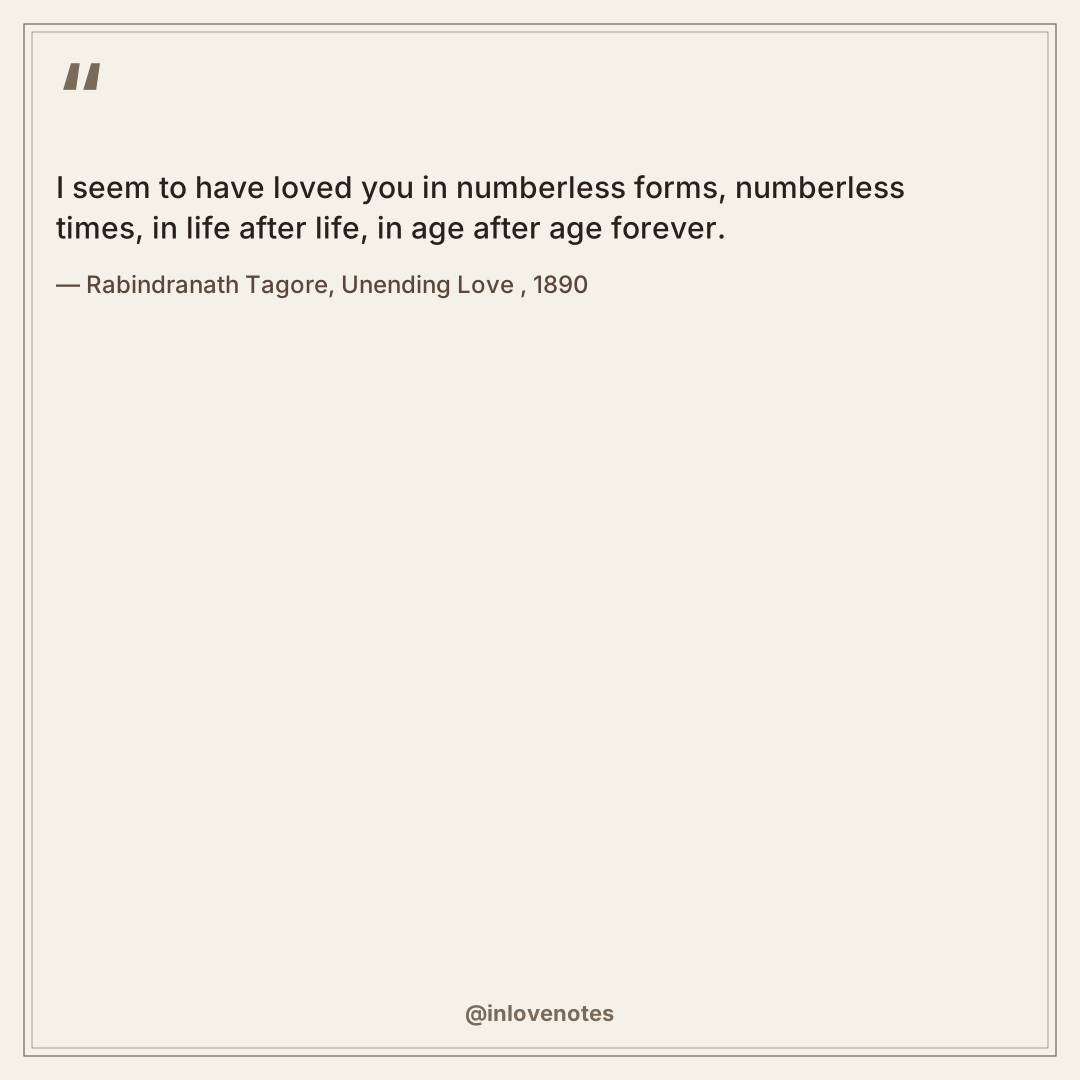
Tagore captures the dizzying scale of devotion that often feels too large to fit on a standard paper square, yet perfectly frames the intensity of early romance.
The strength of these small gestures lies in their unexpected arrival. Finding a note tucked into a laptop keyboard shifts the recipient's entire psychological posture for the afternoon. It requires no immediate response, stripping away the conversational obligation inherent in digital messaging. The sender simply offers a thought and walks away, leaving the paper to do the heavy lifting of connection.
When Grand Declarations Overwhelm the Moment
Attempting to compress sweeping philosophical treatises into a lunchbox note often creates unintended emotional pressure. The medium of a sticky note inherently demands brevity. When writers try to force deep love messages into spaces meant for lighthearted affection, the resulting friction can make the gesture feel performative rather than genuine. A heavy declaration left on a steering wheel before a stressful commute might induce anxiety rather than comfort.
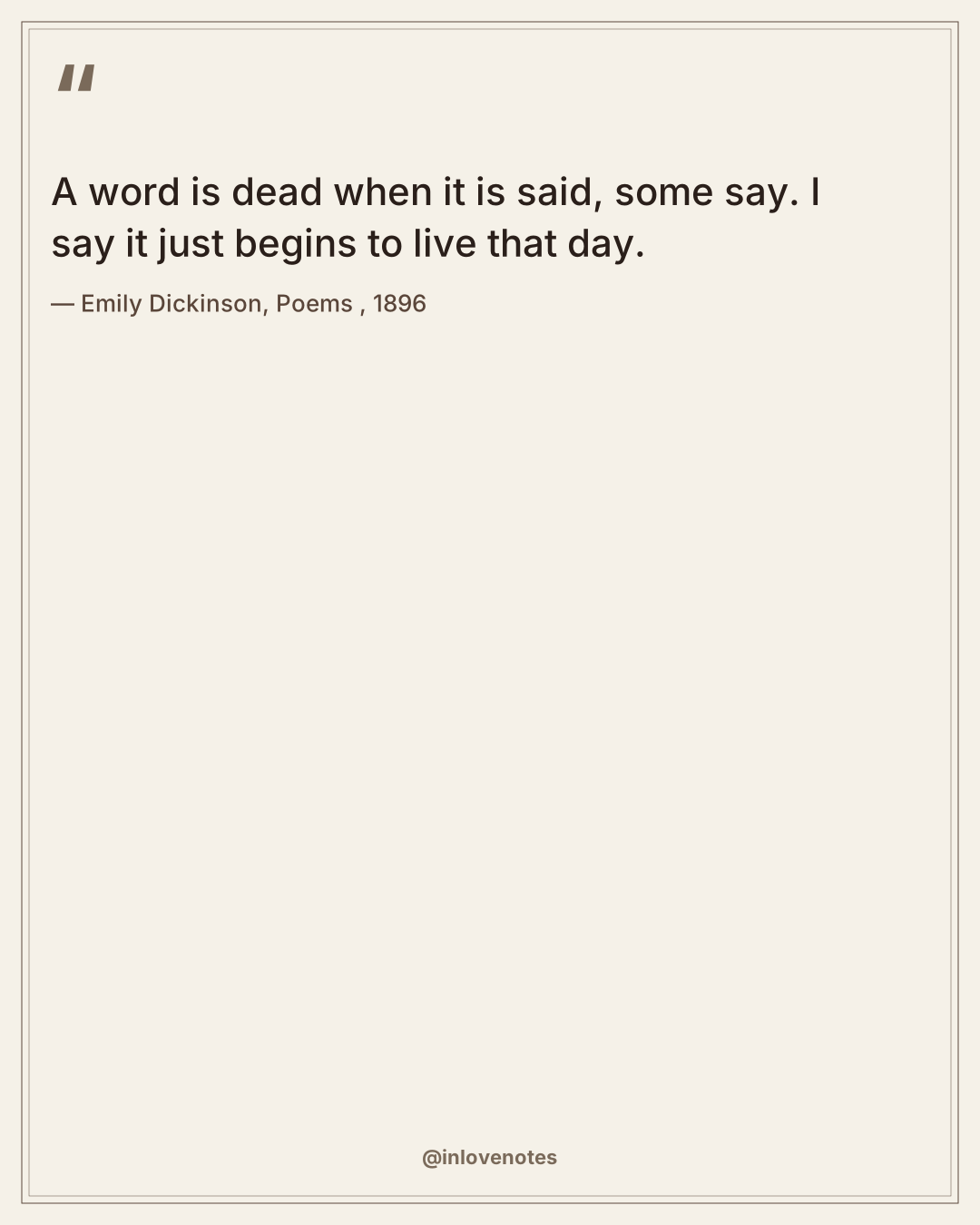
"A word is dead when it is said, some say. I say it just begins to live that day." — Emily Dickinson, Poems, 1896
Dickinson understood that language carries a lingering echo, which explains why a poorly timed or overly heavy note can disrupt a peaceful morning routine.
"True love is inexhaustible; the more you give, the more you have." — Antoine de Saint-Exupéry, Wisdom of the Sands, 1948
While the French aviator wrote extensively on profound connection, applying this level of philosophical weight to a rushed morning scribble often misses the mark entirely.
The risk of the daily note lies in the trap of escalation. If Tuesday's message quotes a Renaissance poet, Wednesday's message feels inadequate if it only mentions picking up dry cleaning. This pressure to constantly innovate turns a spontaneous act of affection into a grueling administrative task. The most successful practitioners of the physical note understand that the paper itself is the primary message, rendering the actual words secondary to the act of placement.
Reconciling the Scale of Daily Devotion
The most sustainable approach bridges the gap between grand romance and daily logistics by embracing the mundane. A successful note does not need to reinvent poetry. It merely needs to acknowledge the specific reality of the person receiving it. The sweet spot exists right at the intersection of observation and brevity, where a simple sentence about a shared joke carries more weight than a copied sonnet.
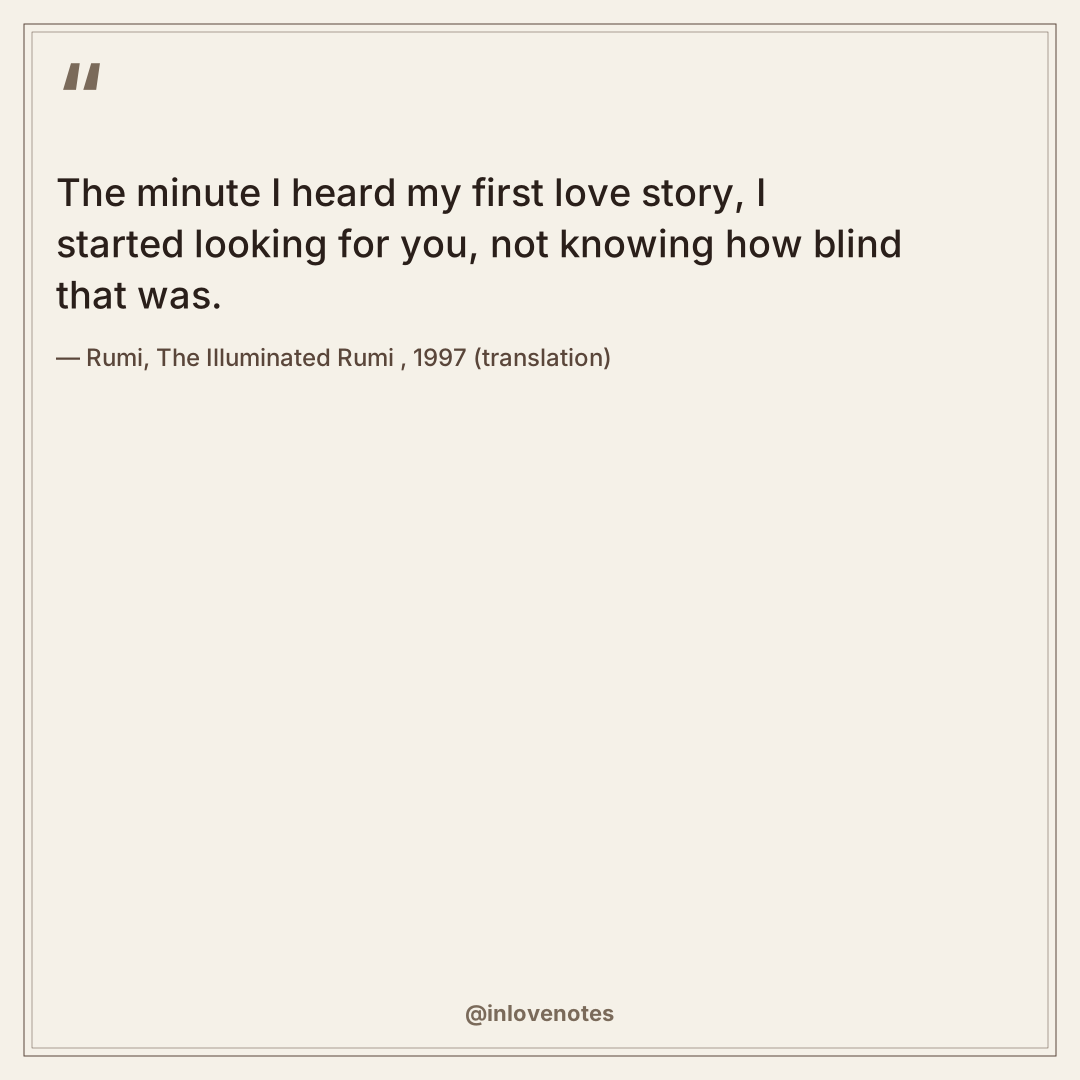
"The minute I heard my first love story, I started looking for you, not knowing how blind that was." — Rumi, The Illuminated Rumi, 1997 (translation)
Translations of the 13th-century mystic frequently remind us that the search for connection often resolves in the quietest, most ordinary moments of domestic life.
"Whatever happens tomorrow, we had today." — David Nicholls, One Day, 2009
Nicholls distills the essence of a perfect, low-stakes message that anchors a relationship in the immediate present without demanding future guarantees.
Balancing these scales requires a keen understanding of your partner's current emotional bandwidth. A well-placed note acts as a calibration tool, adjusting its tone to match the specific gravity of the day ahead. By keeping the stakes low and the frequency unpredictable, the physical note retains its power to surprise, delight, and ground a relationship in the tactile world.
Further reading
- how literary figures expressed devotion
- quiet sentiments for anniversary letters
- grounding your digital expressions of romance
- the comedic side of Mediterranean romance
As you move into the rhythm of the coming week, consider the blank spaces in your shared environment as opportunities for quiet intervention. A single sentence left on a bathroom mirror on a Wednesday morning might just alter the entire trajectory of an otherwise unremarkable afternoon.
What to Carry Forward
- The physical medium matters more than the eloquence of the message.
- Keep the stakes low for daily notes to avoid emotional fatigue.
- A rushed handwriting style adds authenticity that digital fonts cannot replicate.
- Placement transforms a simple sentence into a surprising event.
- Consistency builds a private archive of shared history over time.