a note on
Scripture on Maternal Devotion: 7 Bible Verses from the Old and New Testaments
Ancient texts frame a mother's endurance not as passive sacrifice, but as a deliberate and fierce spiritual discipline.
penned by Erdi Dogan

How do ancient texts define the endurance required to raise a child? Where does the boundary lie between quiet affection and fierce resilience? The biblical canon offers a surprisingly unsentimental view of domestic life, framing maternal devotion as a rigorous spiritual discipline rather than a soft instinct. I realized this while sitting with my aunt in a diner booth off Route 66 in Flagstaff, Arizona, back in 2013. She had just finished a grueling shift at the hospital, yet her primary concern was mapping out her son's college applications on a paper napkin. Her exhaustion was palpable, but her resolve to secure his future was absolute. This kind of grit mirrors the ancient descriptions of women who anchored their households through famine, war, and societal upheaval.
The Illusion of the Fragile Matriarch
Popular culture often paints historical women as passive figures waiting quietly for divine deliverance. The texts themselves reveal something entirely different when examined closely. Women in antiquity made calculated, dangerous decisions to protect their lineage against imperial decrees and environmental collapse. Recognizing this historical agency fundamentally shifts our understanding of scriptural perspectives on human connection. These historical figures functioned as the primary architects of their families' survival during periods of intense political instability.
The Reality of Calculated Endurance
True strength requires immense strategic patience and a willingness to operate in the shadows of recorded history. When modern readers look for finding solace during chaotic parenting moments, they frequently uncover narratives of women negotiating with hostile kings or hiding infants from state violence. The emotional labor of motherhood documented in these passages is deeply intertwined with establishing boundaries for personal restoration. Maintaining a household in the ancient Near East demanded a level of physical and mental fortitude that modern interpretations often overlook.
7 Bible Verses About Mothers Love and Strength
"Strength and dignity are her clothing, and she laughs at the time to come." — King Lemuel, Proverbs 31:25 (ESV), 2001
This proverb concludes a larger acrostic poem detailing the immense economic and social power wielded by a household manager in ancient Israel.
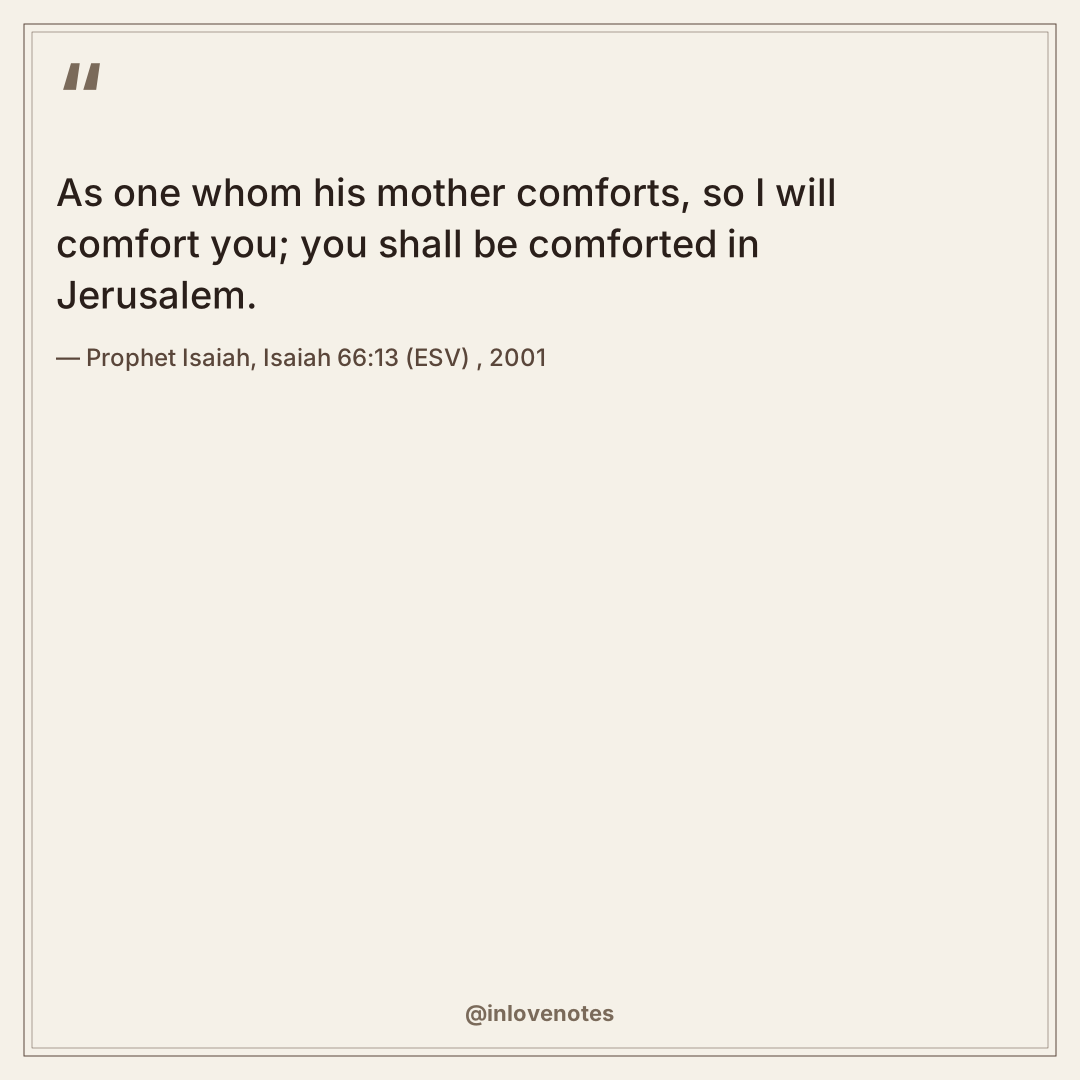
"As one whom his mother comforts, so I will comfort you; you shall be comforted in Jerusalem." — Prophet Isaiah, Isaiah 66:13 (ESV), 2001
Isaiah deliberately uses the ultimate symbol of human security to describe divine consolation during the volatile post-exilic period.
"Love bears all things, believes all things, hopes all things, endures all things." — Apostle Paul, 1 Corinthians 13:7 (ESV), 2001
Paul's letter to the church in Corinth outlines an active, resilient affection that perfectly mirrors a mother's daily commitment to her children. This specific stamina becomes crucial when maintaining momentum when exhaustion sets in.
"She opens her mouth with wisdom, and the teaching of kindness is on her tongue." — King Lemuel, Proverbs 31:26 (ESV), 2001

Instruction in the ancient world was a vital maternal duty that ensured the cultural and moral survival of the next generation.
"But let your adorning be the hidden person of the heart with the imperishable beauty of a gentle and quiet spirit, which in God's sight is very precious." — Apostle Peter, 1 Peter 3:4 (ESV), 2001
Peter addresses the internal fortitude required to navigate hostile social environments within the first-century Roman Empire. This internal focus aligns perfectly with the modern psychological concept of prioritizing internal health before serving others.
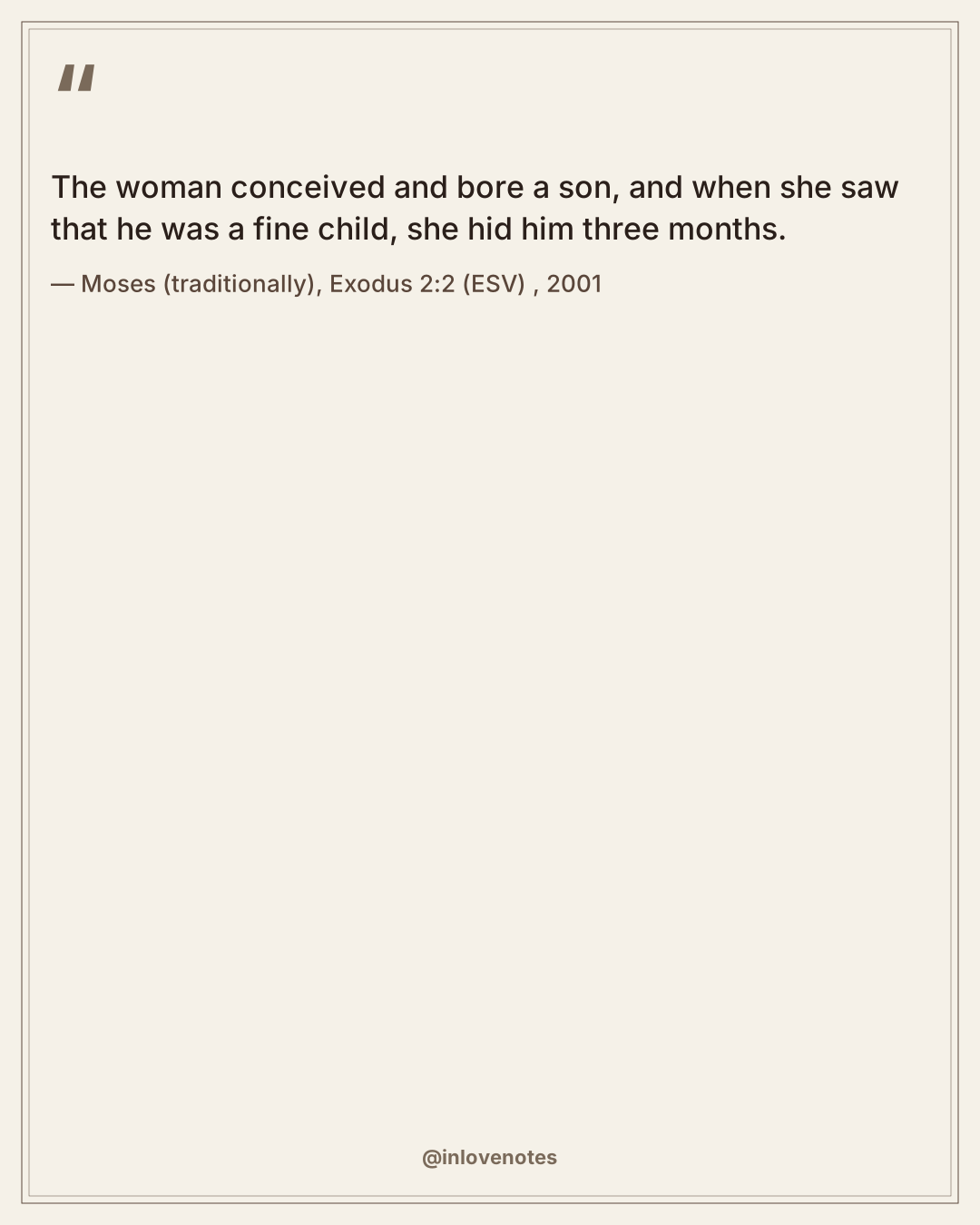
"The woman conceived and bore a son, and when she saw that he was a fine child, she hid him three months." — Moses (traditionally), Exodus 2:2 (ESV), 2001
Jochebed's direct defiance of Pharaoh's infanticide decree demonstrates how maternal love frequently crosses into radical civil disobedience.
"But Mary treasured up all these things, pondering them in her heart." — Luke the Evangelist, Luke 2:19 (ESV), 2001

The Gospel of Luke portrays Mary not just as a passive vessel, but as a theologian actively processing the monumental political and spiritual events surrounding her son's birth. We can observe similar contemplative depth when examining parallels in paternal spiritual guidance.
The historical record left by these ancient texts provides a blueprint for resilience that easily transcends its original agrarian context. A mother's devotion is measured in decades of quiet, deliberate choices rather than fleeting moments of sentimentality. These scriptural narratives document the heavy, necessary work of sustaining human life through constantly shifting cultural landscapes.
Key Takeaways
- Biblical narratives frame maternal devotion as a strategic and resilient action rather than mere biological emotion.
- Ancient texts frequently highlight women making dangerous political choices to protect their vulnerable families.
- The concept of ultimate comfort in scripture is often directly modeled on a mother's stabilizing physical presence.
- Internal fortitude and practical wisdom are consistently presented as the primary tools for effective household leadership.