a note on
The Essential Guide to Biblical Verses on Inner Worth and Healing
Quiet contemplation of ancient scriptures reveals unexpected blueprints for recovering a fractured sense of personal worth and mending old wounds.
penned by Erdi Dogan

People often assume ancient religious texts only champion relentless self-sacrifice, viewing any focus on personal healing as a modern, vaguely selfish invention. They picture early writers demanding the total erasure of the self in favor of serving others until absolutely nothing remains of the individual. This interpretation ignores the deep currents of restoration running through the source material.
Scripture actually frames the preservation of your own soul as a necessary foundation before you can offer anything of lasting value to the world. I first realized this sitting at my aunt's kitchen table in a small farmhouse outside Bend, Oregon, 2004, watching her meticulously underline passages about restoration after a grueling health crisis. The texts do not ask for your destruction. They ask for your active participation in your own repair, treating human dignity as a non-negotiable starting point for any meaningful life.
How Does Scripture Address Our Need for Inner Repair?
The texts approach emotional recovery not as an overnight miracle, but as a deliberate process of realigning your self-perception with divine intention. Writers of the Psalms and epistles frequently documented their own profound mental anguish, demonstrating that acknowledging pain is the absolute prerequisite for moving past it. You cannot fix a wound that you refuse to name.
When you are finding the drive to persevere through exhaustion, examining how historical figures managed their psychological breaking points provides a practical roadmap. Their honest laments show that spiritual strength does not require emotional suppression. The ancient world understood the physical toll of carrying unhealed trauma long before modern psychology gave us the terminology for it.
"He heals the brokenhearted and binds up their wounds." — Anonymous, Book of Psalms 147:3 (NIV), circa 4th Century BCE
This post-exilic psalm was likely composed as the Israelites rebuilt Jerusalem, serving as a reminder that structural reconstruction must be accompanied by internal emotional repair.
"Heal me, Lord, and I will be healed; save me and I will be saved, for you are the one I praise." — Jeremiah, Book of Jeremiah 17:14 (NIV), circa 6th Century BCE
Known as the weeping prophet, Jeremiah regularly voiced his deep depression and burnout, proving that asking for personal intervention is a sign of endurance rather than a lapse in faith.
"Cast all your anxiety on him because he cares for you." — Peter the Apostle, First Epistle of Peter 5:7 (NIV), circa 60 CE
Written to early Christians facing severe social ostracization, this directive treats mental burden as a tangible weight that must be actively transferred to survive hostile environments.
"A cheerful heart is good medicine, but a crushed spirit dries up the bones." — Solomon, Book of Proverbs 17:22 (NIV), circa 10th Century BCE
The ancient wisdom literature frequently linked psychological states to physical health outcomes, acknowledging that chronic emotional neglect manifests in bodily deterioration.
Why Is Recognizing Your Own Value Essential for Recovery?
Healing stagnates when you secretly believe you are not worth the immense effort required to get better. Biblical wisdom insists on human dignity as an inherent, unchangeable trait, established long before your current struggles, public failures, or private doubts. Recognizing this baseline worth permanently shifts your internal monologue from harsh punishment to patient rehabilitation.
Building a foundation of understanding personal worth through scripture helps dismantle the internalized criticism that keeps people trapped in cycles of self-sabotage. If you are serious about establishing a baseline of self-respect, you have to stop speaking to yourself as an enemy. The text demands that you view your own existence as an intentional act of creation.
"I praise you because I am fearfully and wonderfully made; your works are wonderful, I know that full well." — David, Book of Psalms 139:14 (NIV), circa 10th Century BCE
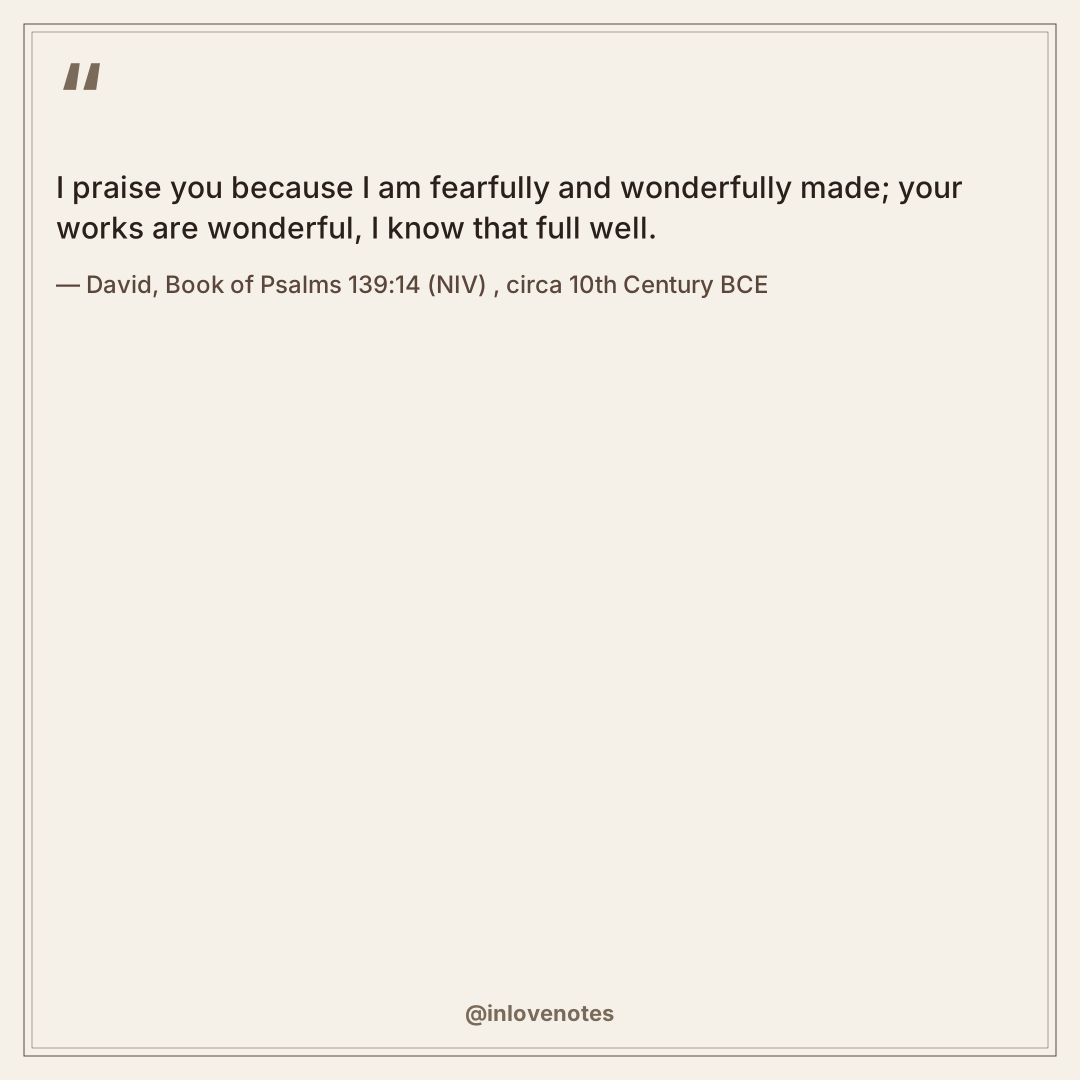
Attributed to King David, this meditation on human biology and consciousness rejects the notion of accidental existence, demanding respect for the physical and spiritual self.
"For we are God’s handiwork, created in Christ Jesus to do good works, which God prepared in advance for us to do." — Paul the Apostle, Epistle to the Ephesians 2:10 (NIV), circa 60 CE
The Greek word translated as handiwork is 'poiema', suggesting a carefully crafted poem or masterpiece, which directly challenges any feelings of worthlessness.
"Since you are precious and honored in my sight, and because I love you, I will give people in exchange for you, nations in exchange for your life." — Anonymous, Book of Isaiah 43:4 (NIV), circa 8th Century BCE
Spoken to a nation in exile feeling entirely abandoned, this passage uses the language of exorbitant ransom to quantify the uncompromising value of human life.
"Are not five sparrows sold for two pennies? Yet not one of them is forgotten by God." — Luke the Evangelist, Gospel of Luke 12:6 (NIV), circa 85 CE
By contrasting the lowest commercial value of a common bird with divine attention, the narrative forces listeners to reassess their own misguided metrics for self-worth.
When Should We Seek Solitude for Mental Restoration?
Stepping away from the relentless demands of your community is repeatedly modeled as a vital survival tactic rather than an avoidance strategy. The narratives show leaders and prophets retreating into the wilderness specifically to escape sensory overload and heavy public expectation. Quiet isolation provides the necessary acoustic space to finally hear your own thoughts again.
Sometimes, we need brief scriptural reminders of personal value to justify putting a pause on our obligations to others. Looking at broader biblical perspectives on devotion reveals that love is never framed as a mechanism that should grind you down into dust. Rest is treated as a holy obligation.
"But Jesus often withdrew to lonely places and prayed." — Luke the Evangelist, Gospel of Luke 5:16 (NIV), circa 85 CE
This habitual withdrawal occurred precisely when public demand for healing and teaching was at its highest, establishing a clear boundary against chronic overwork.
"He makes me lie down in green pastures, he leads me beside quiet waters, he refreshes my soul." — David, Book of Psalms 23:2-3 (NIV), circa 10th Century BCE
The pastoral imagery here points to an enforced rest, suggesting that when we refuse to stop working, circumstances will eventually mandate a pause for our own survival.
"Come to me, all you who are weary and burdened, and I will give you rest." — Matthew the Apostle, Gospel of Matthew 11:28 (NIV), circa 80 CE
Addressed to a population crushed by heavy taxation and rigid religious legalism, this invitation prioritizes immediate relief over continued productivity.
"In repentance and rest is your salvation, in quietness and trust is your strength, but you would have none of it." — Anonymous, Book of Isaiah 30:15 (NIV), circa 8th Century BCE
This verse bluntly critiques the human tendency to choose frantic, anxious activity over the strategic stillness required to actually solve a crisis.
The historical texts make it incredibly clear that treating yourself with contempt is a fundamental misreading of the material. True restoration begins the moment you decide your own well-being is a legitimate priority.
Points Worth Pinning
- Inner repair requires acknowledging your emotional reality rather than suppressing it for the comfort of the people around you.
- Scriptural wisdom frames human dignity as an inherent baseline, meaning your worth is not subject to your daily productivity.
- Strategic withdrawal from community obligations is modeled as a necessary boundary for survival, not a selfish indulgence.
- Physical health and psychological stability are treated as deeply interconnected states that require equal attention and care.