a note on
The Essential Guide to Love Notes Ideas on Daily Devotion
A folded piece of paper left on a kitchen counter carries more weight than a digital message sent across the world.
penned by Erdi Dogan

The Quiet Architecture of a Handwritten Message
I still remember finding a stack of index cards written by my best friend's mother in a basement laundry room in Pittsburgh, Pennsylvania, 2021. The cards were rubber-banded together in a dusty shoebox, each one containing a single sentence directed at her husband before he left for his shift at the steel mill. They were not grand declarations of eternal passion. They were simple, pragmatic observations about the weather, a reminder to take his lunch, and a brief note of affection scribbled in blue ink. This is the true foundation of handwritten affection. A physical note demands physical space, taking up room on a counter or a dashboard, forcing the recipient to pause and acknowledge the physical reality of another person's care.
Most advice surrounding romantic correspondence assumes you are writing a sweeping letter to be read by candlelight. The reality of modern affection is far more fragmented. We leave notes on bathroom mirrors, tuck them into laptop bags, and slide them under windshield wipers. When considering crafting love notes for her or him, the context matters as much as the content. A message found at six in the morning carries a different emotional weight than one discovered late at night. The intention is not to overwhelm the recipient with poetry, but to provide a momentary anchor in an otherwise chaotic day.
The best notes often borrow from established thinkers, using a borrowed phrase to articulate a complex feeling. You do not need to be a poet to leave a meaningful message. You simply need to be observant. Incorporating quiet expressions for anniversary letters into a Tuesday morning routine elevates the mundane into something worth keeping. The act of writing it down by hand signals a deliberate pause in your own day, a small sacrifice of time dedicated entirely to someone else.
Love Notes Ideas for the Morning Departure
Morning notes require brevity. The recipient is likely rushing, holding a travel mug, and mentally preparing for the day ahead. These messages should serve as a gentle push out the door, a reminder that they are seen and valued before they face the public.
"I would rather share one lifetime with you than face all the ages of this world alone." — J.R.R. Tolkien, The Fellowship of the Ring, 1954
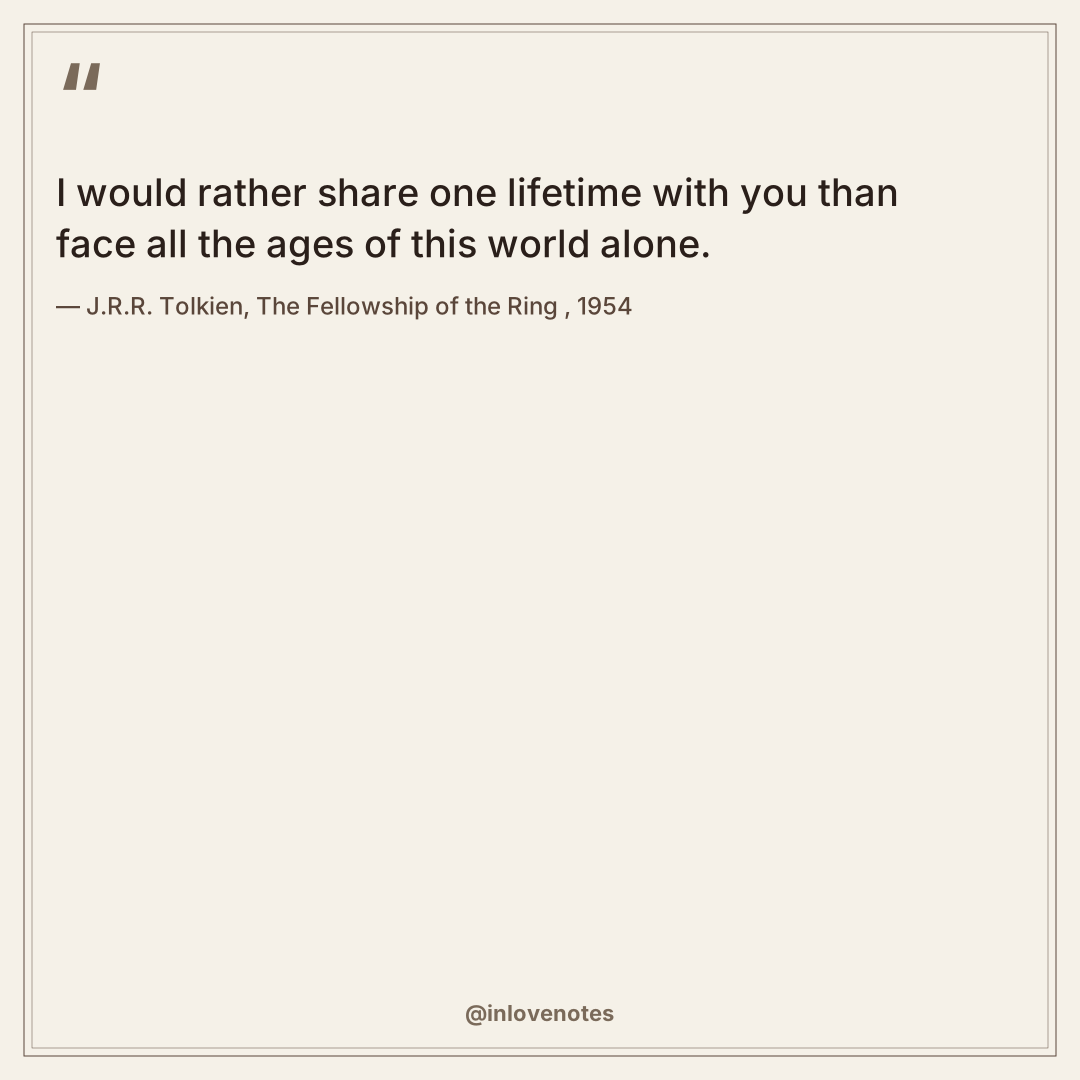
Tolkien's assertion of chosen partnership grounds a chaotic morning in the certainty of a shared life.
"You are my dearest one, my reason for life." — Ian McEwan, Atonement, 2001
This direct, unadorned statement from McEwan's narrative cuts through the noise of a busy schedule.
"Whatever our souls are made of, his and mine are the same." — Inspired by Emily Brontë
While often cited in dramatic contexts, this sentiment works beautifully as a quiet reassurance left on a steering wheel.
"I love you right up to the moon—and back." — Sam McBratney, Guess How Much I Love You, 1994
A familiar childhood refrain can offer profound comfort when written by a partner on a difficult morning.
"There is nothing I would not do for those who are really my friends." — Jane Austen, Northanger Abbey, 1818
Austen's practical view of loyalty reminds a partner that love is fundamentally an act of steadfast friendship.
Leaving these notes requires strategic placement. A quote tucked into a wallet or taped to a steering wheel interrupts the autopilot of a morning commute. When you are sending deep love messages, the element of surprise amplifies the impact. The goal is to create a private moment in a public space, a tiny rebellion against the demands of the clock.
Love Notes Ideas for the Evening Return
Evening notes serve a different function entirely. They are meant to decompress, to welcome, and to transition the recipient from the external world back into the domestic sphere. These messages can afford to be slightly longer, offering romantic lines drawn from classic literature that invite reflection rather than immediate action.
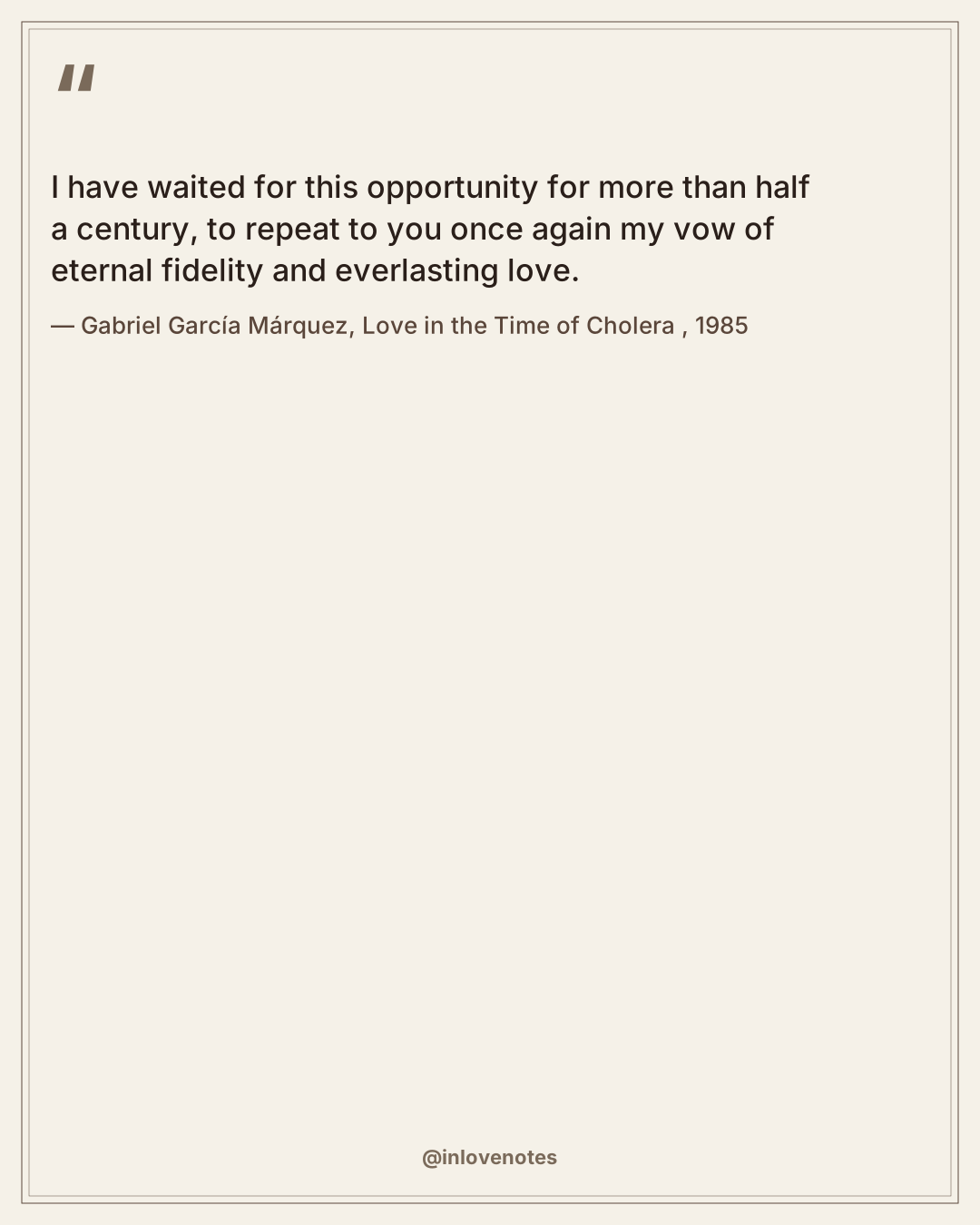
"I have waited for this opportunity for more than half a century, to repeat to you once again my vow of eternal fidelity and everlasting love." — Gabriel García Márquez, Love in the Time of Cholera, 1985
Márquez captures the endurance required to maintain affection through the long, quiet stretches of a shared life.
"You should be kissed and by someone who knows how." — Margaret Mitchell, Gone with the Wind, 1936
A playful, confident line works perfectly as a welcoming note left on a kitchen island after a long workday.
"I love you without knowing how, or when, or from where." — Pablo Neruda, 100 Love Sonnets, 1959
Neruda's admission of mystery strips away the need for logical explanations, leaving only the raw fact of devotion.
"To love another person is to see the face of God." — Victor Hugo, Les Misérables, 1862
Hugo's grand philosophical statement elevates the simple act of coming home to a spiritual return.
"I look at you and see the rest of my life in front of my eyes." — Unknown, Traditional Vow, 1990
Sometimes an anonymous, widely shared sentiment captures the exact feeling of watching a partner walk through the front door.
The evening note is a quiet acknowledgment of survival. It says that the day is done, the outside world has been managed, and the sanctuary of the relationship remains intact. Drawing inspiration from what authors teach us about devotion helps frame these daily returns not as mundane routines, but as continuous choices to be present with one another.
Corrections to the Record
Common claim: A handwritten note must be long to be meaningful.
Closer to the evidence: The physical presence of the note matters more than the word count. A single sentence left on a bathroom mirror often carries more emotional resonance than a sprawling, multi-page letter that the recipient lacks the time to read.
Common claim: Using someone else's words is unoriginal and lazy.
Closer to the evidence: Curating a specific quote for a specific moment requires deep attention to your partner's current emotional state. Selecting the exact right line from a book they love demonstrates profound listening skills.
Common claim: Love notes are only for special occasions or anniversaries.
Closer to the evidence: The most impactful messages arrive on random Tuesdays when nothing is expected. Routine, unexpected affection builds a stronger foundation than obligatory holiday cards.
Take a small piece of paper right now, write down a single sentence about something you noticed your partner do yesterday, and leave it where they will find it tomorrow morning.