a note on
What Makes a Letter Worth Keeping? 10 Long Love Notes for Her
The art of writing extended letters requires patience, specific memories, and a willingness to put your deepest affections onto physical paper.
penned by Erdi Dogan
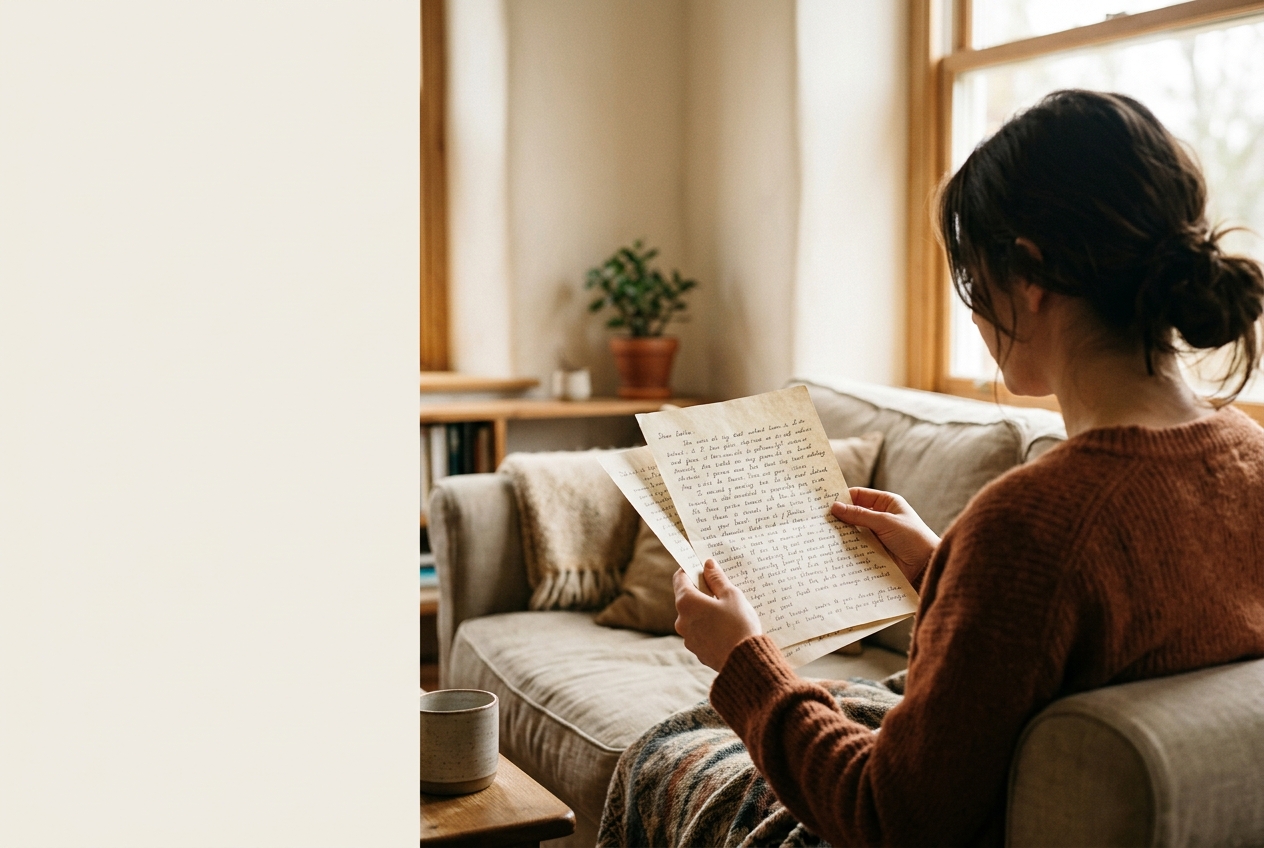
"A letter is an unannounced visit." — Friedrich Nietzsche.
Putting pen to paper demands a specific kind of vulnerability that text messages simply cannot replicate. I found a stack of letters kept by my stepmother in a boarding-house attic in Savannah, Georgia, 2013, bound tightly with frayed butcher's twine. The ink had faded into the heavy cotton paper, yet the emotional weight of the cursive script remained entirely intact. Writing at length forces the author to slow down and articulate the exact texture of their affection, transforming a passing thought into a physical artifact.
A longer take on this lives in these selections for quiet anniversaries.
Declarations from the Nineteenth Century
Historical correspondence reveals how people navigated romance before instant communication fractured our attention spans. These writers relied on the postal service to carry the full weight of their devotion across vast distances.
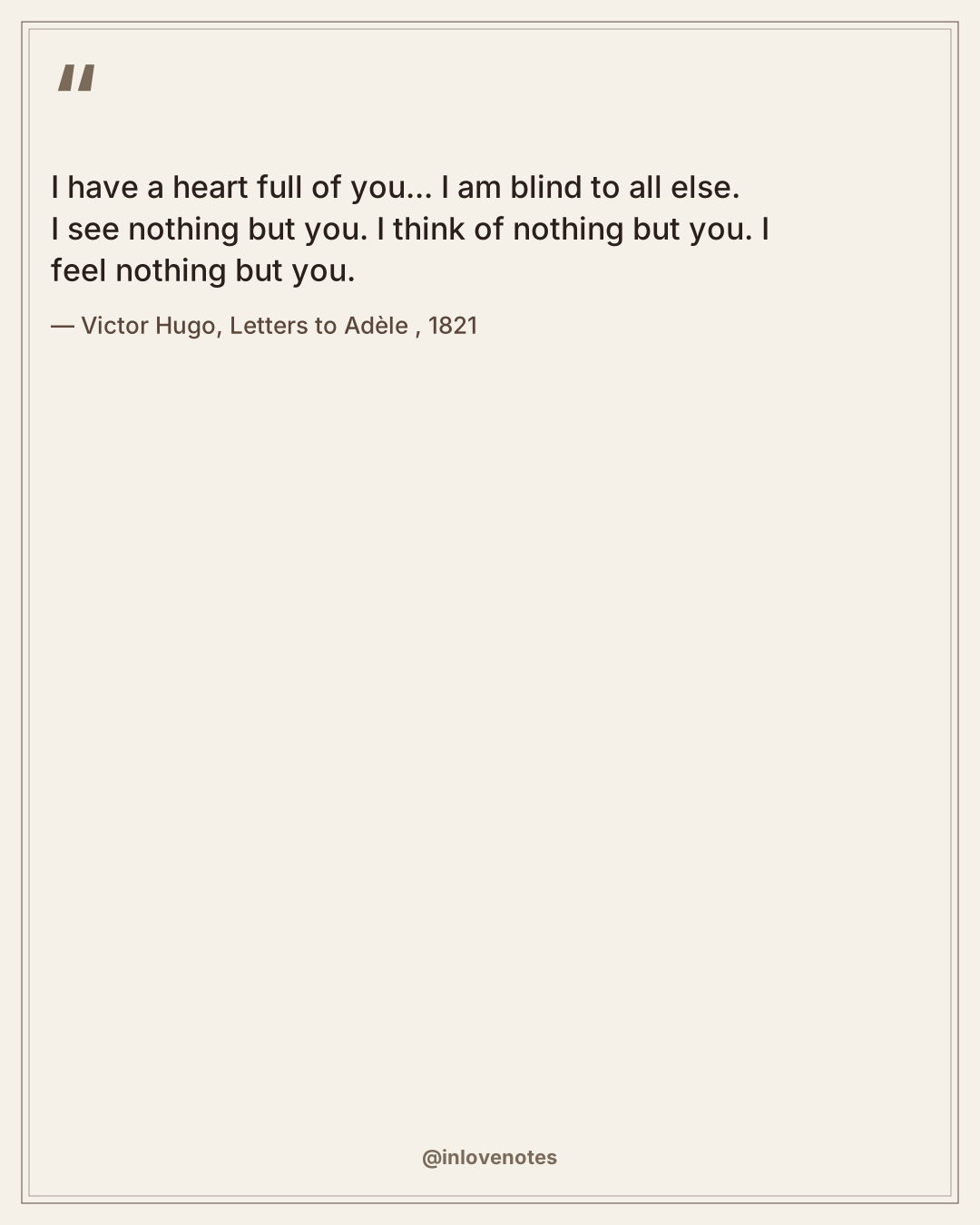
"I have a heart full of you... I am blind to all else. I see nothing but you. I think of nothing but you. I feel nothing but you." — Victor Hugo, Letters to Adèle, 1821
Hugo wrote this during a period of intense longing before their marriage, capturing the absolute focus that early romance demands from the human mind.
"Out of the depths of my happy heart wells a great tide of love and prayer for this priceless treasure that is confided to my lifelong keeping." — Mark Twain, Letter to Olivia Langdon, 1869
Samuel Clemens dropped his usual cynical humor entirely when writing to Langdon, revealing a profound sincerity that anchored their eventual thirty-four-year marriage.
This gets argued with in how classic authors approached devotion.
"I cannot express it; but I feel that I am a captive, and that my heart is in your hands." — Nathaniel Hawthorne, Letter to Sophia Peabody, 1839
Hawthorne often struggled with social isolation, making his written confessions to Peabody the primary bridge between his solitary mind and the outside world.
"I almost wish we were butterflies and liv'd but three summer days—three such days with you I could fill with more delight than fifty common years could ever contain." — John Keats, Letter to Fanny Brawne, 1819
Facing his own mortality, Keats compressed a lifetime of anticipated devotion into brief, devastatingly beautiful metaphors that continue to define English romanticism.
For the counterpoint, see our broader archive of romantic messages for her.
Modern Devotion and Literary Confessions
As the twentieth century accelerated the pace of daily life, handwritten letters became deliberate acts of rebellion against an increasingly mechanized world.
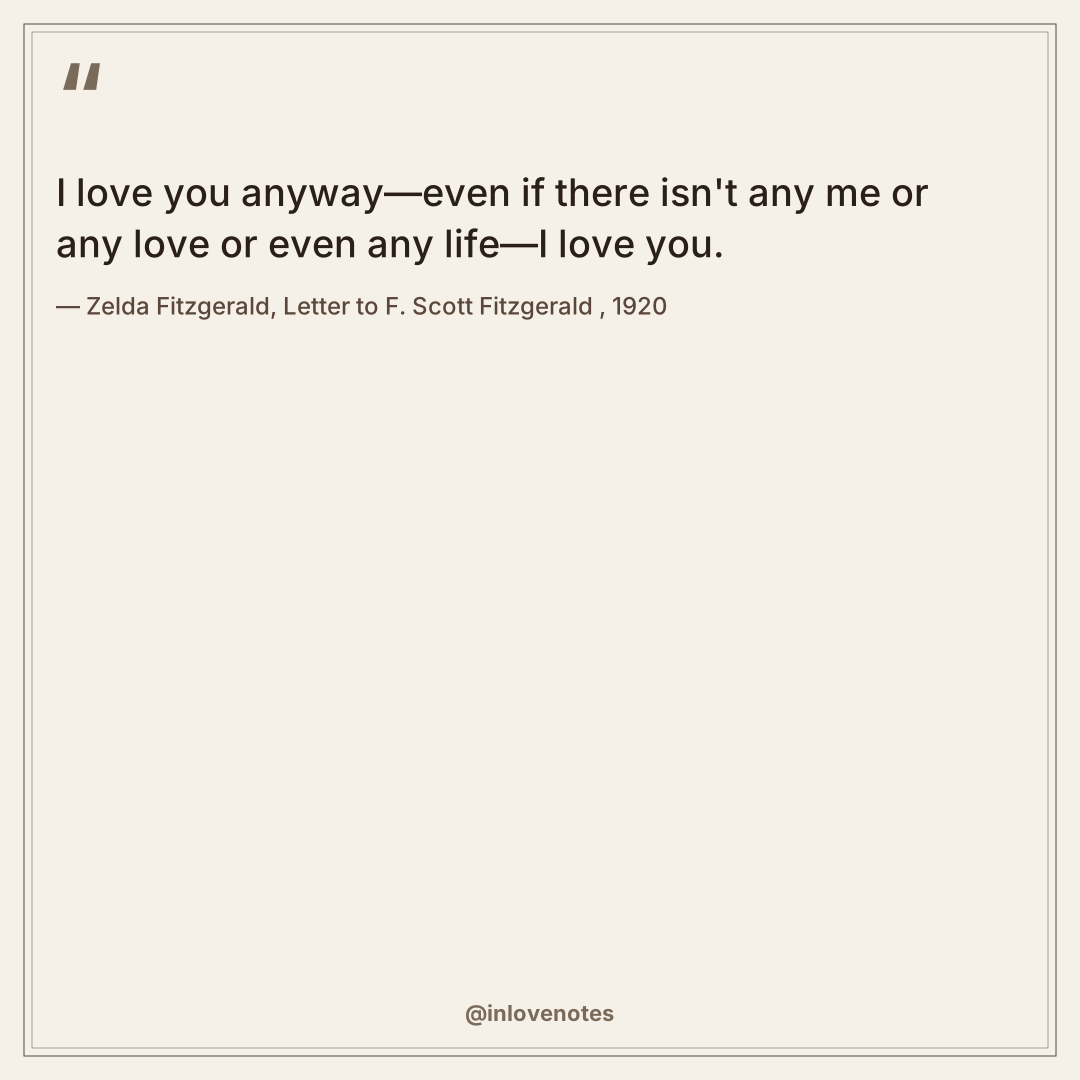
"I love you anyway—even if there isn't any me or any love or even any life—I love you." — Zelda Fitzgerald, Letter to F. Scott Fitzgerald, 1920
Zelda's correspondence often blurred the lines between existential philosophy and raw affection, reflecting the chaotic brilliance of the Jazz Age.
"My darling Clemmie, in your letter from Madras you wrote some words very dear to me, about having enriched your life. I cannot tell you what pleasure this gave me, because I always feel so overwhelmingly in your debt." — Winston Churchill, Letter to Clementine Churchill, 1935
Away from the political theater of London, the statesman relied heavily on Clementine's steady presence to navigate his infamous bouts of depression.
"I belong to you; there is really no other way of expressing it, and that is not strong enough." — Franz Kafka, Letter to Felice Bauer, 1912
Kafka famously agonized over every decision in his life, yet his declarations to Bauer possessed a rare, uncharacteristic certainty that cut through his usual anxiety.
Related — romantic quotes drawn from historical letters.
"I already love in you your beauty, but I am only beginning to love in you that which is eternal and ever precious—your heart, your soul." — Leo Tolstoy, Letter to Valeria Arsenev, 1856
Before writing his massive epics, Tolstoy practiced his psychological observations on the women he courted, analyzing the shift from physical attraction to spiritual connection.
Enduring Promises in Ink
The most memorable letters do not rely on complex vocabulary to make their point. They strip away the artifice of formal writing to present a clear, undeniable truth to the reader.
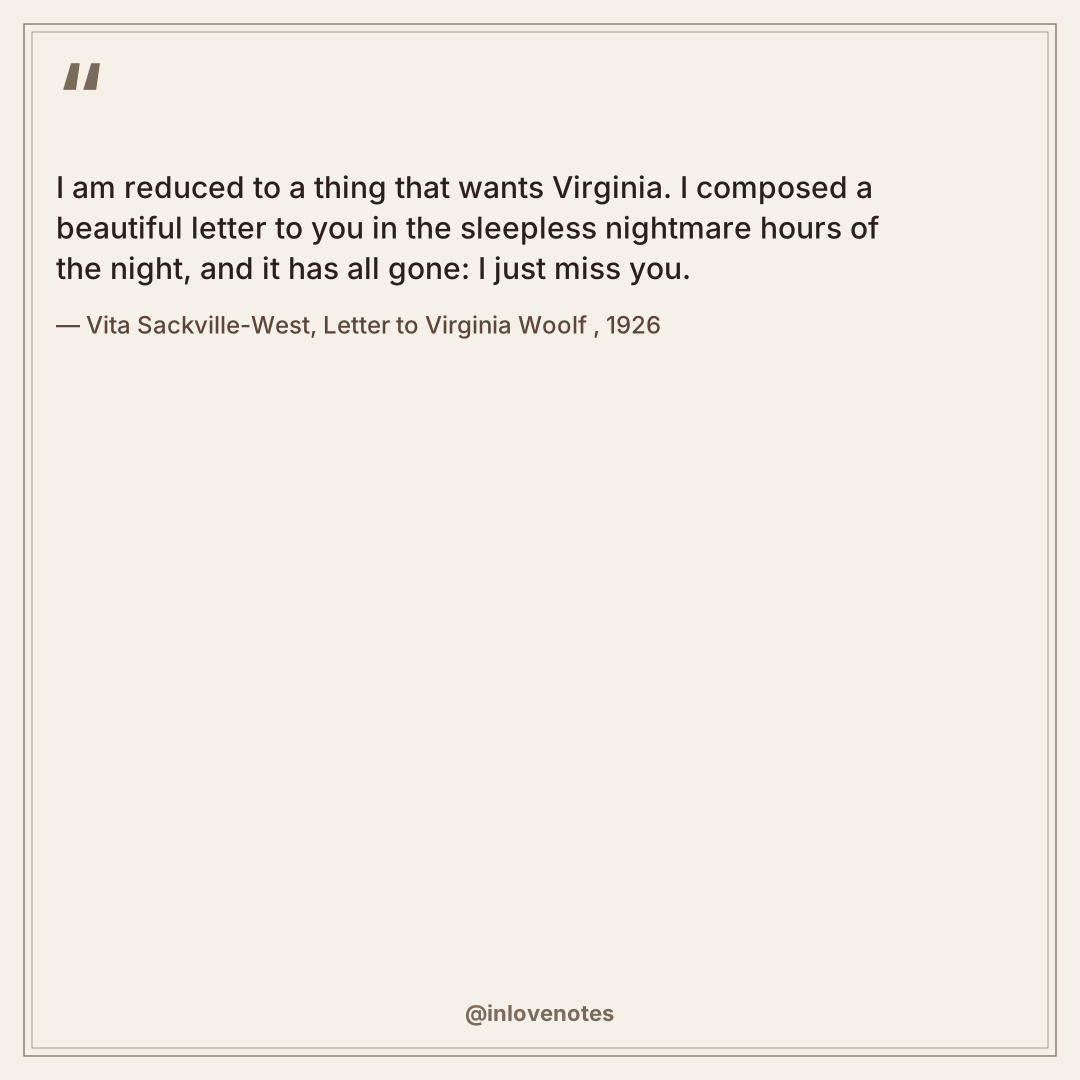
"I am reduced to a thing that wants Virginia. I composed a beautiful letter to you in the sleepless nightmare hours of the night, and it has all gone: I just miss you." — Vita Sackville-West, Letter to Virginia Woolf, 1926
The stark simplicity of this admission stands out against the highly intellectual circles both women inhabited during the height of the Bloomsbury Group's influence.
A different angle on this lives in finding the right words for her birthday.
"You still fascinate and inspire me. You influence me for the better. You're the object of my desire, the number one earthly reason for my existence." — Inspired by Johnny Cash, Letter to June Carter, 1994
Written for a birthday, this sentiment proves that decades of marriage and shared hardship only sharpen the clarity of true devotion.
Explore more within our deep emotional messages collection.
Questions Readers Send In
How long should a handwritten note actually be?
The physical length matters far less than the specificity of the memories you choose to include on the page. A single paragraph detailing a precise moment you realized you loved her carries more weight than three pages of generic adjectives.
What kind of paper works best for preserving these letters?
Archival-quality cotton paper resists yellowing over the decades. Standard notebook paper contains acids that will eventually degrade the ink and cause the sheet to crumble.
Should I draft my thoughts before writing them in ink?
Drafting prevents the anxiety of ruining a good piece of stationery with a sudden mistake. Many historical figures wrote multiple versions of their most famous letters before sending the final, pristine copy to their partner.
The act of writing a letter demands a physical commitment to the emotion you wish to convey. Ink on paper creates a permanent record of a fleeting feeling, giving the recipient something tangible to hold when distance or time intervenes.