a note on
Where Does Scripture Place Our Value? 10 Self Love in the Bible Quotes KJV
The King James Version addresses our inherent value through verses that challenge modern assumptions about pride and spiritual worth.
penned by Erdi Dogan

"To recognize one's own worth is simply to acknowledge the craftsmanship of the creator." — Inspired by Thomas Aquinas, Summa Theologica, 1273
Reading ancient texts through a modern lens often distorts their original intent. The concept of valuing oneself rarely appears in seventeenth-century translations as a psychological exercise. I remember sitting with my aunt in a quiet pew in Savannah, Georgia, 2014, listening to her explain the difference between vanity and divine care. She pointed out that the text does not ask readers to despise their own existence. It asks them to recognize their origin. The language of the King James Version carries a specific weight that demands careful reading.
The Modern Misunderstanding of Biblical Humility
A persistent assumption suggests that historical Christian texts demand absolute self-loathing as a prerequisite for holiness. This reading conflates humility with degradation. The actual text of the 1611 translation consistently frames human life as an intentional, valued creation rather than a cosmic mistake. Humility in this context means understanding your place in a larger structure, not denying your inherent worth within it. You are a deliberate act of creation.
A deeper exploration of scriptural passages addressing our internal value reveals a consistent theme.
The Reality of Divine Valuation in Scripture
The writers of these texts approached human value from the outside in. They established worth by pointing to the attention given by the divine. This external validation provides a foundation for internal acceptance.
"I will praise thee; for I am fearfully and wonderfully made: marvellous are thy works; and that my soul knoweth right well." — King David, Psalm 139:14, 1611 KJV
This psalm attributes complex, deliberate design to the human form, establishing a baseline of respect for one's own physical and spiritual existence.
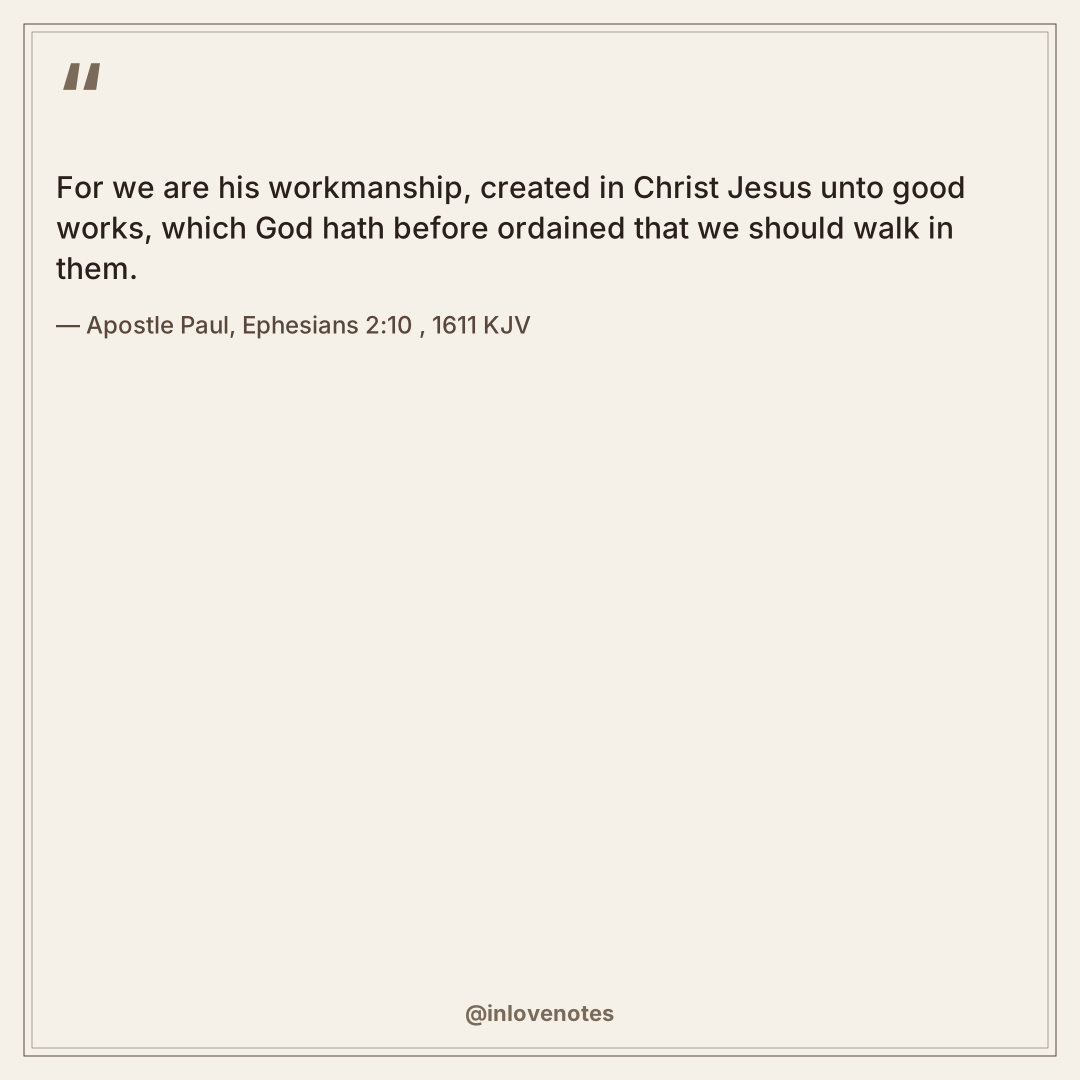
"For we are his workmanship, created in Christ Jesus unto good works, which God hath before ordained that we should walk in them." — Apostle Paul, Ephesians 2:10, 1611 KJV
Paul uses the Greek concept of 'poiema', translated here as workmanship, which implies a crafted poem or masterpiece rather than a mass-produced object.
For a different perspective on this, consider the scriptural foundation for internal care.
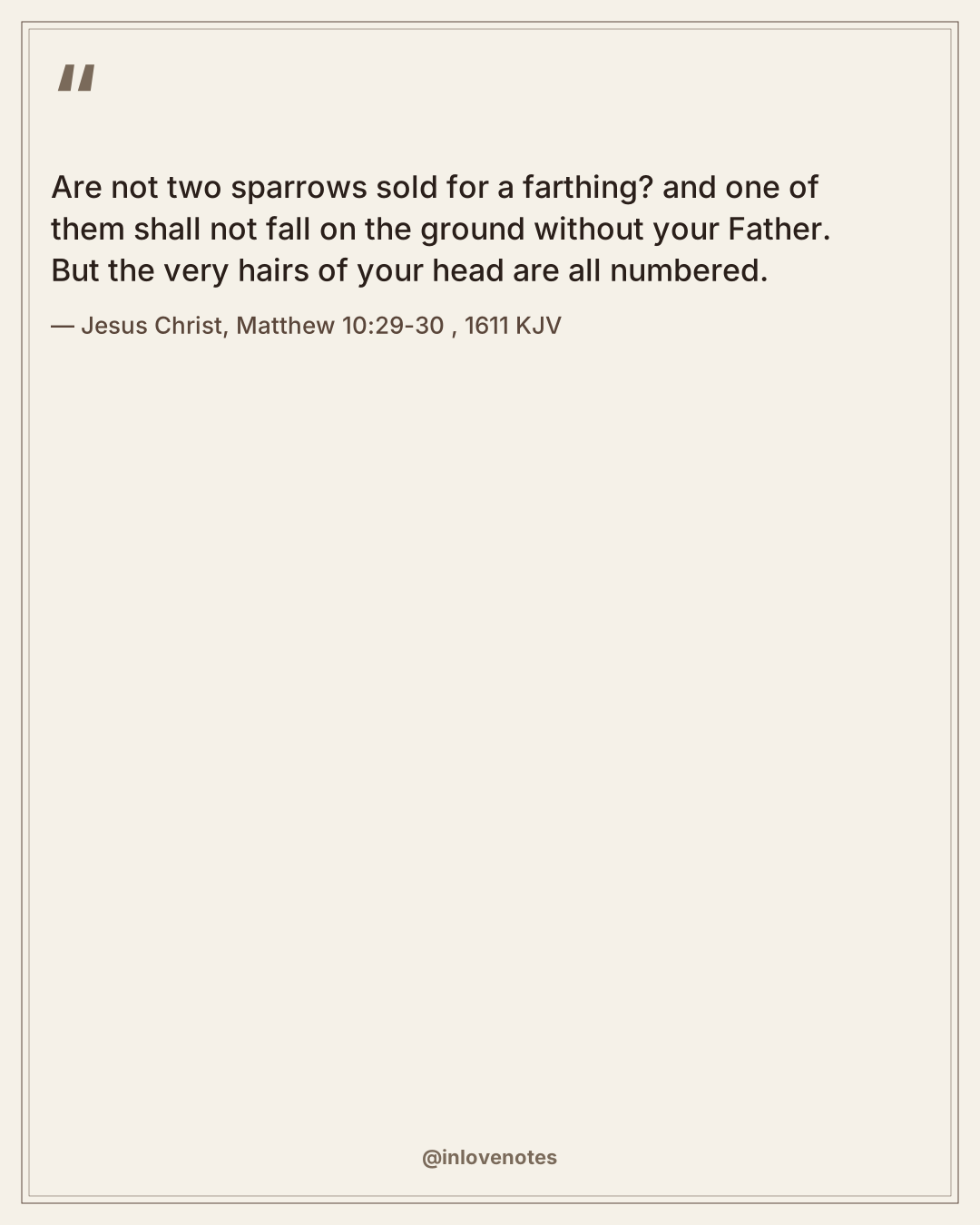
"Are not two sparrows sold for a farthing? and one of them shall not fall on the ground without your Father. But the very hairs of your head are all numbered." — Jesus Christ, Matthew 10:29-30, 1611 KJV
This passage uses the economic worthlessness of a sparrow in the first-century market to highlight the exhaustive, detailed attention given to human life.
"Behold, what manner of love the Father hath bestowed upon us, that we should be called the sons of God." — Apostle John, 1 John 3:1, 1611 KJV
John shifts the identity of the reader from a mere subject to a recognized heir, fundamentally altering how they are instructed to view themselves.
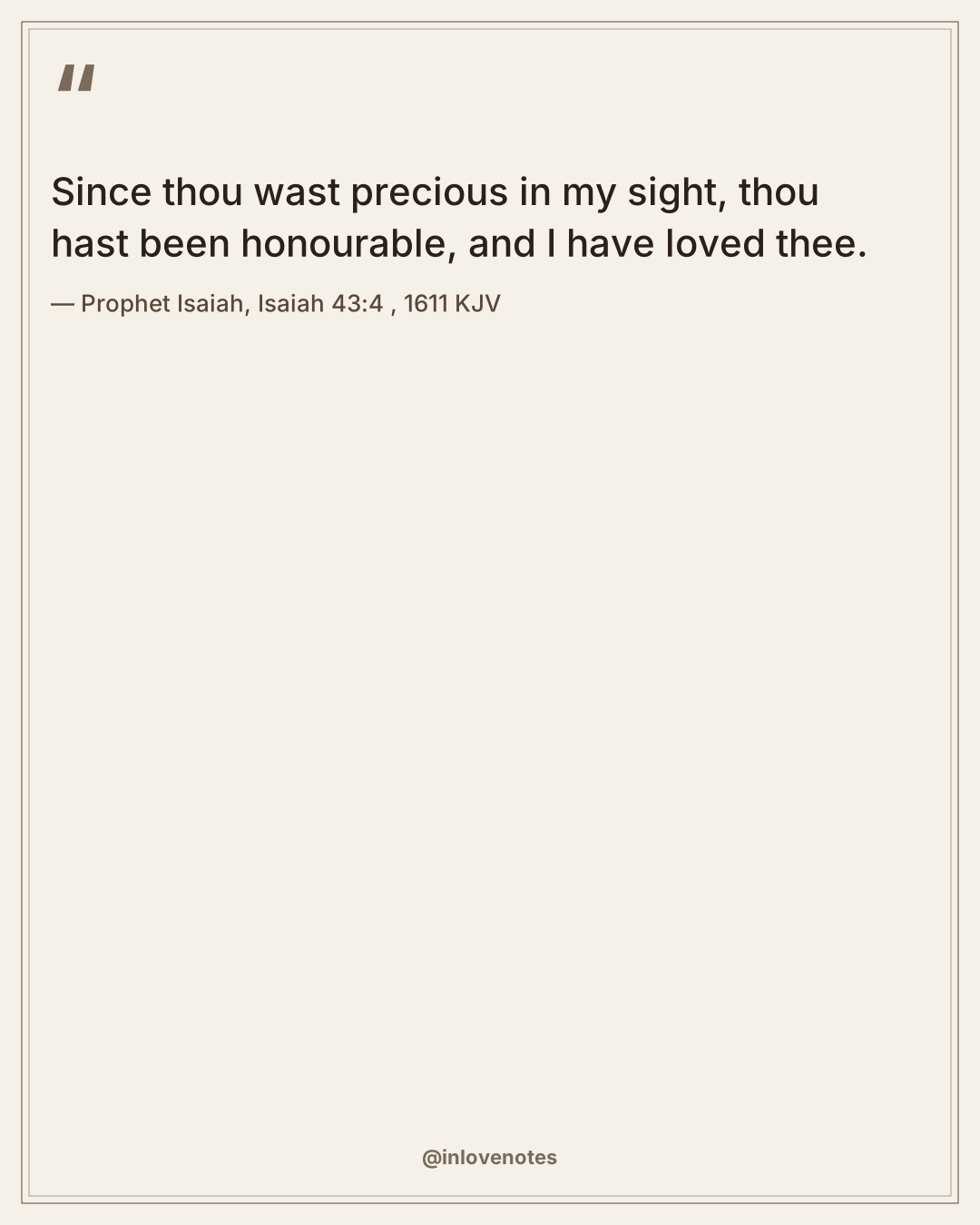
"Since thou wast precious in my sight, thou hast been honourable, and I have loved thee." — Prophet Isaiah, Isaiah 43:4, 1611 KJV
Isaiah records a direct statement of value that predates any action or achievement by the recipient.
This connects to broader biblical definitions of affection.
What Actually Helps When Reading the KJV for Inner Worth
Extracting personal value from a text written millennia ago requires looking past the archaic pronouns. The core message focuses on an unshakeable baseline of worth that external circumstances cannot alter. The text anchors identity in something permanent.
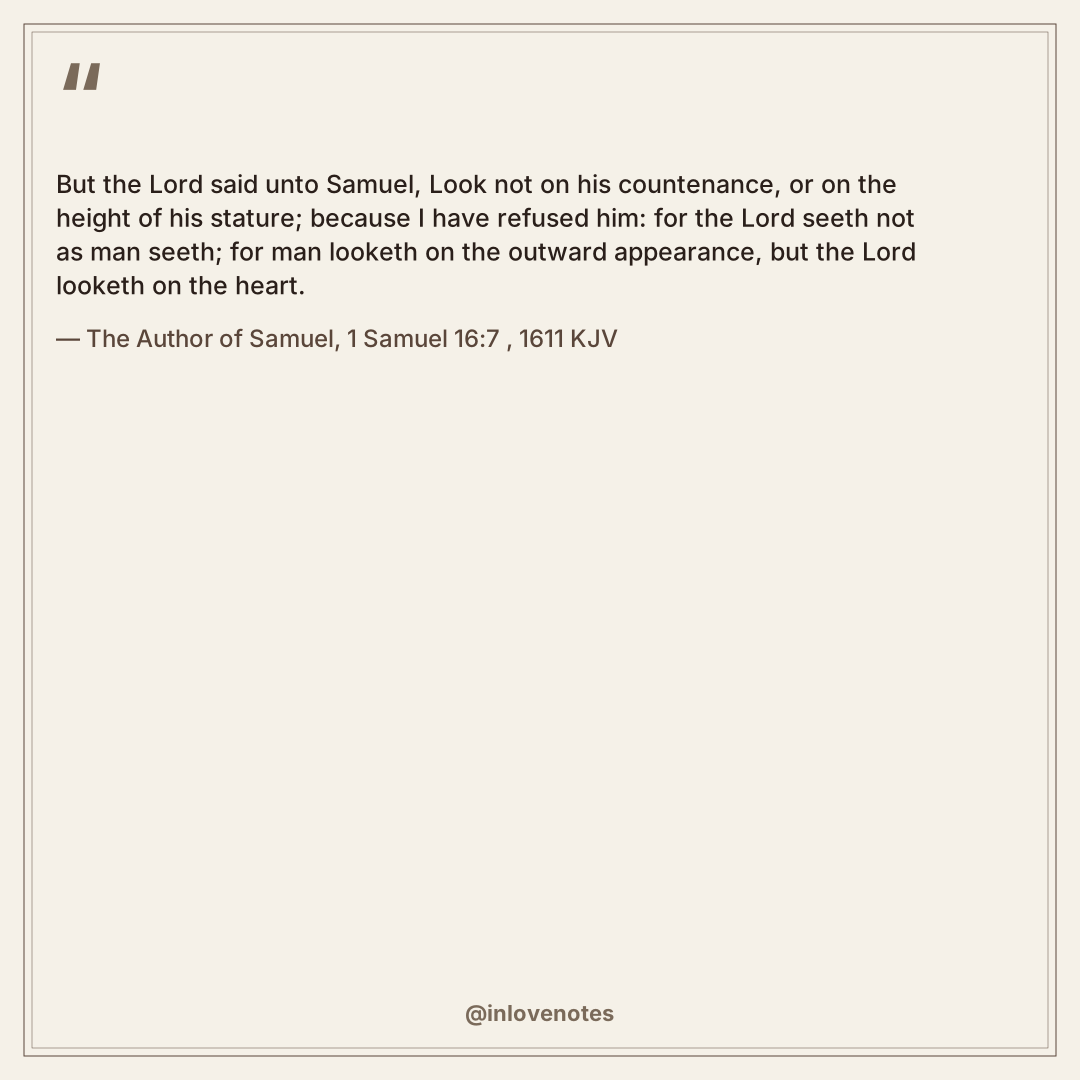
"But the Lord said unto Samuel, Look not on his countenance, or on the height of his stature; because I have refused him: for the Lord seeth not as man seeth; for man looketh on the outward appearance, but the Lord looketh on the heart." — The Author of Samuel, 1 Samuel 16:7, 1611 KJV
This narrative moment dismantles the human tendency to measure worth by physical metrics or social standing.
This directly relates to finding the drive to continue forward.
"And God saw every thing that he had made, and, behold, it was very good." — The Author of Genesis, Genesis 1:31, 1611 KJV
The foundational text of the entire canon concludes its creation account with a definitive, positive assessment of the material world and humanity within it.
"Let your conversation be without covetousness; and be content with such things as ye have: for he hath said, I will never leave thee, nor forsake thee." — Author of Hebrews, Hebrews 13:5, 1611 KJV
Contentment here is tied directly to the promise of permanent presence, suggesting that anxiety about status is unnecessary when one's position is secure.
Readers looking for shorter texts often turn to brief verses for morning meditation.
"A good man out of the good treasure of his heart bringeth forth that which is good." — Jesus Christ, Luke 6:45, 1611 KJV
This teaching locates the source of positive action entirely within the internal state of the individual, validating the importance of the inner life.
"For I am persuaded, that neither death, nor life, nor angels, nor principalities, nor powers, nor things present, nor things to come, Nor height, nor depth, nor any other creature, shall be able to separate us from the love of God, which is in Christ Jesus our Lord." — Apostle Paul, Romans 8:38-39, 1611 KJV
Paul concludes his argument by listing every conceivable threat to human security and dismissing them all as powerless against divine valuation.
Questions Readers Send In
Does the King James Version actually use the phrase "self love"?
The exact phrase "self love" does not appear in a positive context within the 1611 translation. The text instead uses concepts of being valued, chosen, and wonderfully made to communicate what modern psychology terms healthy self-esteem.
Why is the KJV language so different from modern self-help?
Seventeenth-century English prioritized communal identity and theological hierarchy over individual psychology. The translators focused on humanity's relationship to the divine rather than internal emotional states, which requires readers to look for themes of worth rather than modern therapeutic vocabulary.
How can I apply these ancient verses today?
Focus on the underlying principle of inherent worth. When the text states you are "fearfully and wonderfully made," it offers a defense against modern pressures that demand you prove your value through productivity or appearance.
Write down the verse from Psalm 139 on a small card and keep it where you will see it tomorrow morning.