a note on
Why Brief Love Quotes for Husbands Carry the Heaviest Weight
The evolution of marital correspondence reveals that brevity often communicates devotion far better than sprawling romantic prose ever could.
penned by Erdi Dogan

Why do we feel the need to write sprawling letters when a single sentence often carries more weight? What happens to a marriage when the grand declarations of the wedding day give way to brief, scribbled notes left on the kitchen counter?
The answer lies in the rhythm of daily cohabitation. I found a stack of index cards written by my aunt in a cramped apartment in South Boston, 1982, each bearing just three or four words for her husband's lunchbox. She understood that a long-term partnership requires constant, low-stakes reinforcement rather than exhausting theatricality. Short messages serve as vital check-ins. They function as a quiet pulse beneath the noise of mortgages and school runs. When examining messages drawn from historical letters, it becomes clear that brevity often outlasts verbosity. The most enduring notes strip away the performative romance to leave only the raw, unadorned fact of devotion.
The Mechanics of the Single-Sentence Note
Couples who have spent decades together rarely need paragraphs to explain their affection. They rely on shorthand. A few carefully chosen words can recalibrate a difficult morning or acknowledge an unseen sacrifice.
"You are my heart, my life, my one and only thought." — Arthur Conan Doyle, The White Company, 1891
Doyle embedded this line in a historical adventure novel, yet it perfectly captures the singular focus required to maintain a partnership through chaotic seasons.
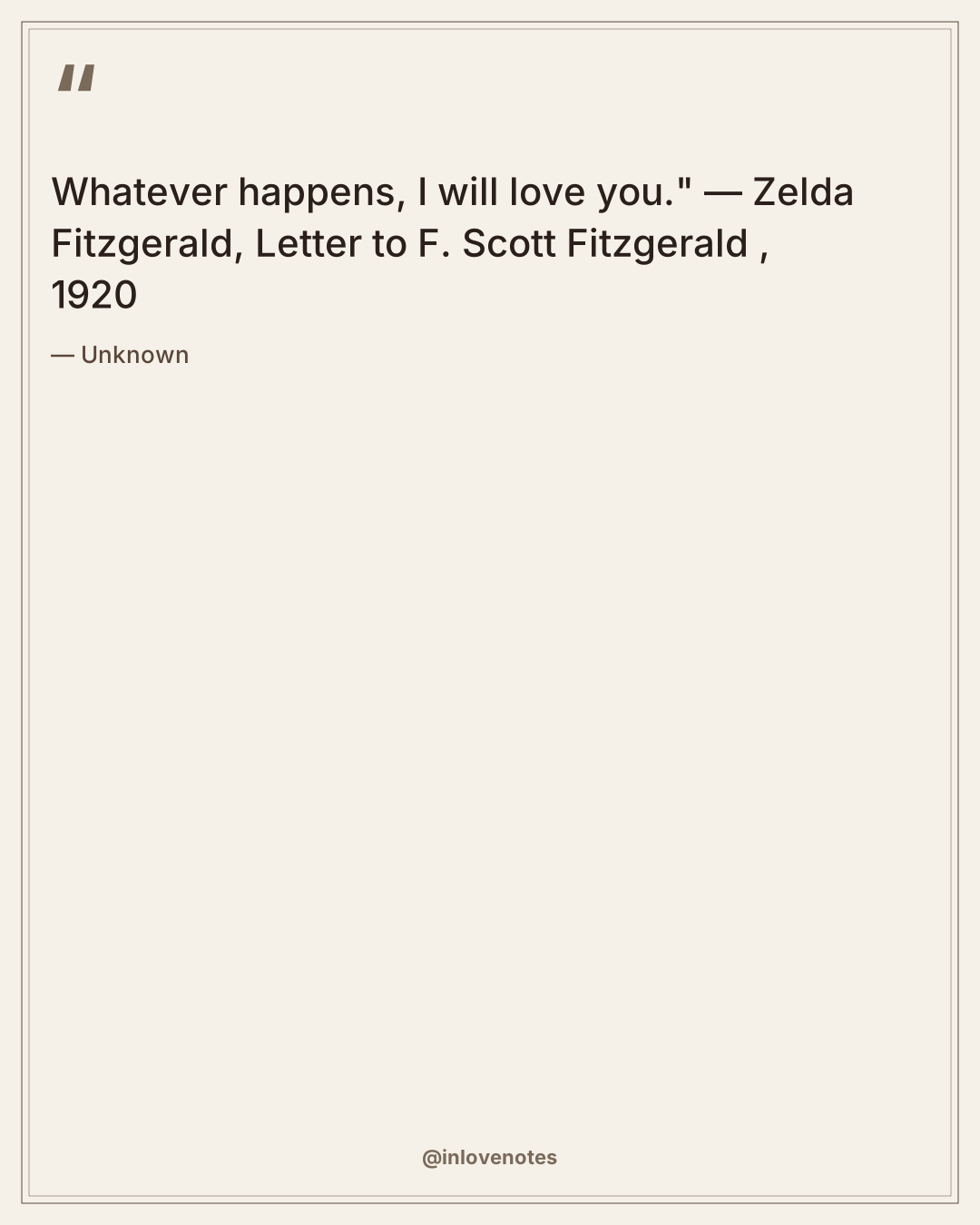
"Whatever happens, I will love you." — Zelda Fitzgerald, Letter to F. Scott Fitzgerald, 1920
Written during the turbulent early days of their courtship, Zelda’s absolute declaration functions as a protective boundary against an unpredictable future.
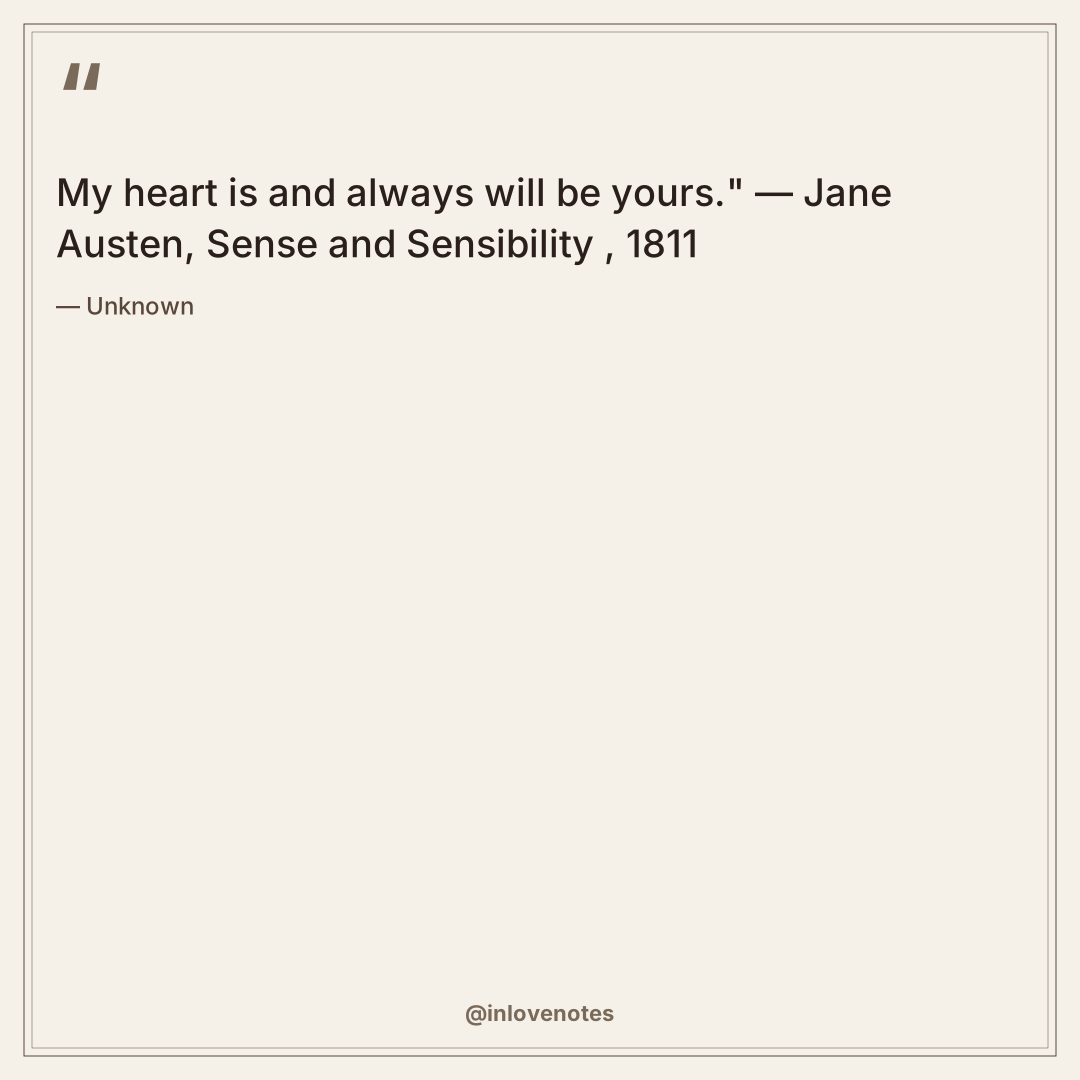
"My heart is and always will be yours." — Jane Austen, Sense and Sensibility, 1811
Austen understood that the most profound commitments require the fewest syllables, a principle that remains entirely applicable to modern marriages.
Anchoring Affection in the Everyday
Lengthy prose demands time and emotional energy from both the writer and the recipient. Short quotes fit into the margins of a Tuesday morning. They can be slipped into a coat pocket, texted during a tedious commute, or left on a bathroom mirror. This practice aligns with the broader tradition of crafting deep love messages that prioritize immediate emotional resonance over literary complexity.
"If I know what love is, it is because of you." — Hermann Hesse, Narcissus and Goldmund, 1930
Hesse assigns the very definition of a complex emotion to a specific person, making this an ideal sentiment for acknowledging a husband's steadying influence.
"You are my greatest adventure." — Brad Bird, The Incredibles, 2004
This line from an animated film about middle-aged domesticity reframes the predictable routines of marriage as a thrilling shared expedition.
"I love thee to the depth and breadth and height my soul can reach." — Elizabeth Barrett Browning, Sonnets from the Portuguese, 1850
While part of a larger, highly structured sonnet, this opening line stands alone as a complete spatial measurement of devotion.
The Psychological Relief of Short Messages
Marriages today operate under an immense cognitive load. Between managing household logistics, navigating professional demands, and maintaining social obligations, partners rarely have the mental bandwidth to process elaborate declarations of affection. A short note bypasses this fatigue entirely. It delivers a concentrated dose of reassurance without demanding a lengthy response. This efficiency does not dilute the romance; rather, it distills it. The recipient absorbs the sentiment instantly.
"I love you more than my own skin." — Frida Kahlo, Letter to Diego Rivera, 1940
Kahlo’s visceral phrasing bypasses traditional romantic clichés to deliver a startlingly physical description of her attachment to Rivera.
"My heart beats faster when you take my hand." — Inspired by Victorian correspondence
Focusing on a specific physical reaction grounds the emotion in reality, reminding a spouse that their physical presence still triggers a biological response.
The Shift Away from Performative Romance
Modern relationships often suffer under the weight of digital exhibitionism. A private, brief note acts as a counterweight to public displays. It exists solely for the recipient. We see this dynamic when couples look for humorous ways to express devotion, relying on inside jokes that require no outside validation. The brevity guarantees intimacy.
"I love you right up to the moon—and back." — Sam McBratney, Guess How Much I Love You, 1994
Originally written for a children's book, this exact phrasing has been co-opted by adults because it provides a tangible, geographic scale for an invisible feeling.
"You have my whole heart for my whole life." — French Proverb
This traditional saying eliminates any ambiguity about the timeline of the commitment, offering absolute security in just nine words.
Writing a few words on a scrap of paper takes only seconds. The resulting artifact can sit on a dashboard for months.
What to Carry Forward
- Brevity forces clarity, stripping away unnecessary adjectives to reveal the core truth of your partnership.
- Short quotes function best when delivered unexpectedly, such as tucked inside a wallet or left on a steering wheel.
- Borrowing language from literature or film allows you to express complex gratitude without drafting original poetry.
- The physical act of handwriting a single sentence often carries more emotional weight than a lengthy digital message.
- Consistent, low-effort notes build a stronger foundation than rare, high-effort romantic gestures.