a note on
Why We Rely on Short Self Love in the Bible Quotes to Anchor Modern Life
Ancient texts offer a surprising counter-narrative to modern burnout by framing personal value as an inherent right rather than an earned achievement.
penned by Erdi Dogan

Sitting with my aunt in a dusty community garden in Portland, 2018, I watched her trace the spine of a worn paperback and realized how often we misinterpret ancient endurance as a mandate for modern burnout. The contemporary wellness industry insists that self-compassion is a novel invention. It sells retreats and digital detoxes as the primary vehicles for internal peace, framing rest as a luxury commodity. Yet, historical texts offer a much older, less commercial framework for viewing one's own existence with dignity. When we examine short self love in the bible quotes, we find a radical departure from the modern hustle culture that demands we constantly prove our utility. These ancient lines function as quiet, durable anchors in a chaotic world. They remind readers that human value is inherent rather than transactional, establishing a baseline of worth that exists entirely independent of economic output or social standing.
The cultural shift toward reading scripture as a text of self-preservation reveals a deep exhaustion with performance-based metrics of success. Generations of readers have approached these texts looking for moral instruction, but modern audiences increasingly seek validation of their basic humanity. This pivot makes sense when you consider the relentless pace of contemporary life. We are surrounded by screens that quantify our popularity and workplaces that measure our efficiency down to the minute. In stark contrast, the ancient writers proposed a worldview where simply existing as a created being was sufficient cause for celebration. Understanding this ancient perspective requires us to look past the institutional dogmas that often overshadow the text itself. It demands that we read these passages as intimate letters written to people who were also struggling to find their footing in unforgiving empires.
The Rejection of Transactional Worth
The ancient Mediterranean world operated on strict hierarchies of power, wealth, and social obligation. In that context, the assertion that an ordinary person possessed inherent divine value was politically and socially disruptive. Today, we face different hierarchies, but the pressure to earn our keep remains deeply ingrained in our collective psyche. We measure ourselves against impossible standards. Exploring ancient texts concerning personal value provides a necessary psychological interruption to this cycle of constant striving. The writers of these texts did not predicate human worth on agricultural yields or military victories. Instead, they grounded human dignity in the simple, undeniable fact of existence.
This radical reframing is particularly vital when we consider the modern epidemic of burnout. We frequently treat ourselves as machines that require optimization rather than living organisms that require care. By revisiting these ancient frameworks, we can begin understanding personal boundaries before extending care to the communities around us. The logic is straightforward but difficult to practice. If a person believes their core identity is flawed or conditional, they will exhaust themselves trying to balance the ledger. Conversely, accepting a baseline of unconditional worth allows for a more sustainable approach to daily life. It shifts the motivation for action from fear of inadequacy to a quiet, grounded confidence.
Historical context deepens the impact of these passages. Consider the agrarian societies where these texts originated, where survival depended on physical labor and community cooperation. Even in those high-stakes environments, the literature carved out conceptual space for rest and intrinsic value. The concept of a Sabbath, for instance, was not merely a religious ritual but a profound economic disruption. It mandated that both humans and animals cease their labor, declaring that production is not the ultimate purpose of life. This ancient boundary-setting mirrors our modern struggle to disconnect from work emails and social obligations. The wisdom embedded in these practices suggests that self-preservation has always required intentional, structural defense against the demands of the world.
The Architecture of Inherent Dignity
When we look closely at the specific language used in these ancient texts, we see a deliberate construction of human dignity. The phrasing is often poetic, utilizing natural imagery to convey profound psychological truths. These are not merely motivational slogans. They are theological arguments for the absolute sanctity of the individual mind and body.
"I praise you, for I am fearfully and wonderfully made." — Psalm 139:14, English Standard Version, 2001
This line, attributed to ancient Hebrew poetry, directly contradicts the modern tendency toward bodily and psychological self-criticism by framing the self as a deliberate, awe-inspiring creation.
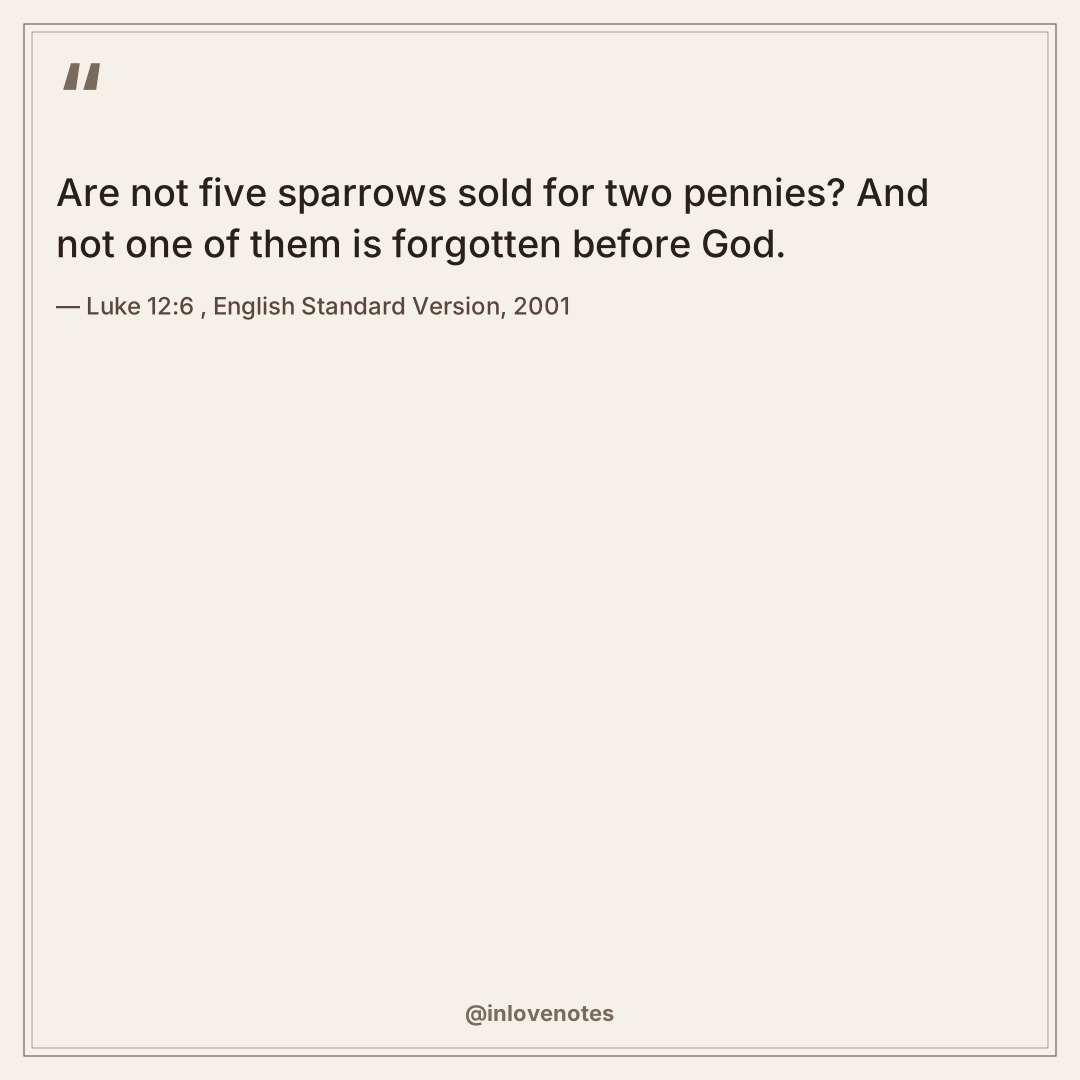
"Are not five sparrows sold for two pennies? And not one of them is forgotten before God." — Luke 12:6, English Standard Version, 2001
Written in the context of first-century Roman occupation, this passage uses the lowest-value marketplace commodity to argue that even the most seemingly insignificant life holds immense, unshakeable worth.
"For we are his workmanship, created in Christ Jesus for good works." — Ephesians 2:10, English Standard Version, 2001
This first-century letter flips the script on labor, suggesting that human beings are the masterpiece themselves, rather than mere instruments meant to produce masterpieces for others.
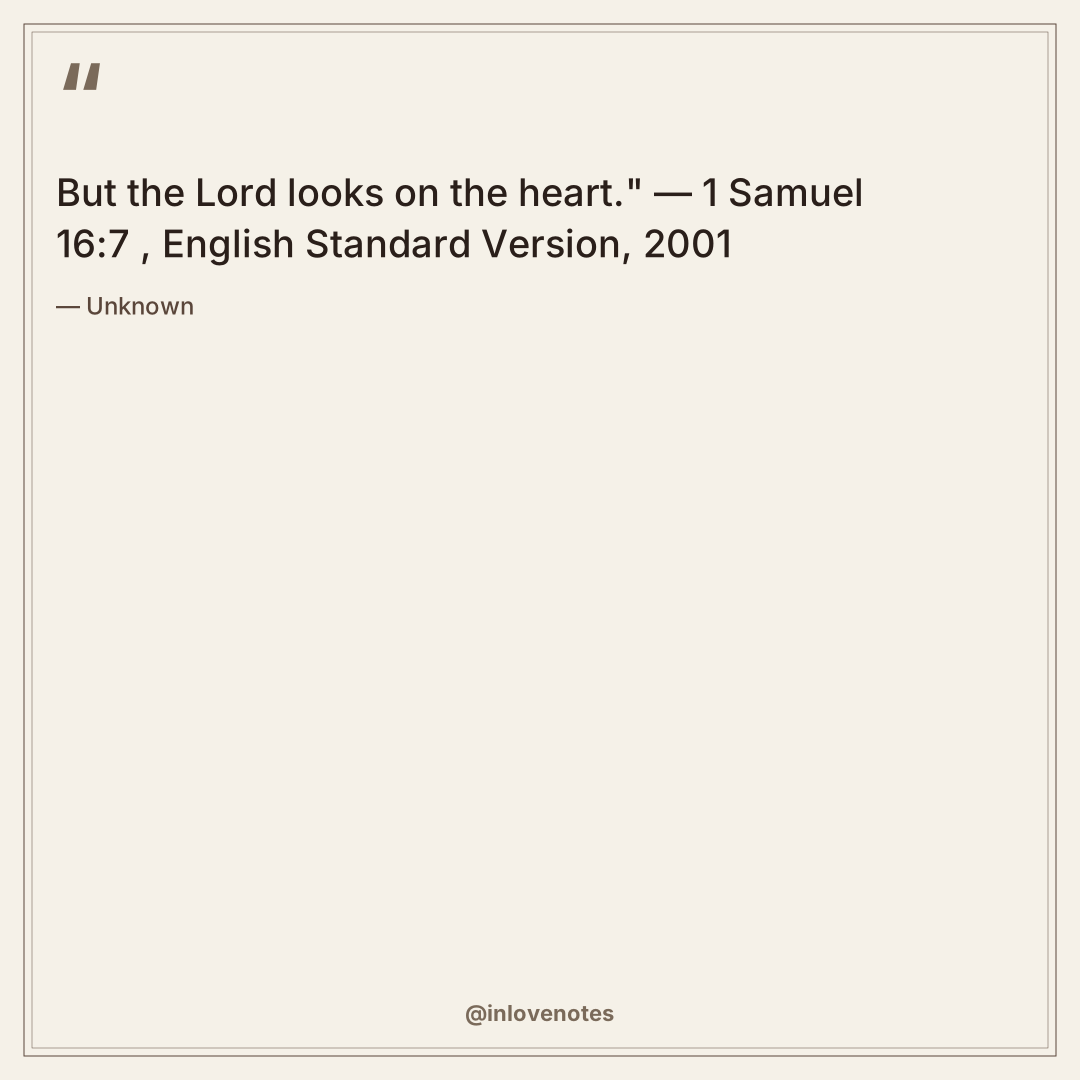
"But the Lord looks on the heart." — 1 Samuel 16:7, English Standard Version, 2001
Found in a historical narrative about royal succession, this brief clause dismisses superficial metrics of physical stature and social rank in favor of internal, unseen realities.
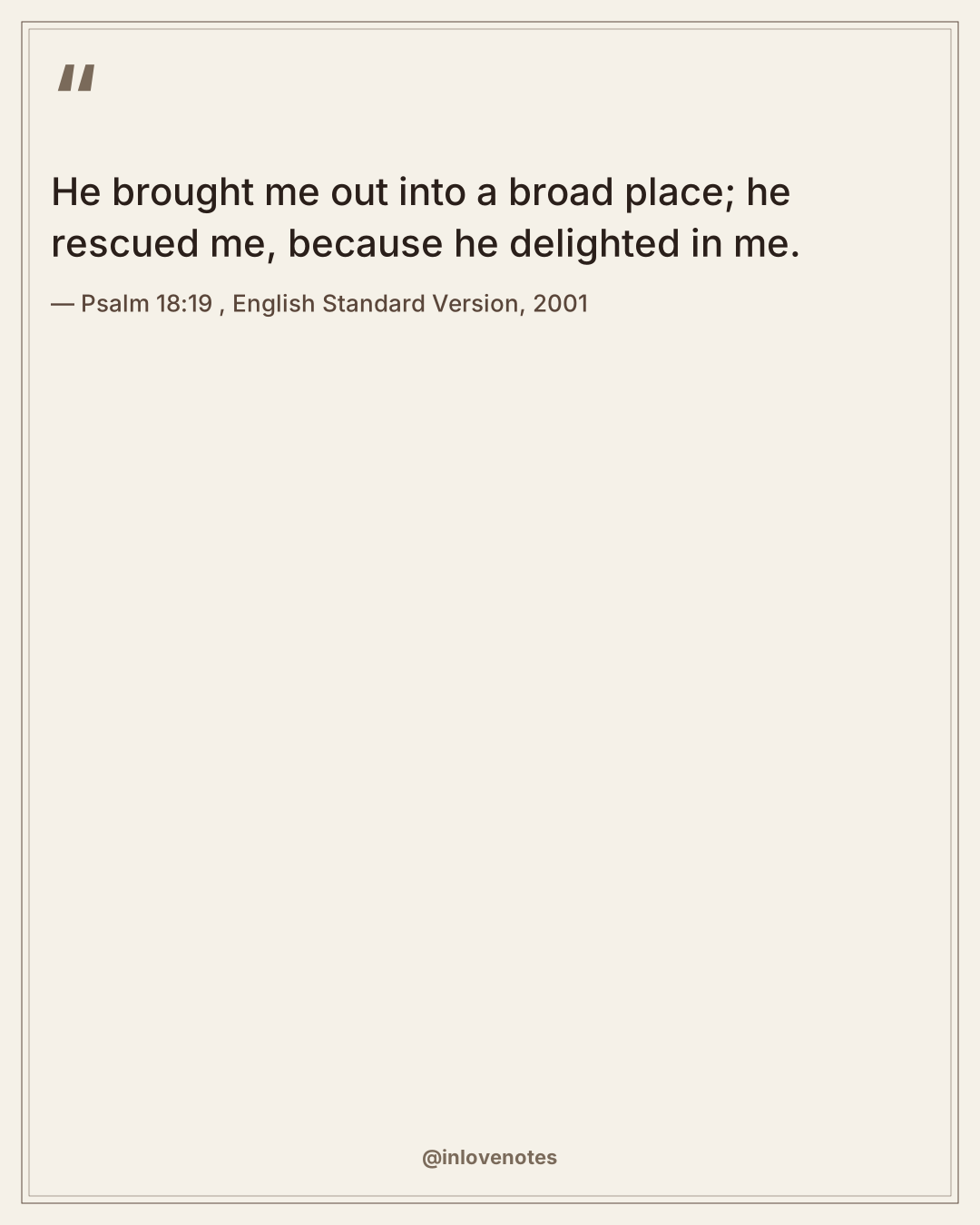
"He brought me out into a broad place; he rescued me, because he delighted in me." — Psalm 18:19, English Standard Version, 2001
This poetic imagery of being moved from confinement to expansive freedom hinges entirely on the concept of being inherently delightful, independent of any heroic action.
Reframing Rest and Self-Preservation
The integration of these concepts into daily life requires a conscious dismantling of the guilt associated with self-care. We often view rest as a temporary pause designed solely to make us more productive when we return to work. This utilitarian view of recovery fundamentally misses the point of broader scriptural themes of compassion. True self-regard involves recognizing that joy, stillness, and peace are valid endpoints in themselves. They do not need to be justified by future output. When we read these ancient texts through a modern lens, they offer permission to step off the treadmill of constant achievement.
This perspective is especially crucial during periods of prolonged stress or grief. When external circumstances are chaotic, internal stability becomes the only reliable sanctuary. Many readers find that finding stamina during particularly grueling seasons requires returning to fundamental truths about their own value. It is impossible to pour from an empty vessel, as the old adage goes. Yet, the ancient texts go further than this pragmatic advice. They suggest that the vessel itself is sacred, regardless of whether it is currently pouring anything out for anyone else. This distinction is subtle but deeply transformative for those accustomed to measuring their worth by their usefulness to others.
Ultimately, the enduring appeal of these short phrases lies in their stark simplicity. In a world characterized by complex algorithms, nuanced social dynamics, and endless streams of information, a clear, declarative statement of worth cuts through the noise. It provides a cognitive reset. By internalizing these ancient affirmations, modern individuals can construct a resilient internal architecture capable of withstanding the inevitable criticisms and failures of daily life. The goal is not arrogance, but a quiet, unassailable peace.
A Few Honest Corrections
Common claim: Ancient texts only promote self-sacrifice and ignore personal boundaries.
Closer to the evidence: While themes of service are prevalent, the foundational texts repeatedly emphasize the necessity of solitude, physical rest, and recognizing one's own inherent value before attempting to serve the broader community.
Common claim: Short scriptural quotes lack the psychological depth of modern therapy.
Closer to the evidence: These brief passages often function as cognitive behavioral anchors, providing concise, repeatable affirmations that interrupt spirals of negative self-talk with established historical authority.
Common claim: Self-love in a religious context is inherently selfish or prideful.
Closer to the evidence: Historical theological frameworks frequently distinguish between destructive arrogance and the healthy, necessary stewardship of one's own physical and mental well-being as a created entity.