a note on
5 Sad Love Quotes for Him That Acknowledge Heavy Grief
Grief demands language that does not rush toward an immediate fix or attempt to bandage a shattered reality.
penned by Erdi Dogan

Absence reshapes the physical geometry of a room. I watched my mother in a clapboard cottage in coastal Maine, 1991, arrange two coffee mugs on the counter out of sheer muscle memory before the reality of my father's empty chair finally caught up with her hands. Grief demands an exactness that most daily language completely fails to deliver. Finding the right words for a partner who is navigating loss, sudden distance, or a profound emotional fracture requires stepping away from cheerful platitudes. You do not need sentences that promise a brighter tomorrow. You need anchors that simply validate the terrible weight of today.
The Crushing Weight of Unspoken Distance
Silence between two people carries a density all its own. When a man is processing sorrow, he often retreats inward, building walls that are difficult to breach with standard conversational tools. Offering a written line that names the darkness can provide a strange, quiet comfort.
"Where there is sorrow there is holy ground." — Oscar Wilde, De Profundis, 1897
Wilde wrote this expansive, devastating letter from his cell in Reading Gaol, confronting the stark reality of isolation and public ruin head-on.
"No one ever told me that grief felt so like fear." — C.S. Lewis, A Grief Observed, 1961
Lewis published this raw journal under a pseudonym after the death of his wife, stripping away his usual academic distance to document moments of raw, unvarnished panic.
Pairs well with: validating his heavy grief directly
Acknowledging the Physical Fracture
Real heartbreak manifests in the body before the mind fully comprehends the shift. Literature from the 19th and early 20th centuries often captured this physiological response without rushing toward modern therapeutic resolutions.
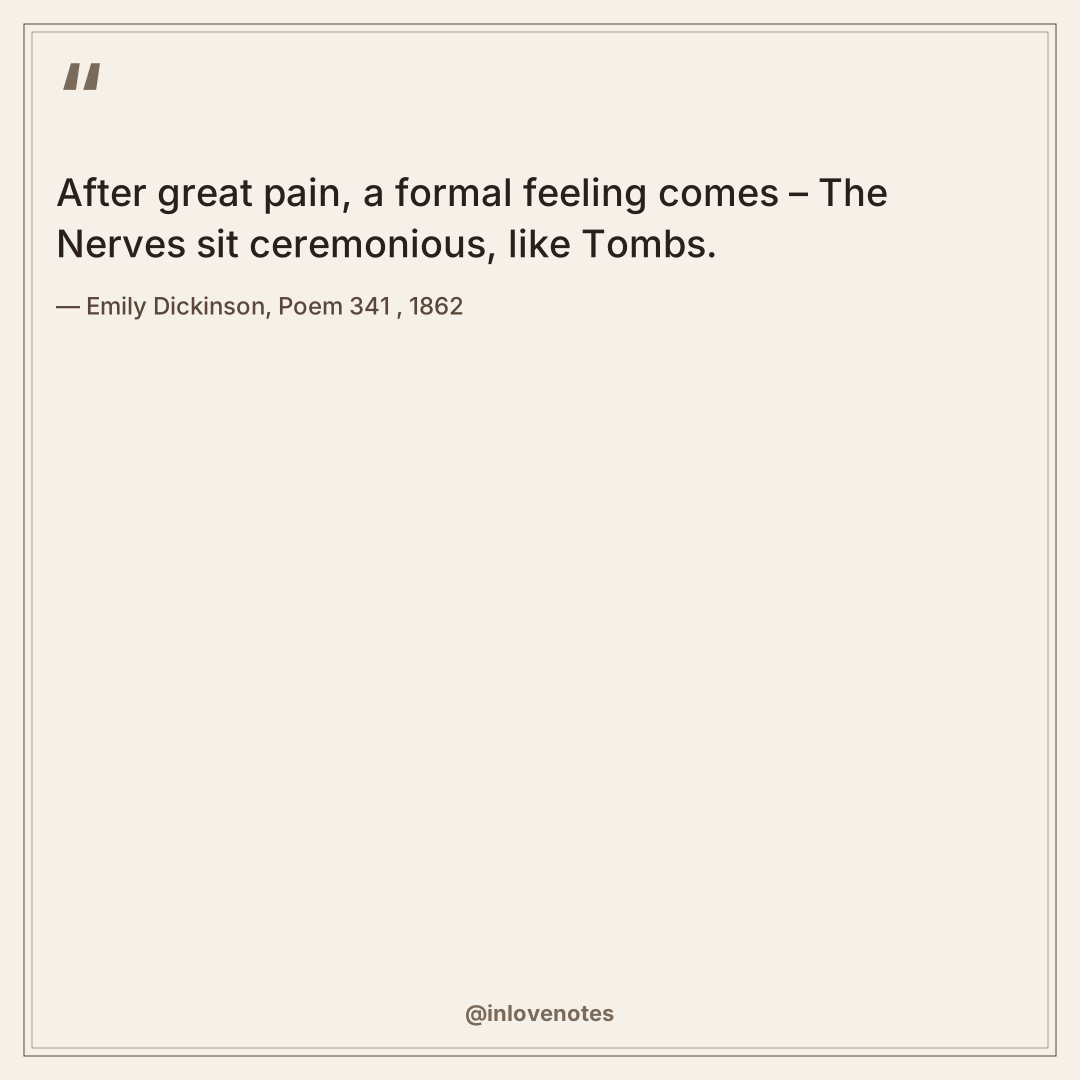
"After great pain, a formal feeling comes – The Nerves sit ceremonious, like Tombs." — Emily Dickinson, Poem 341, 1862
Dickinson perfectly captured the icy numbness that follows acute emotional shock, describing the precise moment the human body shuts down to protect itself.
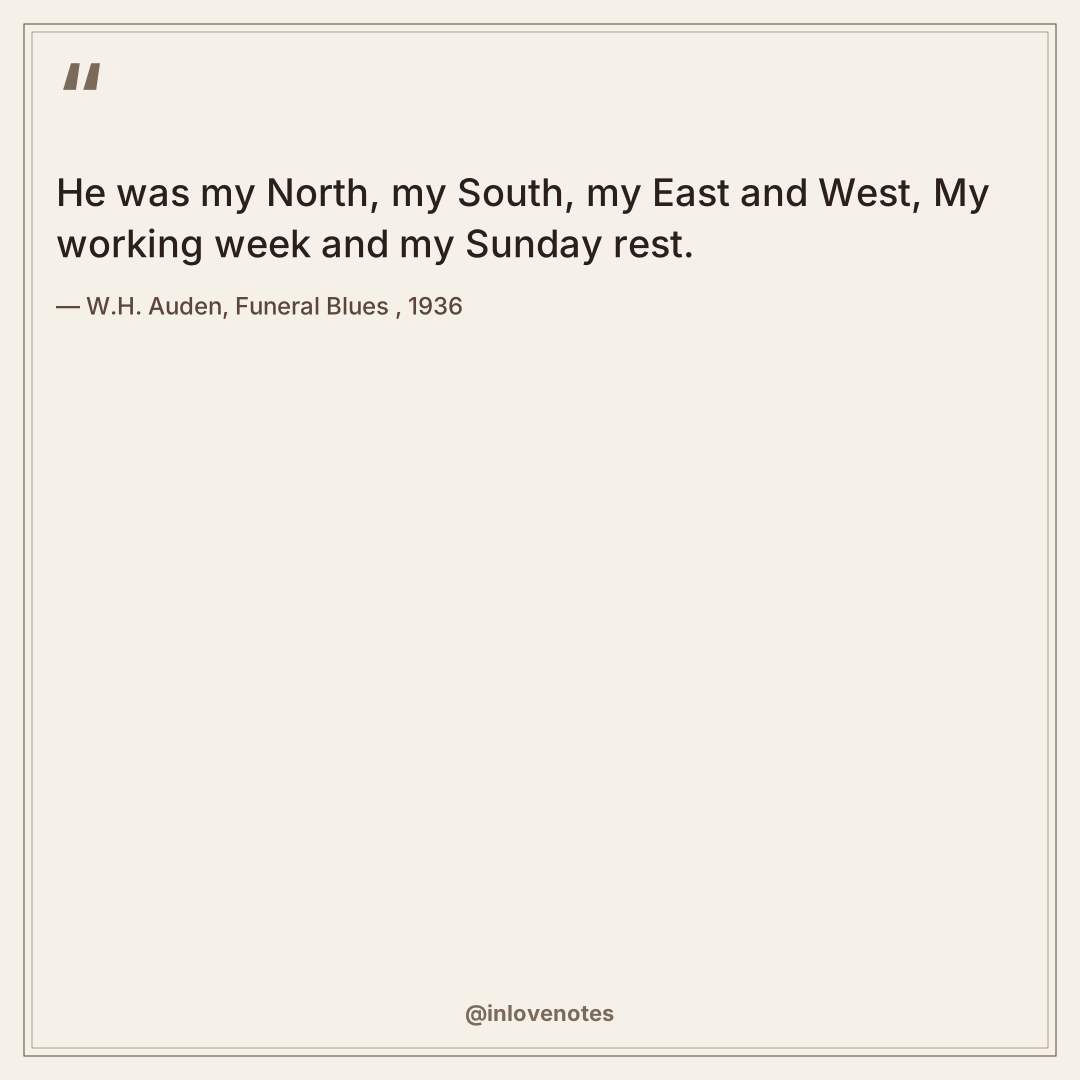
"He was my North, my South, my East and West, My working week and my Sunday rest." — W.H. Auden, Funeral Blues, 1936
Originally drafted for a satirical play, Auden's verses slowly evolved over decades into one of the 20th century's most devastating expressions of total emotional collapse.
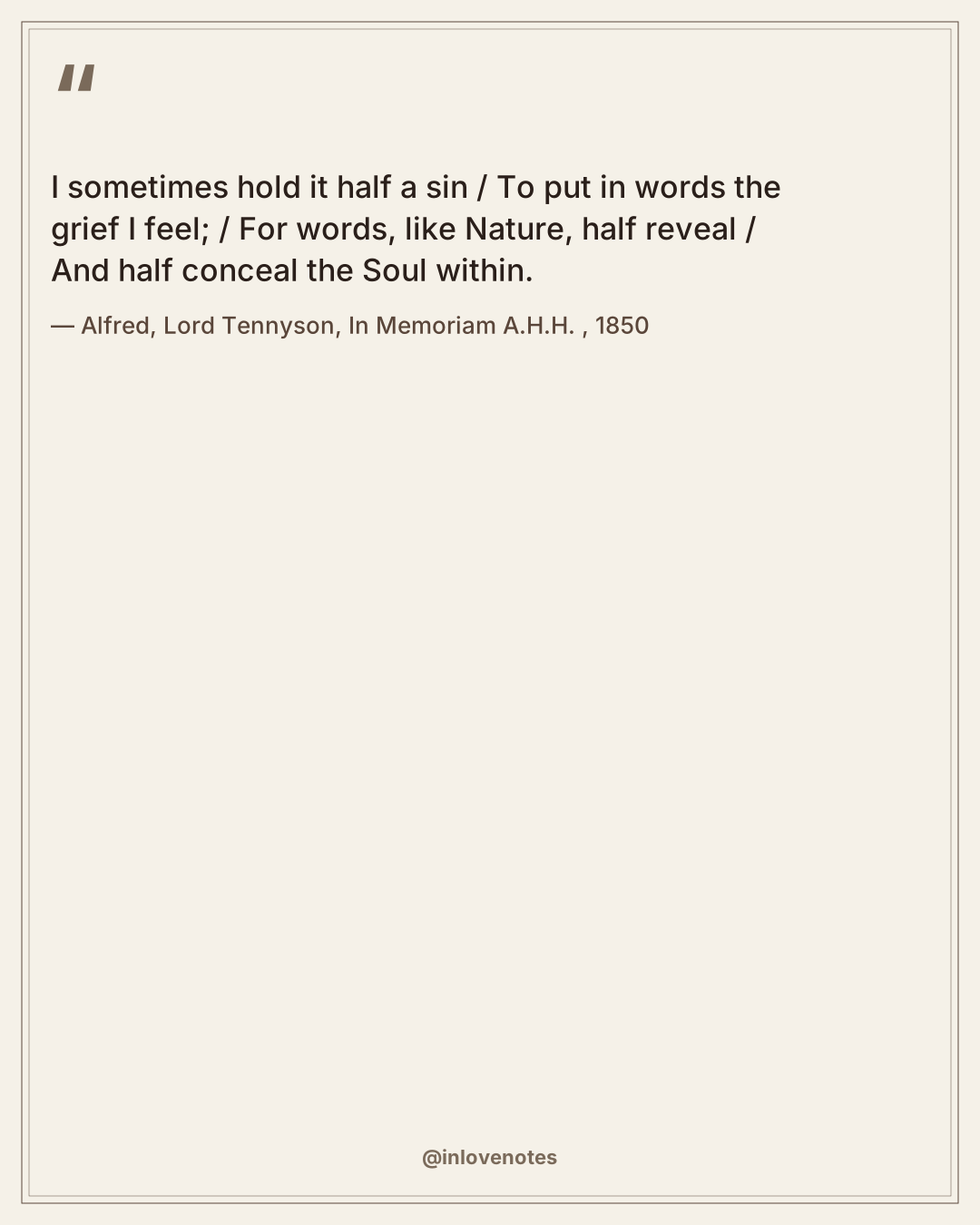
"I sometimes hold it half a sin / To put in words the grief I feel; / For words, like Nature, half reveal / And half conceal the Soul within." — Alfred, Lord Tennyson, In Memoriam A.H.H., 1850
Tennyson spent seventeen years drafting this sprawling elegy for his closest friend, recognizing early on that language itself often betrays the true magnitude of human suffering.
Pairs well with: quiet sentiments for reflective anniversaries
Pairs well with: messages carrying profound emotional weight
Common Questions, Straight Answers
Should I send sad quotes to a grieving partner?
Yes, provided you do not demand a response. Forcing relentless optimism often isolates someone in pain, while acknowledging their grim reality builds genuine, lasting trust.
How do I frame a difficult message without making it worse?
Keep your own commentary remarkably brief. Let the selected verse carry the heavy lifting, and simply remind him that you plan to stay present for the aftermath.
Are older literary verses better for expressing sorrow?
Not inherently, but authors writing in previous centuries often enjoyed more cultural permission to explore melancholy deeply without the modern pressure to immediately heal.