a note on
How Do We Articulate Deep Connection? 18 Heart Touching Relationship Quotes
The words we pass between each other in quiet moments often carry more weight than grand declarations ever could.
penned by Erdi Dogan

We rarely remember everyday conversations exactly. I still remember sitting across from my mother in a diner booth off Route 66 in Flagstaff, Arizona, 2009, listening to her explain why a thirty-year marriage survives its coldest winters. She stirred her coffee and said the secret wasn't passion, but the willingness to keep learning a person who is constantly changing. The writers and thinkers who manage to articulate the gravity of human bonds usually do so by stripping away the theatrics.
A longer take on this lives in our discussion of writing authentic letters to your partner.
The Architecture of Trust
Real intimacy builds its foundation over decades of shared routines. The initial spark requires very little effort, but sustaining a profound connection means choosing the same person repeatedly through shifting seasons and external pressures.
"Love does not consist in gazing at each other, but in looking outward together in the same direction." — Antoine de Saint-Exupéry, Airman's Odyssey, 1939
Published just before the outbreak of the Second World War, this sentiment reframes romance as a collaborative survival effort.
"The best thing to hold onto in life is each other." — Audrey Hepburn
This perspective emerged from her later years spent prioritizing family over a demanding Hollywood schedule.
For the counterpoint, explore the dynamics of phrases that move us emotionally.
"Whatever our souls are made of, his and mine are the same." — Emily Brontë, Wuthering Heights, 1847
Catherine Earnshaw delivers this ferocious declaration of identity and belonging in the bleak, wind-swept moors of Yorkshire.
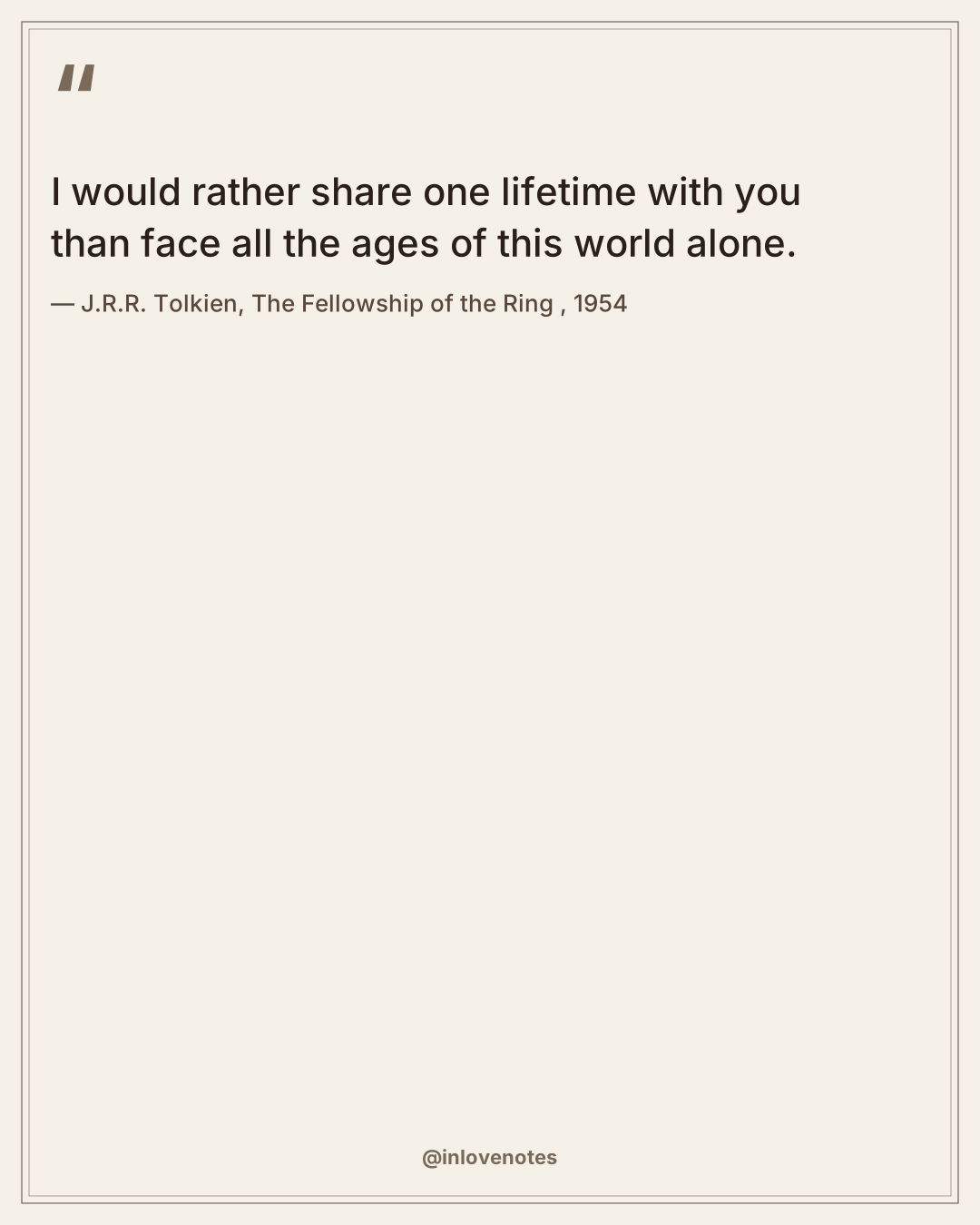
"I would rather share one lifetime with you than face all the ages of this world alone." — J.R.R. Tolkien, The Fellowship of the Ring, 1954
Arwen chooses mortality over eternal isolation, embracing the fragile reality of human connection.
"There is no remedy for love but to love more." — Henry David Thoreau, Journal, 1839
Journal entries from his twenties reveal a deeply romantic interior life beneath the rugged transcendentalism.
"Love is the emblem of eternity; it confounds all notion of time." — Madame de Staël, Corinne, 1807
Her groundbreaking novel challenged nineteenth-century European conventions of how women were allowed to experience passion.
Weathering the Storms
Friction is a guaranteed feature of any honest partnership. Finding the right language to navigate those inevitable conflicts determines whether a relationship deepens or splinters under the weight of familiarity.
This gets argued with in a broader study of how ancient texts frame resilience.
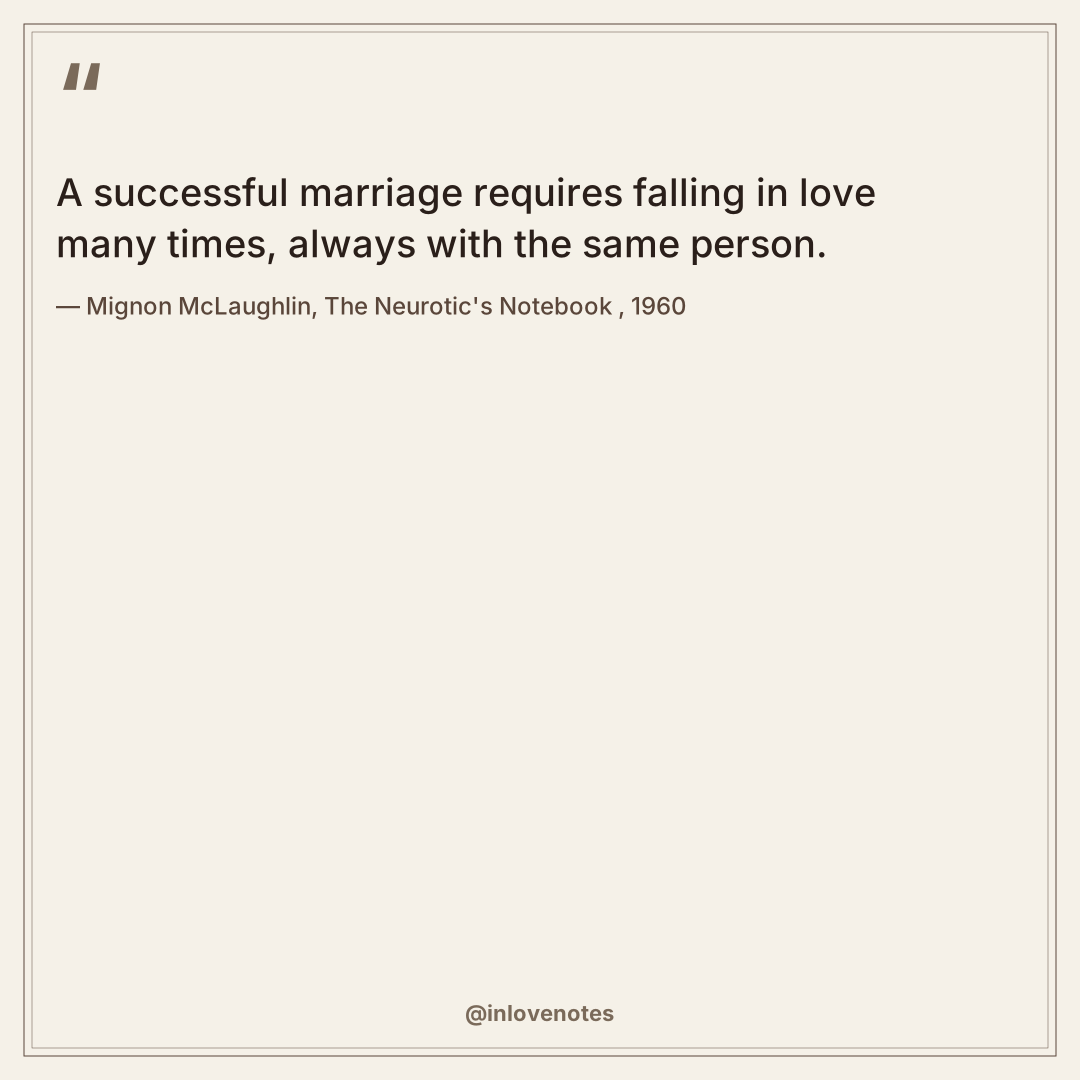
"A successful marriage requires falling in love many times, always with the same person." — Mignon McLaughlin, The Neurotic's Notebook, 1960
A sharp, unsentimental observation from a mid-century journalist who understood the cyclical nature of long-term commitment.
"The giving of love is an education in itself." — Eleanor Roosevelt, My Day, 1944
Penned in her daily syndicated newspaper column during a period of intense global and personal upheaval.
"To be fully seen by somebody, then, and be loved anyhow—this is a human offering that can border on miraculous." — Elizabeth Gilbert, Committed, 2010
Modern memoirs often highlight the sheer vulnerability required to let another person witness our unpolished reality.
"Love is a temporary madness, it erupts like volcanoes and then subsides." — Louis de Bernières, Corelli's Mandolin, 1994
This wartime narrative captures the violent, unpredictable nature of early infatuation before it settles into structural trust.
Related — our deeper look at communicating profound affection in everyday moments.
"We are most alive when we're in love." — John Updike, Assorted Prose, 1965
Known for chronicling the suffocating elements of suburban marriages, he occasionally conceded the undeniable electrical charge of true affection.
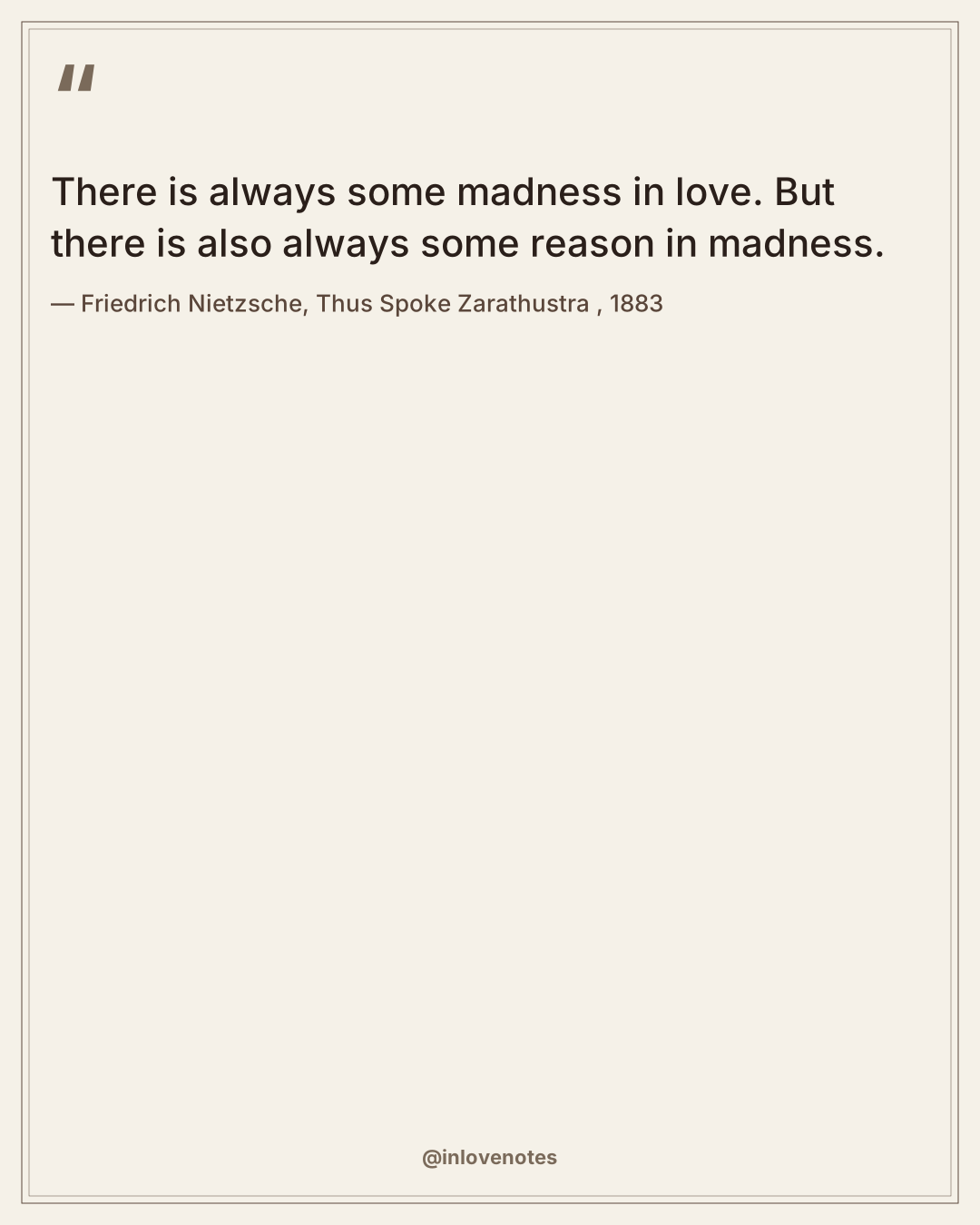
"There is always some madness in love. But there is also always some reason in madness." — Friedrich Nietzsche, Thus Spoke Zarathustra, 1883
The German philosopher rarely wrote about romance, making this stark acknowledgment of irrational devotion particularly striking.
The Quiet Moments of Anchor
Eventually, grand gestures give way to the profound comfort of being completely known. The most resonant observations on partnership honor the silent agreements made over morning coffee and evening commutes.
A practical application surfaces when finding stability during major life shifts.
"Love is an irresistible desire to be irresistibly desired." — Robert Frost
The New England poet stripped away flowery Victorian excess to name the core driver of human attraction.
"The minute I heard my first love story, I started looking for you." — Jalaluddin Rumi, The Masnavi, 13th Century
Translated across centuries, the Persian mystic's verses blur the lines between spiritual devotion and earthly romance.
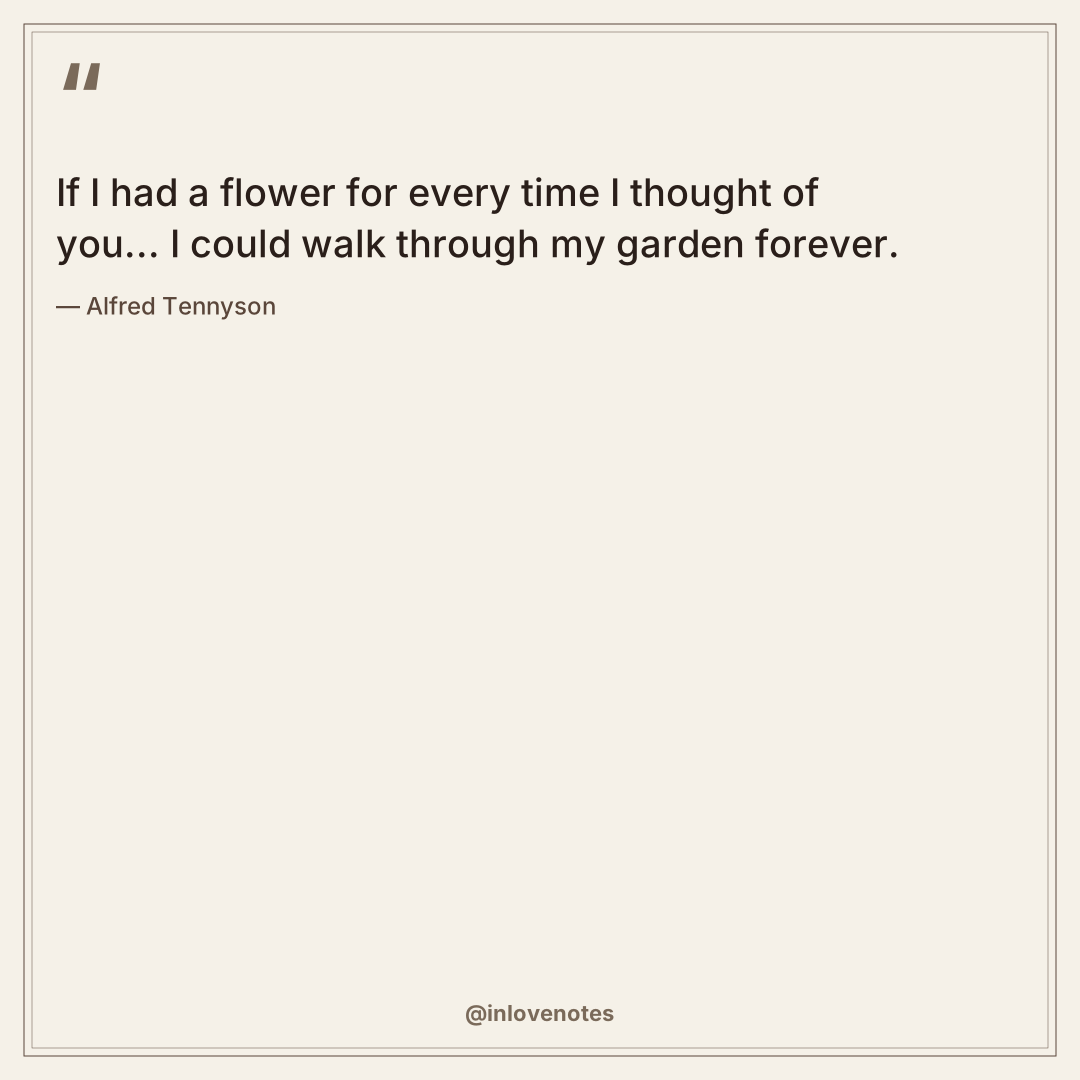
"If I had a flower for every time I thought of you... I could walk through my garden forever." — Alfred Tennyson
This Victorian reflection on persistent memory has anchored handwritten correspondence for over a century.
"Love is not a habitude, a commitment, or a debt. It isn't what romantic songs tell us it is." — Paulo Coelho, The Zahir, 2005
The contemporary novelist frequently dissects the difference between possessive attachment and genuine, liberating affection.
This dynamic shifts entirely when we consider ancient perspectives on human bonds.
"The greatest happiness of life is the conviction that we are loved; loved for ourselves, or rather, loved in spite of ourselves." — Victor Hugo, Les Misérables, 1862
Buried within his massive French epic, this realization defines the moral awakening of its central characters.
"Love builds up the broken wall and straightens the crooked path." — Inspired by Christina Rossetti, Poems, 1862
The nineteenth-century poet consistently explored how genuine affection reconstructs our fractured internal landscapes.
Where Conventional Wisdom Slips
Popular reading: Unconditional love means accepting every behavior without question.
On closer look: True unconditional regard requires rigorous boundaries to survive over a lifetime. Enduring partnerships demand accountability precisely because the stakes of the connection are so high.
Popular reading: True connection happens instantly and effortlessly.
On closer look: Neurological infatuation spikes immediately, but deep structural trust requires thousands of mundane, repeated interactions to solidify into something reliable.
Popular reading: Silence between partners indicates emotional distance.
On closer look: The absence of constant verbal affirmation often signals an advanced stage of security where both individuals no longer feel the need to perform their affection.
Documenting these sentiments provides a physical artifact of an invisible bond. A well-placed phrase read years later can instantly transport two people back to the precise moment they decided to stay.