a note on
How Has Language Captured Devotion? 7 Quotes on Love
Tracing the evolution of romantic language reveals exactly how writers from the nineteenth century to the modern era managed to articulate devotion.
penned by Erdi Dogan

Human language shifts constantly, yet our attempts to pin down romance follow a clear chronological arc from Victorian grandiosity to modern realism. Sitting beside my aunt in a second-floor walkup in Queens, New York, 1982, I watched her read old letters aloud, proving that spoken affection changes shape depending on the decade. The words always change. We track this evolution through seven distinct phases of the written word, observing how authors adapted their vocabulary to fit the cultural anxieties of their specific time periods.
A sharp contrast to this earnestness can be found in humorous observations on male devotion.
Early Nineteenth Century Foundations
Writers in the early 1800s treated affection as an overwhelming, atmospheric force that defied simple logic. Authors relied on sweeping declarations to capture sentiments that society otherwise repressed beneath strict etiquette rules. The prose shifted. This era produced verses that still dominate our collective memory regarding courtship and proposal.
"I cannot fix on the hour, or the spot, or the look, or the words, which laid the foundation. It is too long ago." — Jane Austen, Pride and Prejudice, 1813
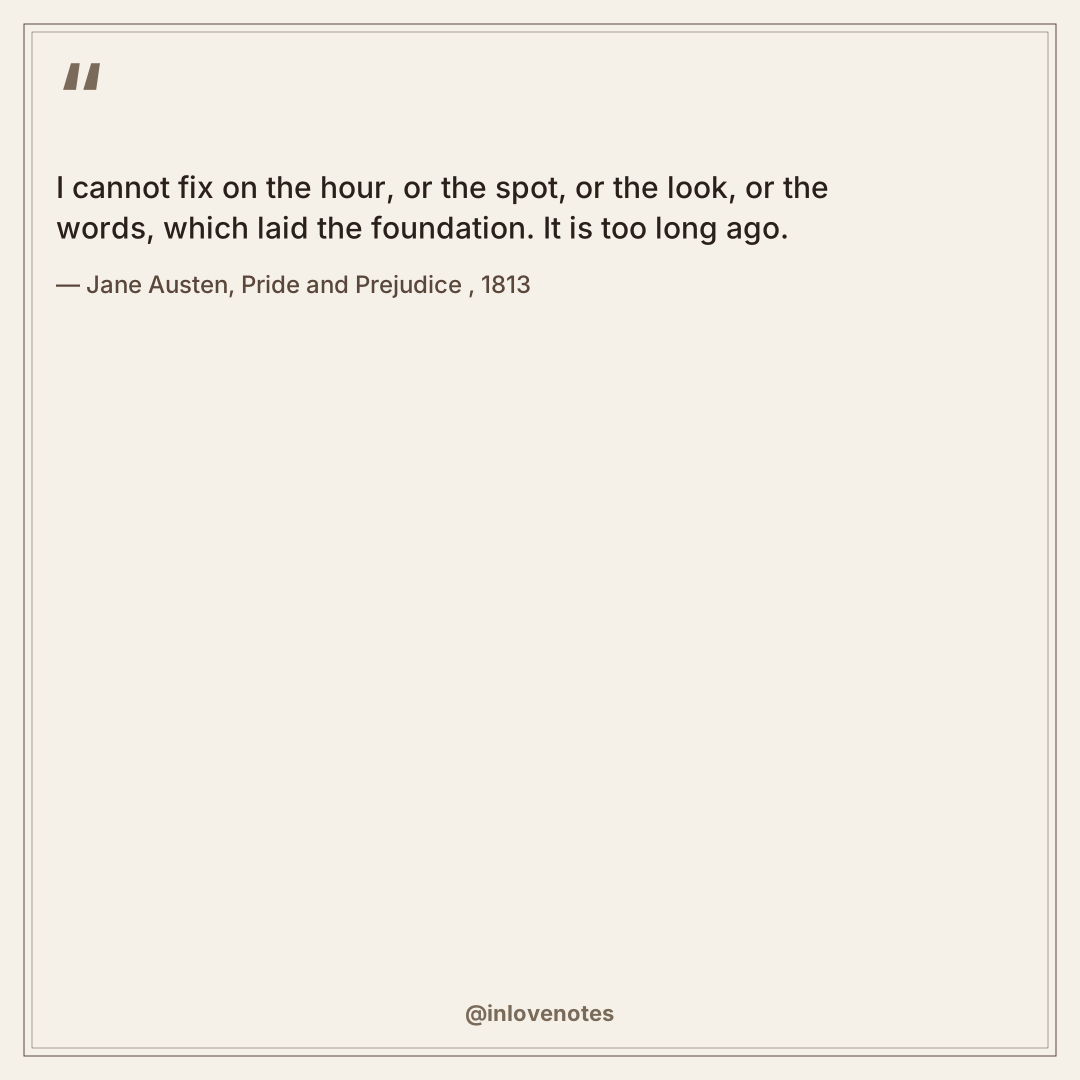
Austen grounds Mr. Darcy’s confession in the quiet, cumulative nature of genuine attachment rather than a sudden burst of irrational infatuation.
"I love thee to the depth and breadth and height my soul can reach." — Elizabeth Barrett Browning, Sonnets from the Portuguese, 1850
Published during the height of the Victorian era, this famous sonnet attempted to measure an emotion that fundamentally resists quantification.
A longer take on individual merit lives in literary reflections on personal value.
The Late Victorian and Edwardian Shift
As industrialization reshaped daily life, authors began framing romance as a refuge against an increasingly mechanical world. They anchored passion in specific domestic details rather than projecting it onto the cosmos alone. Sentences grew shorter. You can see this transition clearly in the serialized novels printed across late nineteenth-century newspapers.
"I loved her against reason, against promise, against peace, against hope, against happiness, against all discouragement that could be." — Charles Dickens, Great Expectations, 1861
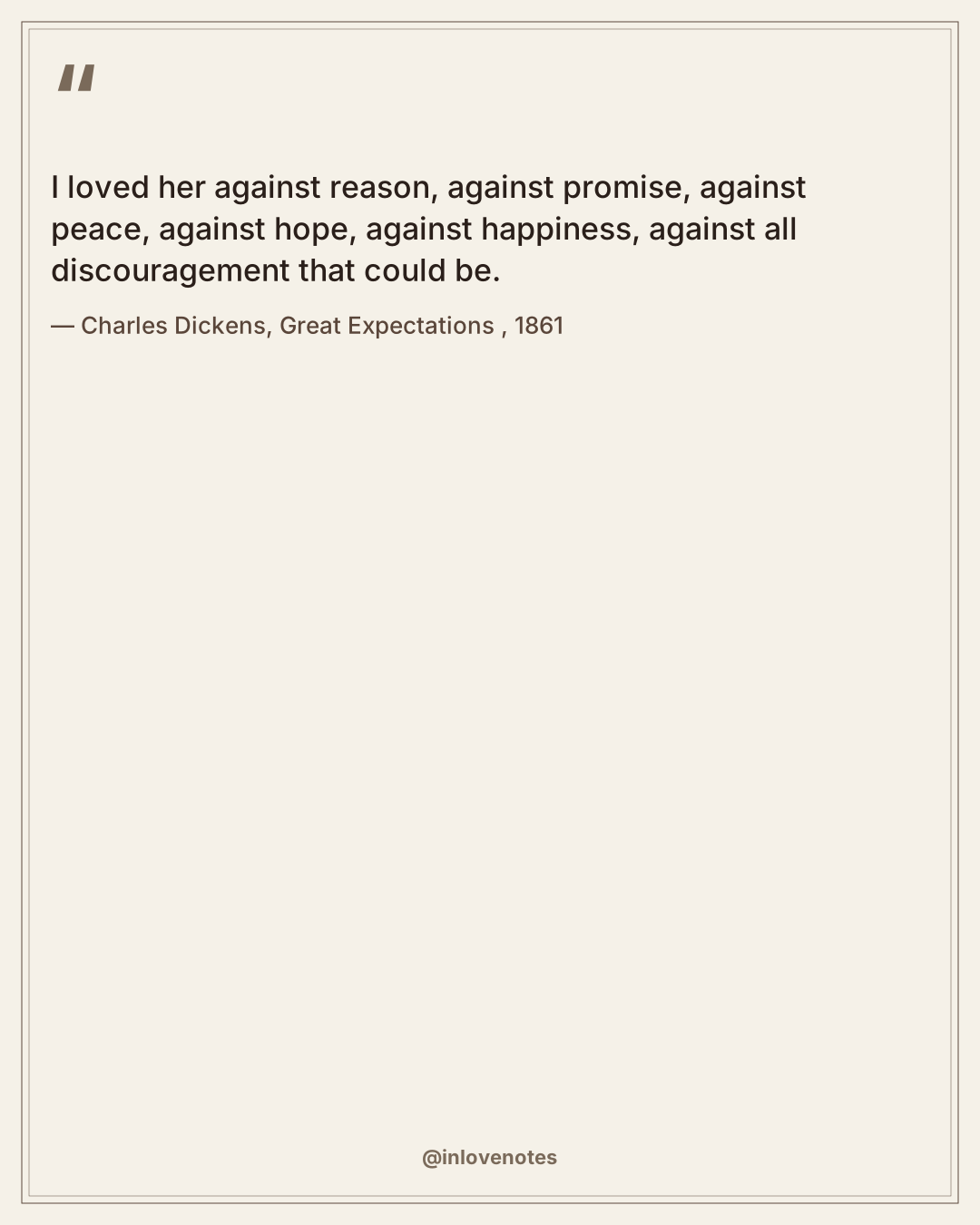
Pip’s painful admission regarding Estella highlights the obsessive, destructive potential of unrequited adoration in the grime of Dickensian London.
"To get the full value of joy you must have someone to divide it with." — Mark Twain, Following the Equator, 1897
Twain strips away European romanticism to present a pragmatic, deeply American view of partnership as a shared daily experience.
This pragmatic perspective diverges from the brief mediterranean phrases about romance that rely heavily on poetic imagery.
Mid-Century Modern Realities
By the time global conflicts fractured the twentieth century, writers abandoned flowery excess for stark, survivalist declarations of devotion. Sentences shortened as authors prioritized psychological truth over poetic ornament. Those seeking profound letters of affection often turn to this precise historical window to find unvarnished honesty.
"I love you. I am at rest with you. I have come home." — Dorothy L. Sayers, Busman's Honeymoon, 1937
Sayers concludes her long-running mystery series by letting Lord Peter Wimsey finally articulate a quiet, exhausted contentment after years of turmoil.
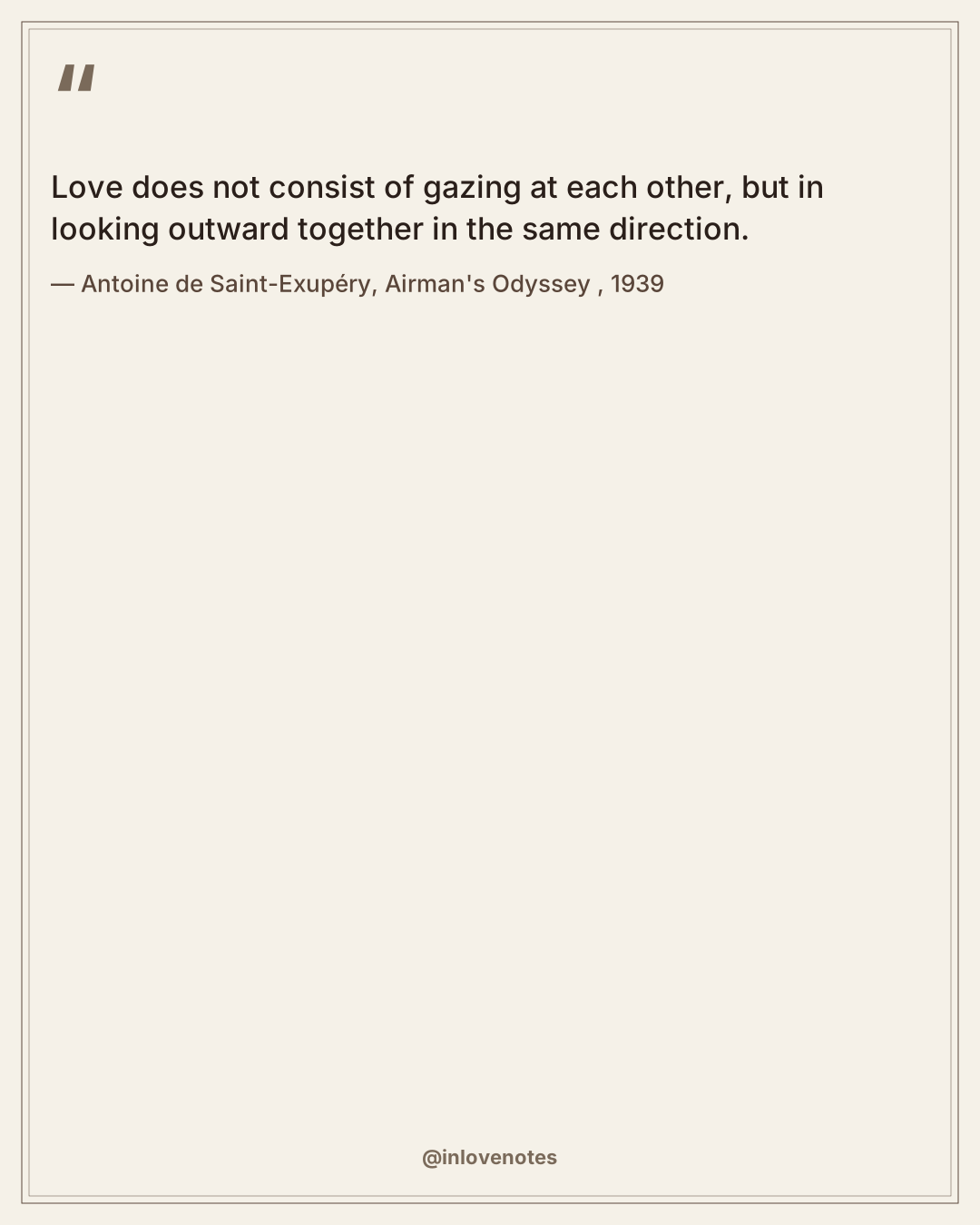
"Love does not consist of gazing at each other, but in looking outward together in the same direction." — Antoine de Saint-Exupéry, Airman's Odyssey, 1939
The pioneering aviator penned this reflection just before the outbreak of World War II, emphasizing unity in the face of immense external peril.
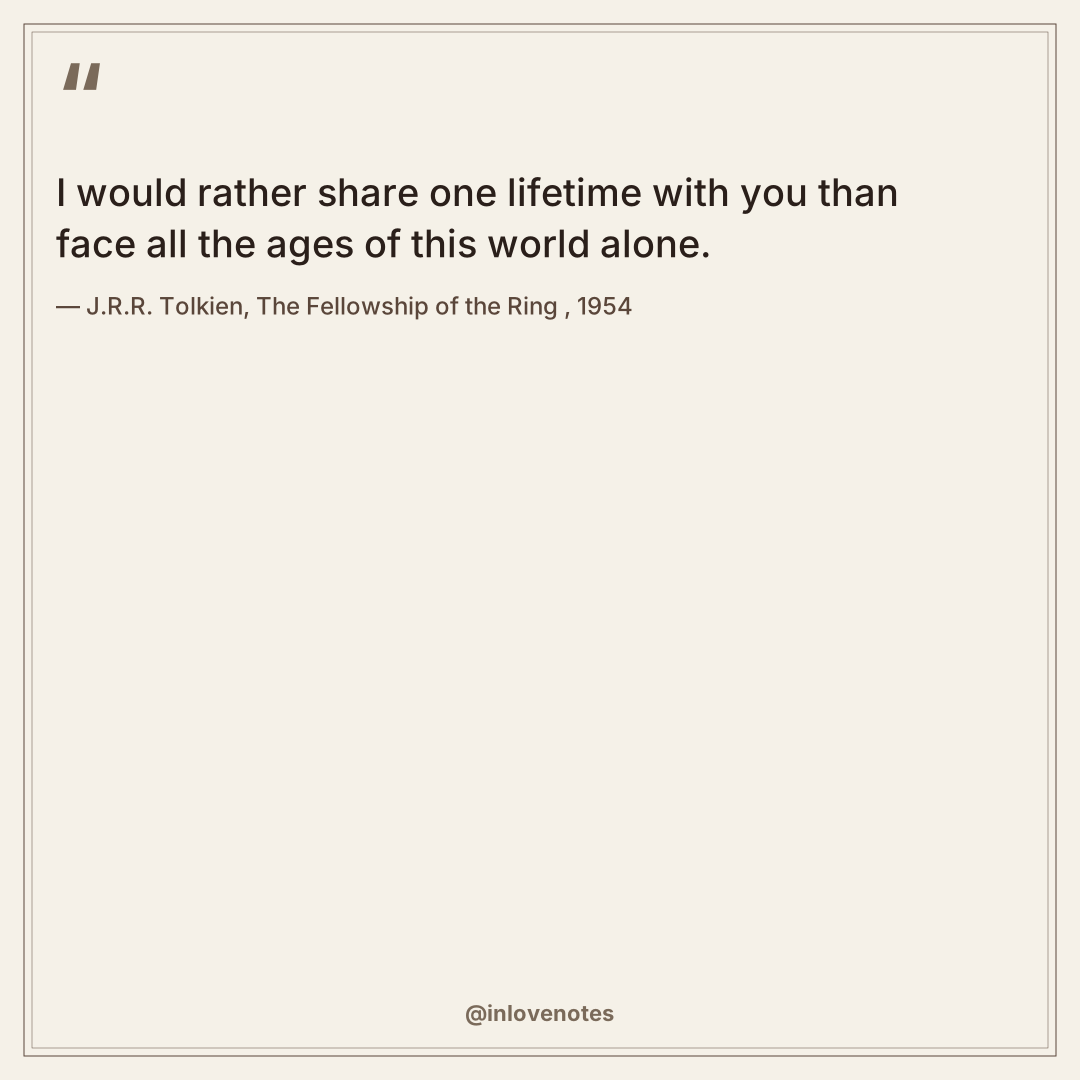
"I would rather share one lifetime with you than face all the ages of this world alone." — J.R.R. Tolkien, The Fellowship of the Ring, 1954
Tolkien anchors the relationship between Arwen and Aragorn in the ultimate sacrifice of immortality for a fleeting, vulnerable human connection.
Readers frequently reference scriptural verses regarding relationships when examining these exact themes of lifelong commitment and sacrifice.
Common Questions, Straight Answers
Why do Victorian authors use such complex phrasing?
Nineteenth-century literary conventions required authors to elevate emotional experiences through formal syntax, deliberately avoiding the blunt conversational style we expect in modern publishing.
Did Dickens actually believe in romantic idealism?
While his early works featured idealized partnerships, his later novels, particularly those written after his marital separation in 1858, portrayed affection as a deeply flawed and complicated human pursuit.
Are translated works reliable for these sentiments?
Translators often have to choose between literal accuracy and poetic rhythm, meaning quotes from authors like Saint-Exupéry exist in several slightly different English variations across different printed editions.