a note on
Why the Biblical Vision of a Mother's Strength Defies Modern Expectations
Ancient scriptures frame maternal endurance not as quiet martyrdom but as a fiercely active force shaping the foundations of early communities.
penned by Erdi Dogan

The Soft-Spoken Martyr Is a Recent Invention
We sat across from my aunt in a diner booth off Route 66 in Flagstaff, Arizona, 2013, listening to her explain why she refused to be called a saint just because she raised four boys on a teacher's salary. She argued that the cultural impulse to paint motherhood as an endless exercise in passive suffering strips the role of its actual grit. This tendency to domesticate maternal labor heavily distorts how modern readers interpret ancient texts. Contemporary greeting cards often reduce scriptural mothers to gentle figures bathed in golden light, yet the original manuscripts present women operating as political strategists, merchants, and community defenders. The editors of the 1992 Women's Bible Commentary exhaustively documented how the translation of certain Hebrew verbs softened the physical and economic power these women wielded. They were not merely surviving. They were actively constructing the socioeconomic realities of their tribes.
Reading these passages through a historical lens reveals a startling pragmatism. The ancient Near East demanded intense physical stamina and sharp economic instincts just to keep a household fed through a famine. When we look past the Victorian-era interpretations of these texts, we find language that mirrors the vocabulary of military commanders and estate managers rather than passive caregivers. A mother's devotion required a terrifying capacity for risk. You had to negotiate with hostile authorities, manage complex agricultural supply chains, and secure inheritances in legal systems designed to ignore female plaintiffs entirely.
What Real Endurance Looks Like in Ancient Texts

The scriptures frequently map maternal love onto the language of structural fortification. Rather than focusing on emotional warmth alone, the writers emphasized the physical and intellectual architecture required to keep a family intact. This robust framework often runs parallel to verses detailing a father's guidance, establishing a dual requirement for communal survival.
"She sets about her work vigorously; her arms are strong for her tasks." — King Lemuel (Traditionally attributed), Book of Proverbs 31:17, NIV, c. 700 BCE
Scholars often point out that the Hebrew word used here for "strong" shares its root with terms used to describe military fortifications, suggesting a muscular, athletic approach to daily labor that shatters the illusion of delicate domesticity.
"She speaks with wisdom, and faithful instruction is on her tongue." — King Lemuel (Traditionally attributed), Book of Proverbs 31:26, NIV, c. 700 BCE
The concept of "faithful instruction" in an oral culture meant that mothers served as the primary theologians and historians for the next generation, carrying the immense responsibility of preserving tribal identity through spoken word.
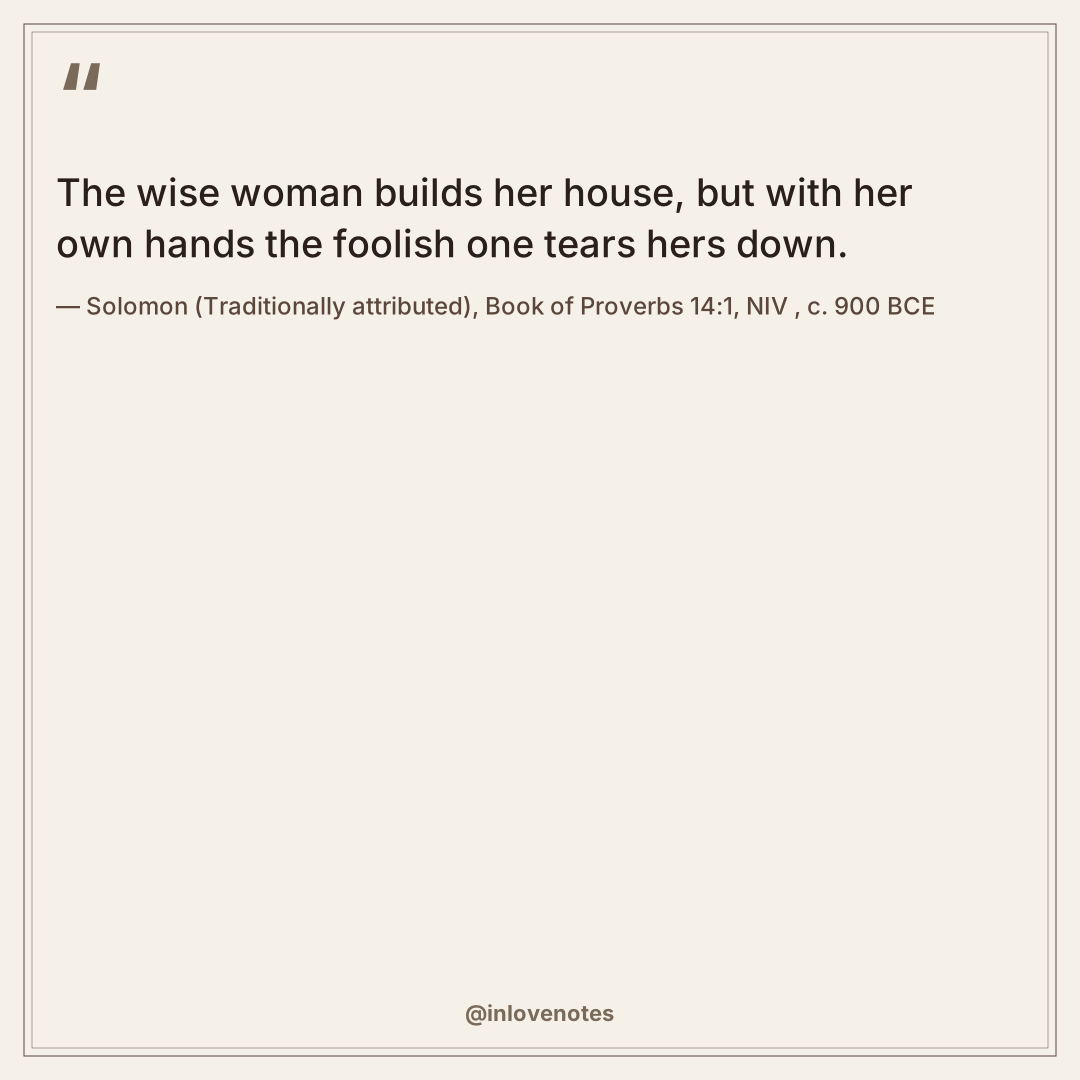
"The wise woman builds her house, but with her own hands the foolish one tears hers down." — Solomon (Traditionally attributed), Book of Proverbs 14:1, NIV, c. 900 BCE
This proverb treats the household not as a physical building but as a multi-generational enterprise requiring constant, deliberate construction and acute economic management.
The Tangible Labor of Sustaining Community

Ancient writers understood that love devoid of action was essentially useless in a desert environment. Protection required strategic defiance against oppressive regimes, a theme repeated throughout the early narratives of Genesis and Exodus. The women who safeguarded their children often had to manipulate the very legal frameworks designed to oppress them. This fierce protectiveness aligns closely with early texts regarding self-preservation, where maintaining one's own strength is treated as a prerequisite for protecting dependents.
"Do everything in love." — Paul the Apostle, First Epistle to the Corinthians 16:14, NIV, c. 54 CE
Written to a fractured community in Corinth, this directive positions love not as an internal feeling but as the operational standard for resolving brutal public disputes and managing complex social hierarchies.
"Where you go I will go, and where you stay I will stay. Your people will be my people and your God my God." — Unknown Author, Book of Ruth 1:16, NIV, c. 400 BCE
Though spoken between a daughter-in-law and mother-in-law, this declaration defines familial devotion as an unbreakable political and economic alliance forged in the face of absolute destitution.
Further reading
- scriptural anchors for weary parents
- ancient texts on finding personal drive
- meditations on internal worth and rest
- what theology teaches about self-regard
A Few Honest Corrections
Popular reading: The Proverbs 31 woman is a template for quiet domesticity.
On closer look: She operates as a merchant, real estate investor, and manager of a complex agricultural estate, engaging in international trade while directing a sizable staff of laborers.
Popular reading: Biblical motherhood focuses entirely on child-rearing.
On closer look: Mothers in these ancient texts frequently act as political operatives and community judges, actively negotiating land rights and securing tribal inheritances through complex legal maneuvers.
Popular reading: Maternal love in scripture is always gentle and accommodating.
On closer look: It is fiercely protective and often ruthlessly pragmatic, as seen when historical figures leverage existing political systems to ensure their children survive hostile regimes and famine.