a note on
Why We Still Write Deep Love Messages for Him in an Age of Ephemeral Texts
The act of writing profound sentiments on physical paper preserves emotional anchors long after digital notifications fade into the background.
penned by Erdi Dogan

I found a stack of index cards in my aunt's cedar chest in a drafty farmhouse outside Portland, Oregon, 1984. The ink had faded to a pale rust color over the years. She had written short, profound observations about her husband on the back of old grocery receipts and banking slips, leaving them tucked into his work boots or lunch pail. We often assume that grand romantic gestures require expensive dinners or public declarations, but the quiet act of putting pen to paper leaves a much longer shadow. Writing deep love messages for him anchors a fleeting thought into a permanent artifact. The physical weight of cardstock transforms a passing compliment into a lasting testament of devotion.
The Tangible Weight of Affection
Digital communication moves at a blistering pace that rarely leaves room for genuine reflection or emotional resonance. A text message vanishes into a scrolling abyss the moment a new notification demands attention from the recipient. Crafting profound expressions of affection requires a medium that forces the sender to slow down and choose their phrasing with deliberate care. The slight hesitation of a fountain pen on textured paper demands a level of focus that a smartphone keyboard simply cannot replicate.
"I love you not only for what you are, but for what I am when I am with you." — Roy Croft, The Family Book of Best Loved Poems, 1952
This mid-century verse captures the transformative nature of partnership by shifting the focus from the beloved's traits to the speaker's own evolution. The poem first appeared in a widely circulated anthology and quickly became a staple of wedding vows.
"You are my heart, my life, my one and only thought." — Arthur Conan Doyle, The White Company, 1891
Conan Doyle stepped away from his famous detective to write historical fiction, embedding this stark declaration of singular focus into a sweeping medieval narrative. The absolute certainty of the phrasing makes it ideal for anniversary letters.
Vulnerability in Ink
Putting strong emotions into written words requires a willingness to be entirely exposed to another person's scrutiny. Spoken words can be walked back or softened with a change in tone, but ink on paper stands as an undeniable record of how you felt on a specific Tuesday afternoon. Sometimes, love involves navigating heavy moments of grief together, where a carefully chosen quote provides comfort when your own vocabulary falls short. The act of selecting the right phrasing demonstrates a deep attentiveness to his internal landscape.
"I seem to have loved you in numberless forms, numberless times." — Rabindranath Tagore, Unending Love, 1890
Tagore touches upon the sensation of eternal familiarity that often accompanies a profound romantic connection. The Nobel laureate frequently explored the boundaries between spiritual devotion and earthly romance in his poetry.
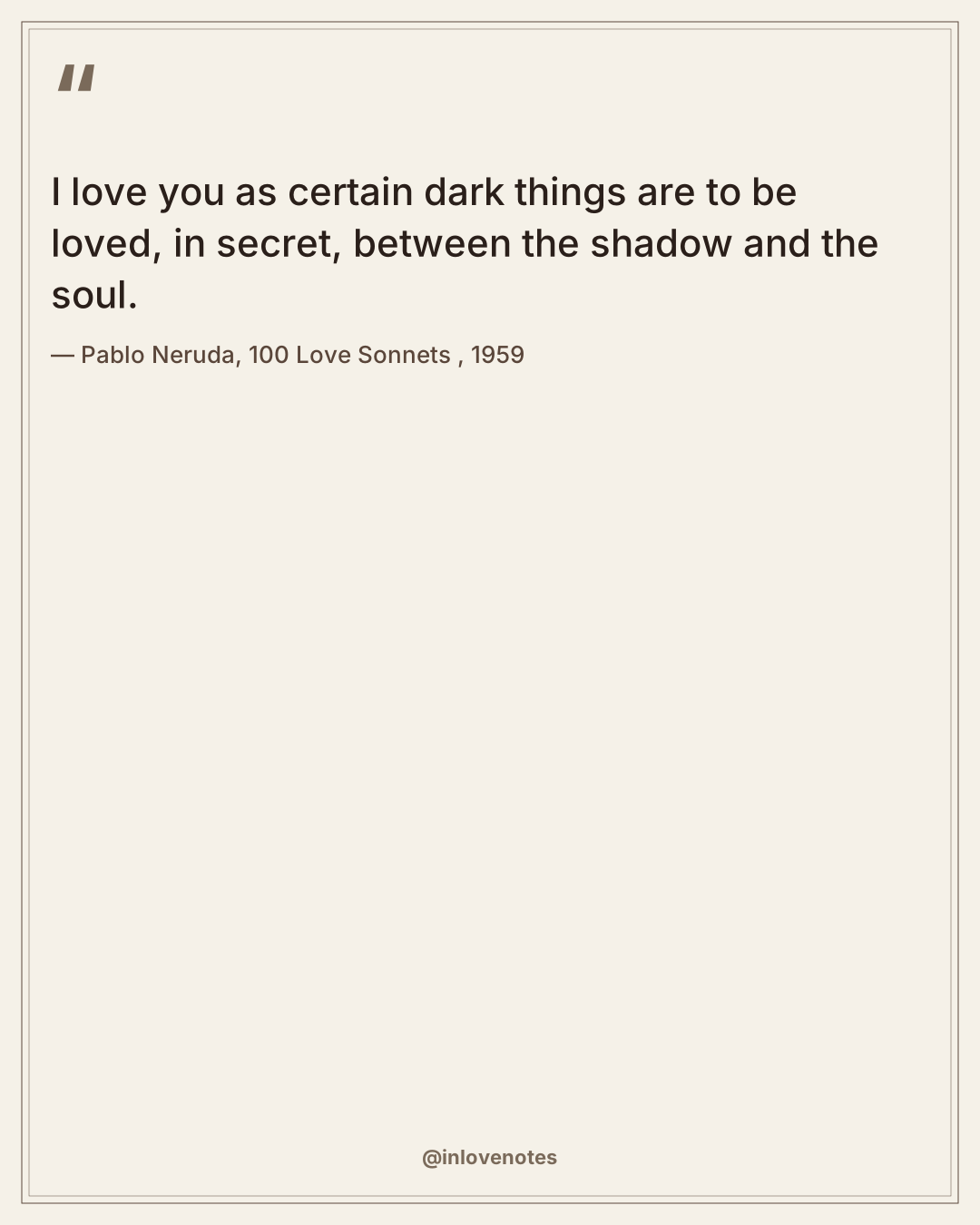
"I love you as certain dark things are to be loved, in secret, between the shadow and the soul." — Pablo Neruda, 100 Love Sonnets, 1959
Neruda bypasses the bright, superficial imagery of traditional romance to acknowledge the complex, private depths of a mature relationship. This specific sonnet remains one of the most heavily studied pieces of twentieth-century Latin American literature.
Historical Precedents for Modern Devotion
Before the advent of instantaneous communication, couples endured long separations relying entirely on the postal service to maintain their bond. A single letter might take weeks to arrive, meaning every sentence had to carry enough emotional sustenance to last until the next delivery. Looking at the correspondence of historical figures reveals a remarkable intensity that modern couples can still channel when writing out a card.
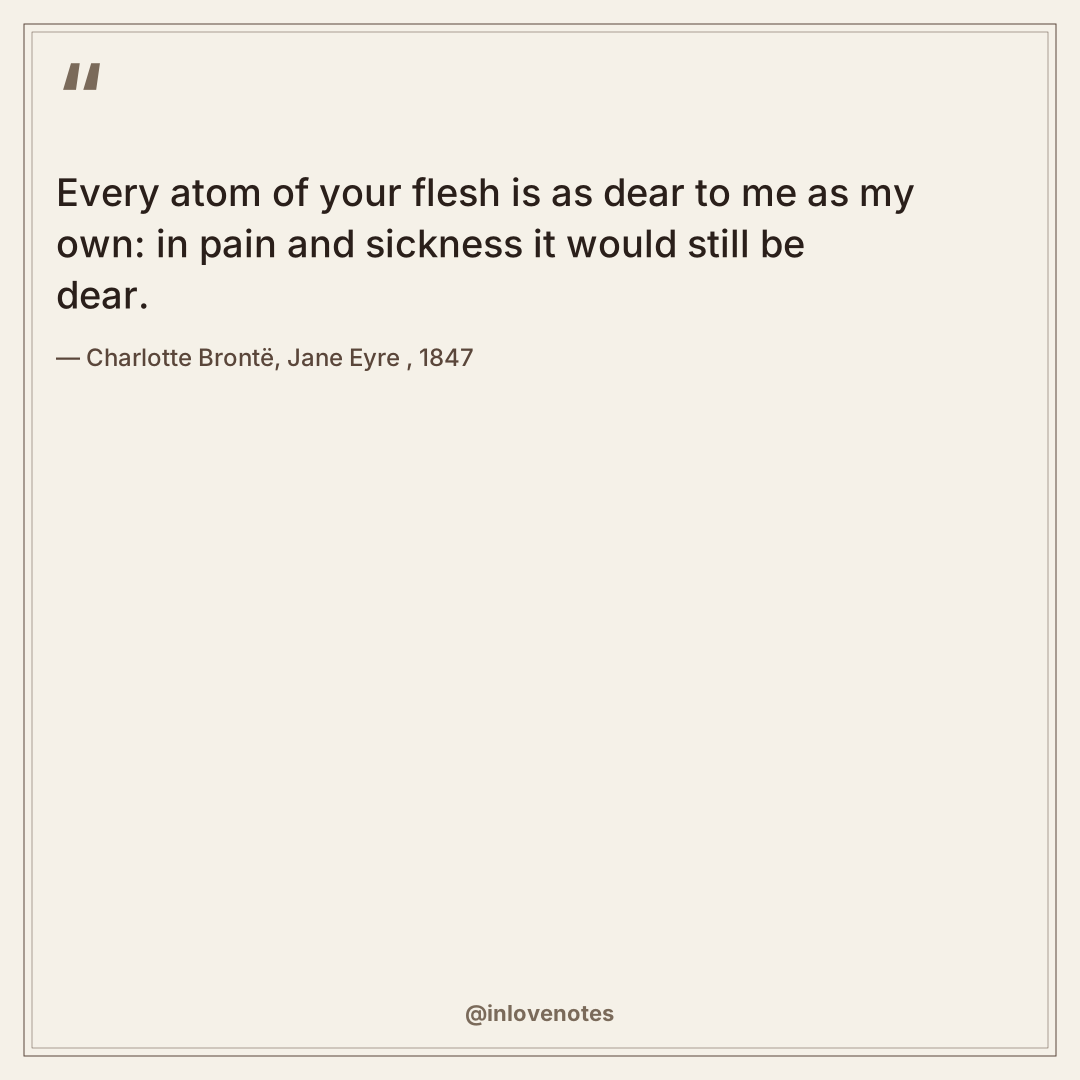
"Every atom of your flesh is as dear to me as my own: in pain and sickness it would still be dear." — Charlotte Brontë, Jane Eyre, 1847
Brontë revolutionized the gothic romance by giving her heroine a voice of fierce, uncompromising equality. The fierce bodily empathy described here speaks to a love that transcends mere aesthetic appreciation.
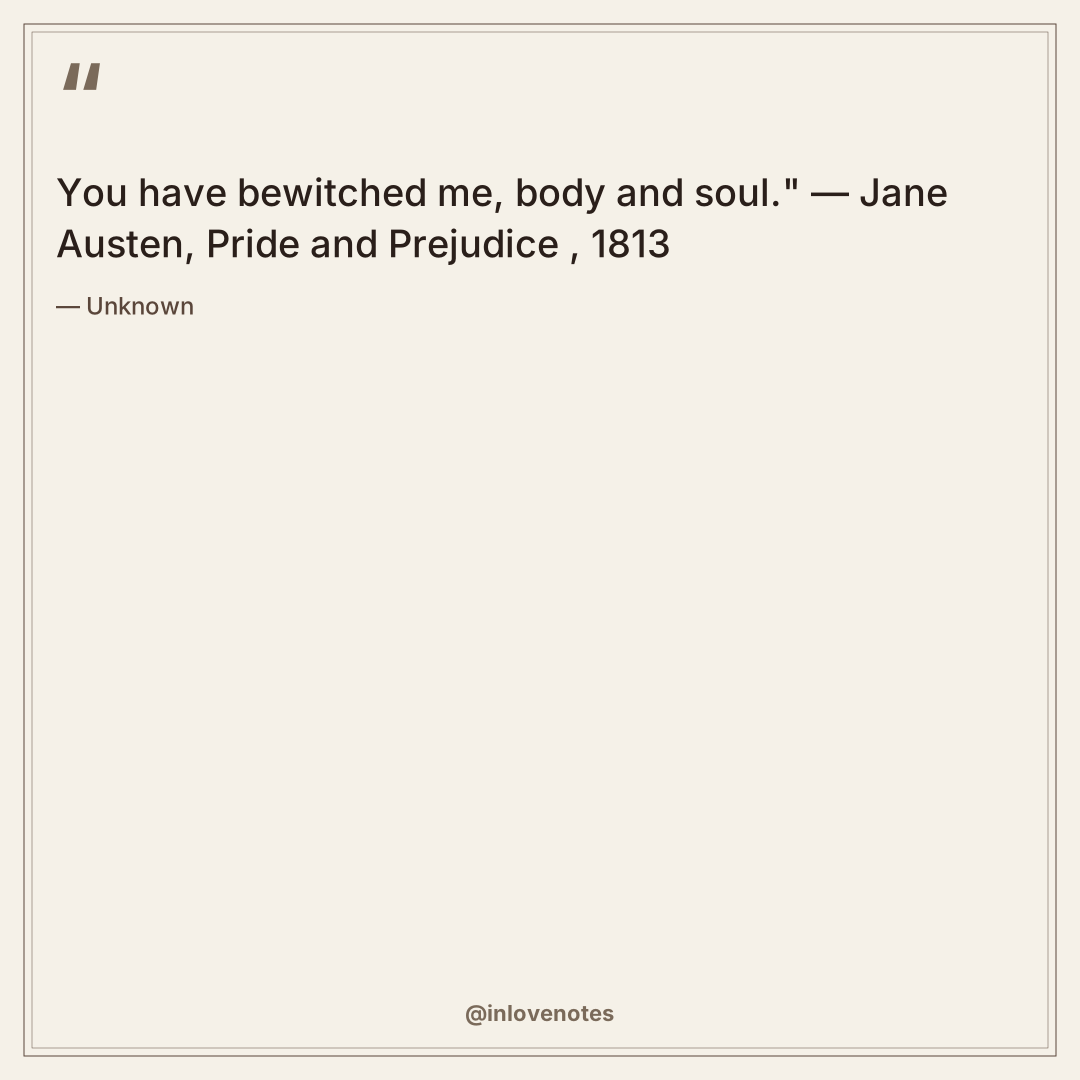
"You have bewitched me, body and soul." — Jane Austen, Pride and Prejudice, 1813
While often associated with the 2005 film adaptation, this exact phrasing captures the overwhelming nature of a love that bypasses logic and social expectation. Austen understood that true devotion often arrives as an uncontrollable force.
Further reading
- historical letters sent to partners
- literary romance found in classic texts
- finding humor in daily devotion
A Few Honest Corrections
Common claim: Men do not value handwritten emotional notes.
Closer to the evidence: Sociological surveys consistently show that men keep physical tokens of affection, such as letters and cards, far longer than digital correspondence. Because men often receive less unsolicited emotional validation in their daily lives, a tangible expression of deep love carries outsized psychological significance.
Common claim: A profound message must use elevated, poetic language.
Closer to the evidence: The most effective expressions of love rely on specific, grounded observations rather than abstract metaphors. Noting the exact way he prepares coffee in the morning creates a stronger emotional impact than relying on generic comparisons to the stars or the ocean.
Common claim: Digital texts carry the same emotional weight if the words are identical.
Closer to the evidence: The medium inherently alters the message by changing how the recipient physically interacts with the words. Holding a piece of paper requires two hands and deliberate visual focus, forcing a moment of quiet isolation that a screen simply cannot provide.
The quiet ritual of sitting at a desk to draft a message creates a necessary pause in an otherwise frantic world. We choose to write these notes not because they are efficient, but precisely because they demand our time and undivided attention. A folded piece of paper sitting on a nightstand waits patiently for the reader to find it on their own terms. The ink dries, the paper ages, and the sentiment remains anchored firmly in the physical world.