a note on
5 Feeling Love Quotes Short for Quiet Romantics
John Keats wrote some of the most intense letters in literary history to Fanny Brawne during his final years.
penned by Erdi Dogan

"Love is my religion." John Keats wrote those words to Fanny Brawne in October 1819, capturing a devotion that consumed his final years. I first read that line aloud to my aunt in a drafty flat in Bath, England, 2012. The letters Keats sent to Brawne between 1819 and 1820 remain a masterclass in brevity and intensity. They burn. They are raw, hurried dispatches written between bouts of illness and feverish writing sessions. People looking for feeling love quotes short enough to memorize often turn to these exact archival pages. When crafting romantic correspondence meant for her, Keats deliberately stripped away the elaborate, mythological metaphors of his formal poetry to deliver direct, piercing declarations that still resonate today.
The Shanklin Letter, July 1819
"My love has made me selfish. I cannot exist without you." — John Keats, Letter to Fanny Brawne, 1819
Keats penned this desperate admission from the Isle of Wight during a period of intense creative output and physical decline. He had retreated to Shanklin with his friend Charles Brown to write a tragedy called Otho the Great, but the coastal isolation only magnified his longing for Brawne. The starkness of the phrasing breaks entirely from the ornate style of his published odes. It strips romance down to a brutal, undeniable necessity. Readers seeking brief lines suited for quiet moments often gravitate toward this exact sentiment because it abandons all pretense of independence. He admits his fundamental flaw before declaring his absolute reliance on her presence in London.
The Winchester Letter, August 1819
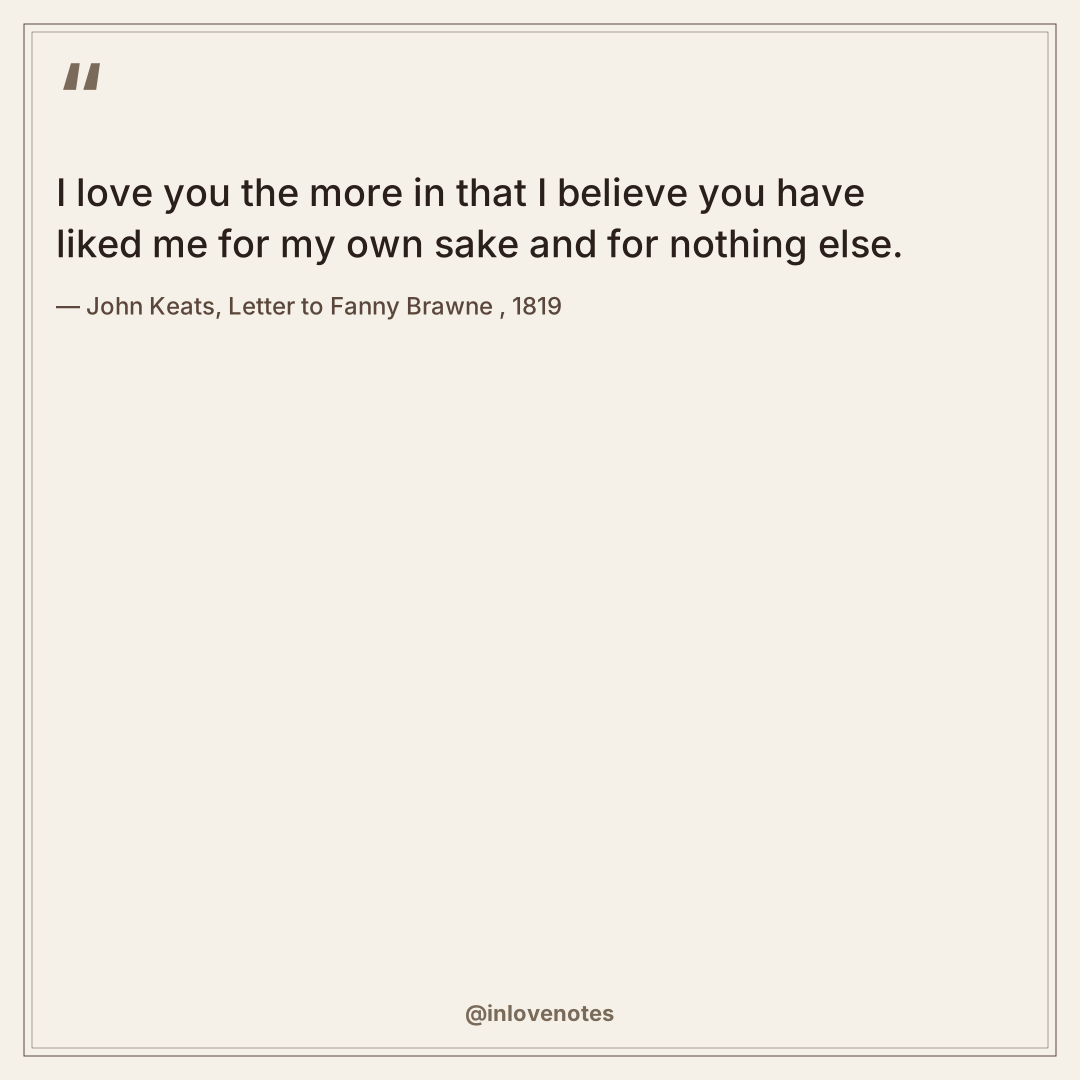
"I love you the more in that I believe you have liked me for my own sake and for nothing else." — John Keats, Letter to Fanny Brawne, 1819
Financial anxiety plagued Keats throughout the summer of 1819, exacerbated by his brother George's financial ruin in America, making him acutely aware of his inability to offer Brawne a stable marriage. He wrote this line from Winchester, marveling at her steadfast affection despite his poverty and failing health. The sentence operates on a profound, quiet vulnerability. It highlights the immense relief of being seen and accepted without the protective armor of literary success or inherited wealth. Couples navigating friction in early courtship can learn much from Keats's willingness to name his deepest insecurities directly to Fanny.
The Fleet Street Note, October 1819
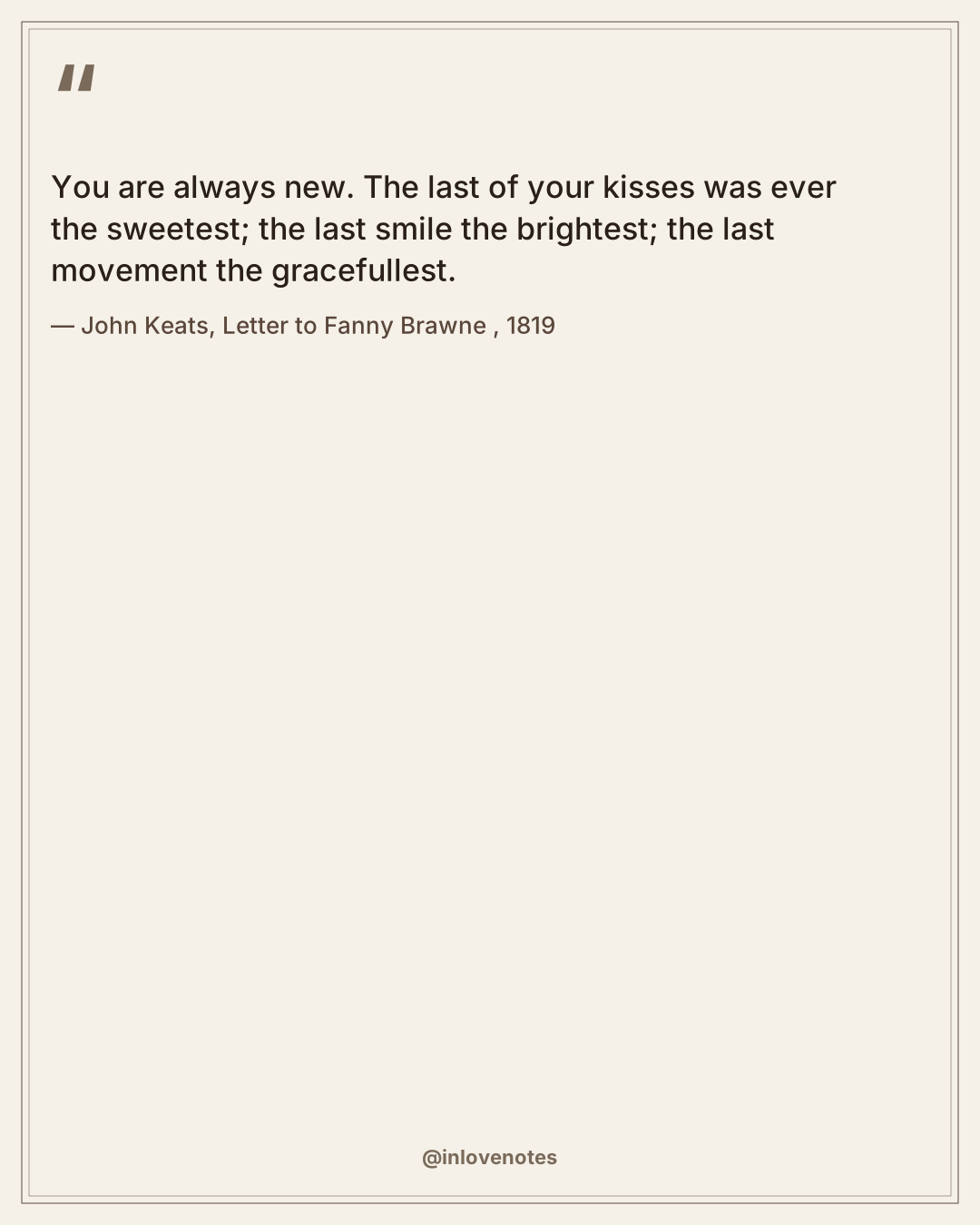
"You are always new. The last of your kisses was ever the sweetest; the last smile the brightest; the last movement the gracefullest." — John Keats, Letter to Fanny Brawne, 1819
Social media frequently truncates this passage to just the first four words, stripping away the rhythmic, breathless escalation that makes the full thought so powerful. Keats wrote this hurried note while staying near Fleet Street, capturing the dizzying sensation of a love that refuses to become routine or predictable. The repetition of the word last builds a compounding momentum that mirrors his quickening pulse. While modern couples might adapt similar phrasing for brief morning texts, the original manuscript reveals a man trying to pin down the exact mechanics of his infatuation before his ink dries.
The Kentish Town Letter, May 1820
"I wish to believe in immortality—I wish to live with you for ever." — John Keats, Letter to Fanny Brawne, 1820
By May 1820, tuberculosis had firmly taken hold of Keats's lungs, forcing him to confront the terrifying brevity of his remaining time. He moved to a lodging house in Kentish Town to be closer to Brawne's family home at Wentworth Place, though his highly contagious condition meant they could only interact through closed windows or during brief, heavily distanced visits. This particular sentence bridges his theological doubts with his earthly devotions. He does not ask for heaven in the abstract. He demands eternity specifically so he can continue looking at Fanny Brawne.
The Final Departure, August 1820
"I would always have you present, you and I alone." — Inspired by John Keats, Letter to Fanny Brawne, 1820
As Keats prepared to leave for Italy in a desperate bid to survive the coming winter, his letters grew increasingly frantic and possessive. The impending separation fractured his carefully maintained composure completely. He could no longer tolerate the thought of her moving through a vibrant London society that he was about to exit permanently. This intense desire for absolute, isolated proximity reflects the terrifying reality of a twenty-four-year-old poet facing his own mortality. He sailed for Naples shortly after, never to see Brawne or England again.
The religion Keats built around Fanny Brawne outlasted his failing lungs. He died in Rome in February 1821, but the hurried notes he sent across London secured their shared immortality.
Questions Readers Send In
Did Fanny Brawne ever reply to John Keats?
She wrote numerous letters back to him, but Keats requested that her letters be buried with him or destroyed upon his death. Consequently, historians only have his side of the correspondence from the years 1819 and 1820.
Why are his letters considered literary masterpieces?
Keats treated his personal correspondence as a testing ground for his poetic theories, blending raw emotion with philosophical concepts like Negative Capability. The letters document the real-time evolution of his brilliant mind alongside his physical decline.
Where are the original letters kept today?
Many of the surviving manuscripts reside at the Keats-Shelley Memorial House in Rome and the Houghton Library at Harvard University. Scholars continue to study the ink smears and hurried handwriting for clues about his physical state.