a note on
Why We Borrow Words When Asking for Forever
The tradition of reciting love proposal quotes reveals our deep need to anchor life-altering questions in the language of poets and playwrights.
penned by Erdi Dogan

Sitting with my sister on the porch of a rented cabin in Sedona, Arizona, in 2019, I watched her trace the edge of a velvet box while rehearsing the lines she planned to say. The desert air felt entirely still. She had spent three months designing a ring, yet the syllables required to actually present it felt impossibly heavy in her mouth. People facing the precipice of a lifelong commitment frequently find their own vocabulary insufficient for the task. They reach backward into history. Finding the right love proposal quotes becomes an exercise in borrowing courage from those who have already navigated the terrifying vulnerability of asking someone to stay forever.
The Architecture of Asking
The act of proposing forces an abstract emotion into a terrifyingly concrete question. A person must distill years of quiet observation and shared routine into a few sentences delivered under immense pressure. It requires absolute clarity. When we pull lines from old novels or stage plays, we are not simply decorating a moment with pretty language. We are utilizing a structural support system for our own breaking voices. Learning how navigating the friction of long-term understanding works in practice demands a foundation built on deliberate, considered language.
Couples often spend hours searching for romantic love messages, testing how different phrases sit in the air between them. The right literary fragment acts as a bridge between the daily reality of a relationship and the ceremonial weight of an engagement. Some individuals naturally possess the rhetorical skill to invent poetry on the spot. Most of us do not. We lean on the cadence of Victorian novelists or mid-century poets to elevate our stumbling declarations into something permanent.
The Weight of Victorian Vows
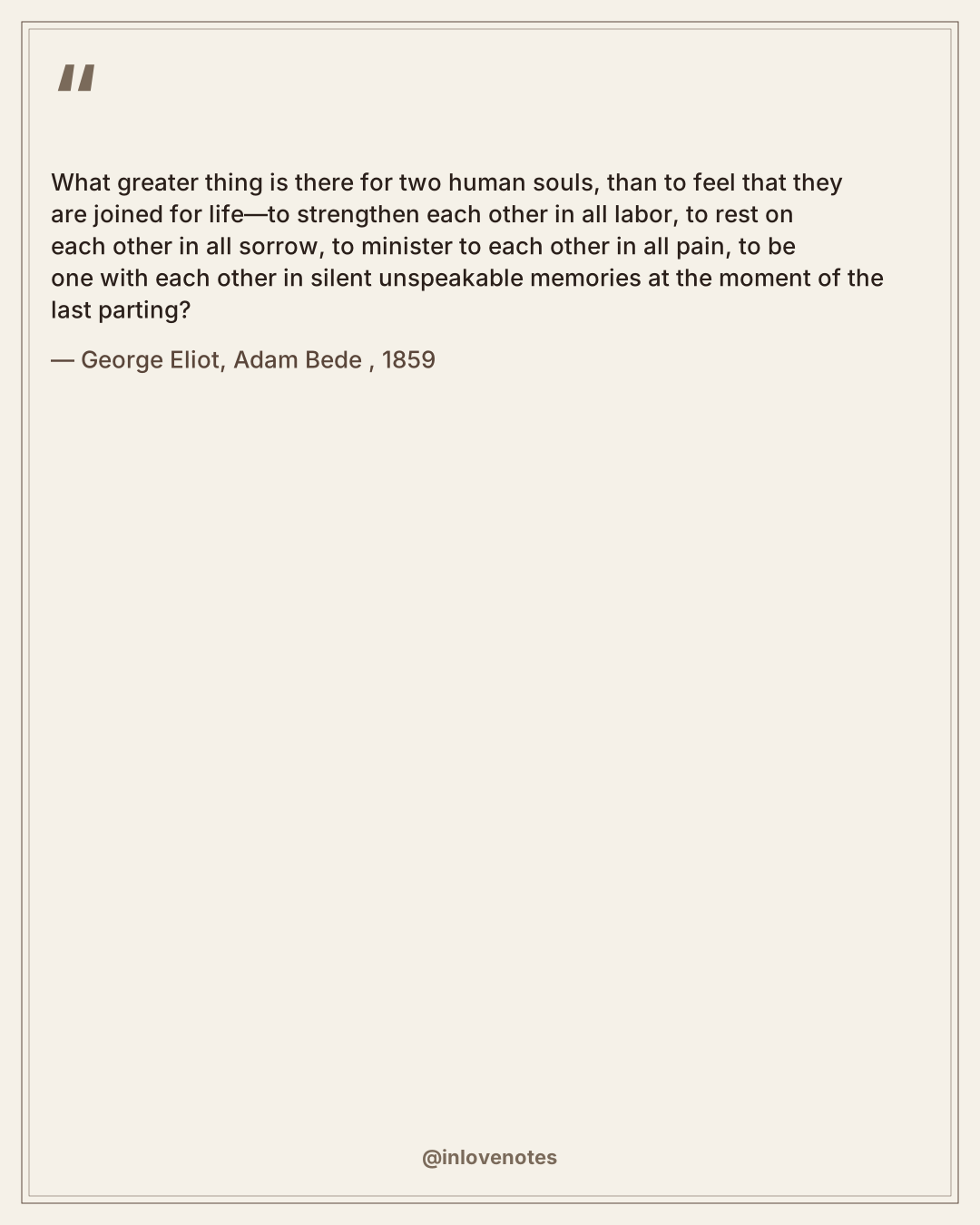
"What greater thing is there for two human souls, than to feel that they are joined for life—to strengthen each other in all labor, to rest on each other in all sorrow, to minister to each other in all pain, to be one with each other in silent unspeakable memories at the moment of the last parting?" — George Eliot, Adam Bede, 1859
Eliot grounds the romantic ideal in the gritty reality of mutual labor and inevitable grief, making this passage particularly suited for couples who view marriage as a practical partnership. The sentiment strips away superficial romance to focus entirely on endurance.
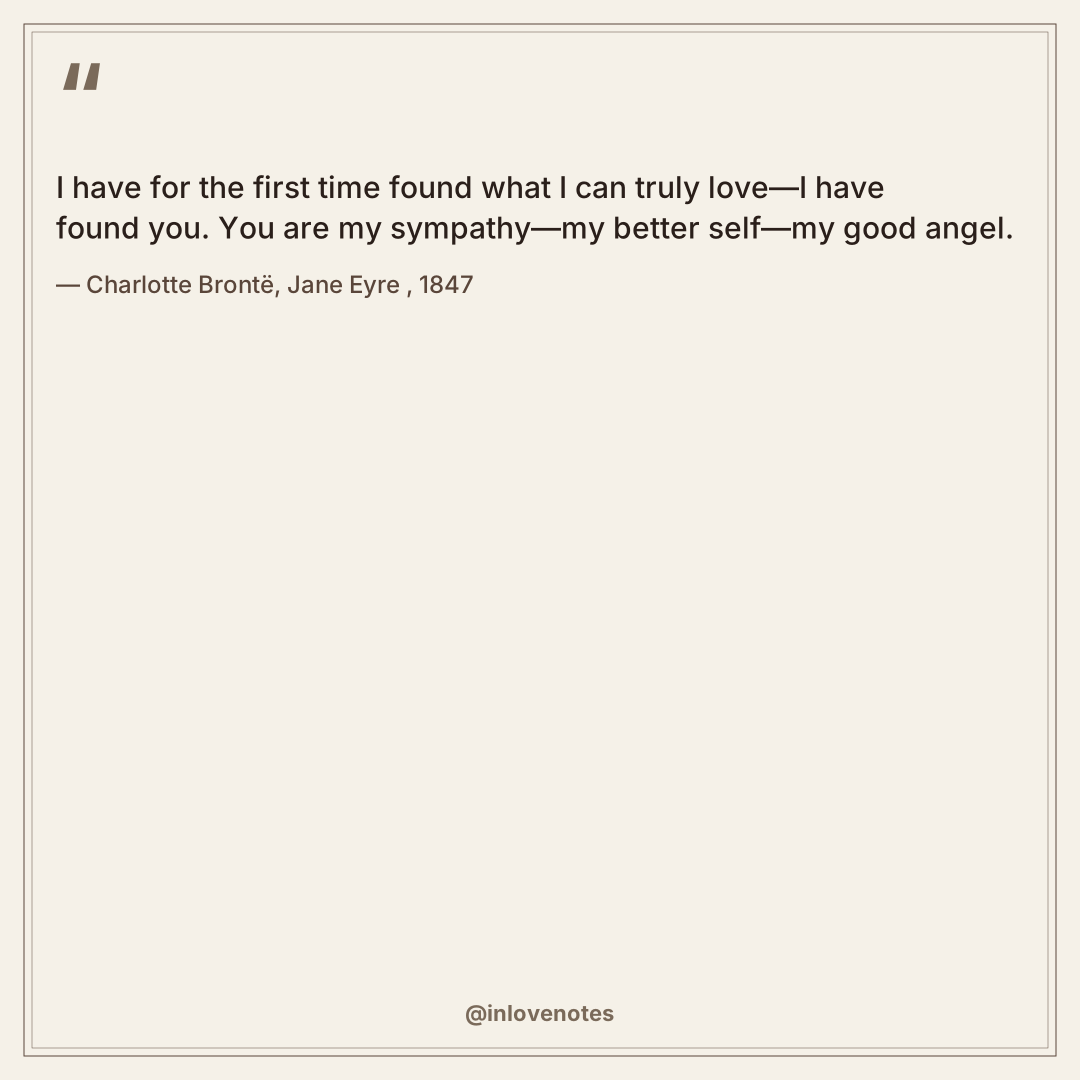
"I have for the first time found what I can truly love—I have found you. You are my sympathy—my better self—my good angel." — Charlotte Brontë, Jane Eyre, 1847
Rochester’s desperate declaration to Jane captures the intense relief of finally encountering an intellectual and emotional equal after years of isolation. It works beautifully for individuals who spent long stretches of their lives assuming they would never find a matching temperament.
"Whatever our souls are made of, his and mine are the same." — Emily Brontë, Wuthering Heights, 1847
Catherine Earnshaw delivers this line not as a sweet compliment, but as a terrifying biological fact about her connection to Heathcliff. Modern proposals often smooth over the darker edges of this Gothic novel to extract its raw, elemental declaration of unity.
The Poetry of Direct Address
"I love you not only for what you are, but for what I am when I am with you." — Roy Croft, The Family Book of Best Loved Poems, 1952
Frequently misattributed to Gabriel García Márquez or Walt Whitman, this mid-century verse shifts the focus from the beloved’s traits to the transformative effect of the relationship itself. It acknowledges that the best partnerships fundamentally alter our own character for the better.
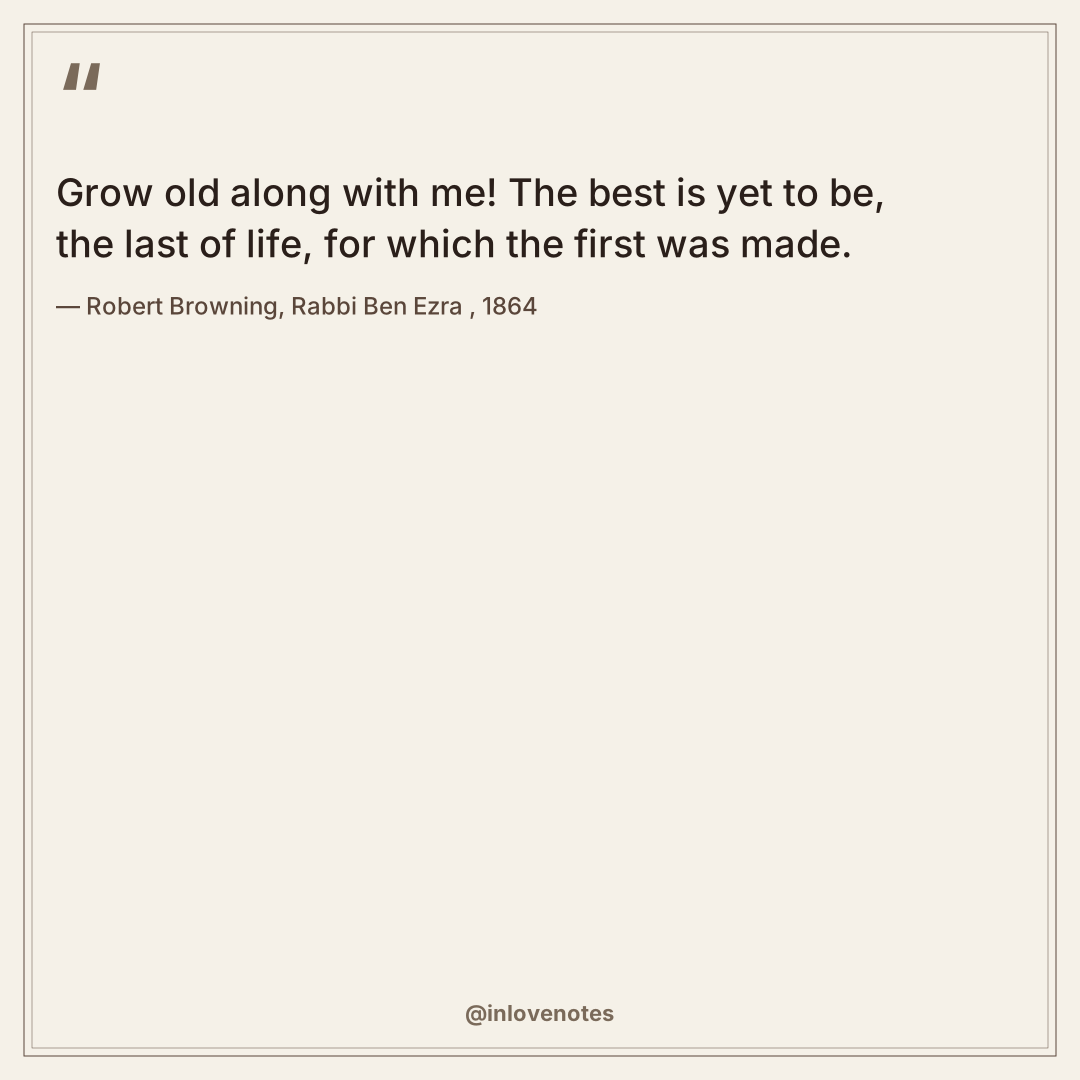
"Grow old along with me! The best is yet to be, the last of life, for which the first was made." — Robert Browning, Rabbi Ben Ezra, 1864
Browning wrote these lines as a philosophical reflection on aging and faith, yet they have become a staple of wedding ceremonies and engagements. The poem offers a defiant optimism about the future that perfectly matches the forward-looking nature of a proposal.
"I would not wish any companion in the world but you." — William Shakespeare, The Tempest, 1611
Miranda speaks these words to Ferdinand with the startling, unvarnished honesty of someone completely uncorrupted by societal games. The line cuts through the performative noise of modern dating to state a simple, undeniable preference.
Further reading
- how quiet romantics express deep feeling
- finding words to anchor a restless mind
- jotting short sentiments for quiet moments
A Few Honest Corrections
Common claim: A proposal requires a lengthy, poetic speech to be memorable.
Closer to the evidence: The human brain under extreme adrenaline rarely processes paragraphs of text, meaning most partners only retain the first and last sentences spoken during the actual moment of a proposal. A single, well-chosen line carries far more emotional resonance than a memorized monologue that the speaker struggles to deliver naturally.
Common claim: Borrowing a quote means your proposal lacks personal authenticity.
Closer to the evidence: Selecting a specific literary passage requires a deep understanding of your partner's values and your shared history, which is a profoundly personal act of curation. The authenticity lies in the choice of the words and the vulnerability of the delivery, not necessarily in the original authorship of the syllables.
Common claim: You must use a universally recognized quote for the moment to land.
Closer to the evidence: Using an obscure line from a book your partner read in college or a lyric from a quiet indie film demonstrates a level of attentiveness that famous Shakespearean sonnets cannot match. The most effective borrowed words are those that hold a private, inside meaning for the two people standing in the room.
The act of asking someone to share a life remains one of the few truly monumental risks ordinary people take. We gather these fragments of literature because we need sturdy vessels to carry our fragile, overwhelming hopes across the threshold of a new reality. Tomorrow morning, thousands of people will wake up and begin rehearsing borrowed words in their mirrors. They will step into the week carrying the quiet, terrifying thrill of a question that might change everything.