a note on
5 Short Feeling Love Quotes for Letter Writers
John Keats penned his most intense declarations of devotion from a damp room on the Isle of Wight during the summer of 1819.
penned by Erdi Dogan

"Love is my religion—I could die for that." John Keats wrote those words to Fanny Brawne in the autumn of 1819, stripping away the ornate mythology of his published poetry to reveal a raw, immediate vulnerability. His letters from that single year remain a masterclass in capturing overwhelming emotion on paper. Reading these fragile pages reminds me of finding a stack of airmail envelopes kept by my aunt in a rented flat in Bath, England, 2012. The ink had faded, but the urgency of the handwriting still carried the weight of the moment. Keats did not write for an audience when he addressed Brawne. He wrote to survive the physical separation that his failing health demanded.
During his stay at Shanklin on the Isle of Wight, the poet produced a sequence of letters that document the exact sensation of romantic consumption. He abandoned formal structure. He let his sentences fracture under the weight of his isolation. Examining these specific passages reveals how poets bridge sudden physical distance without relying on manufactured sentiment.
The July 1 Letter from Shanklin
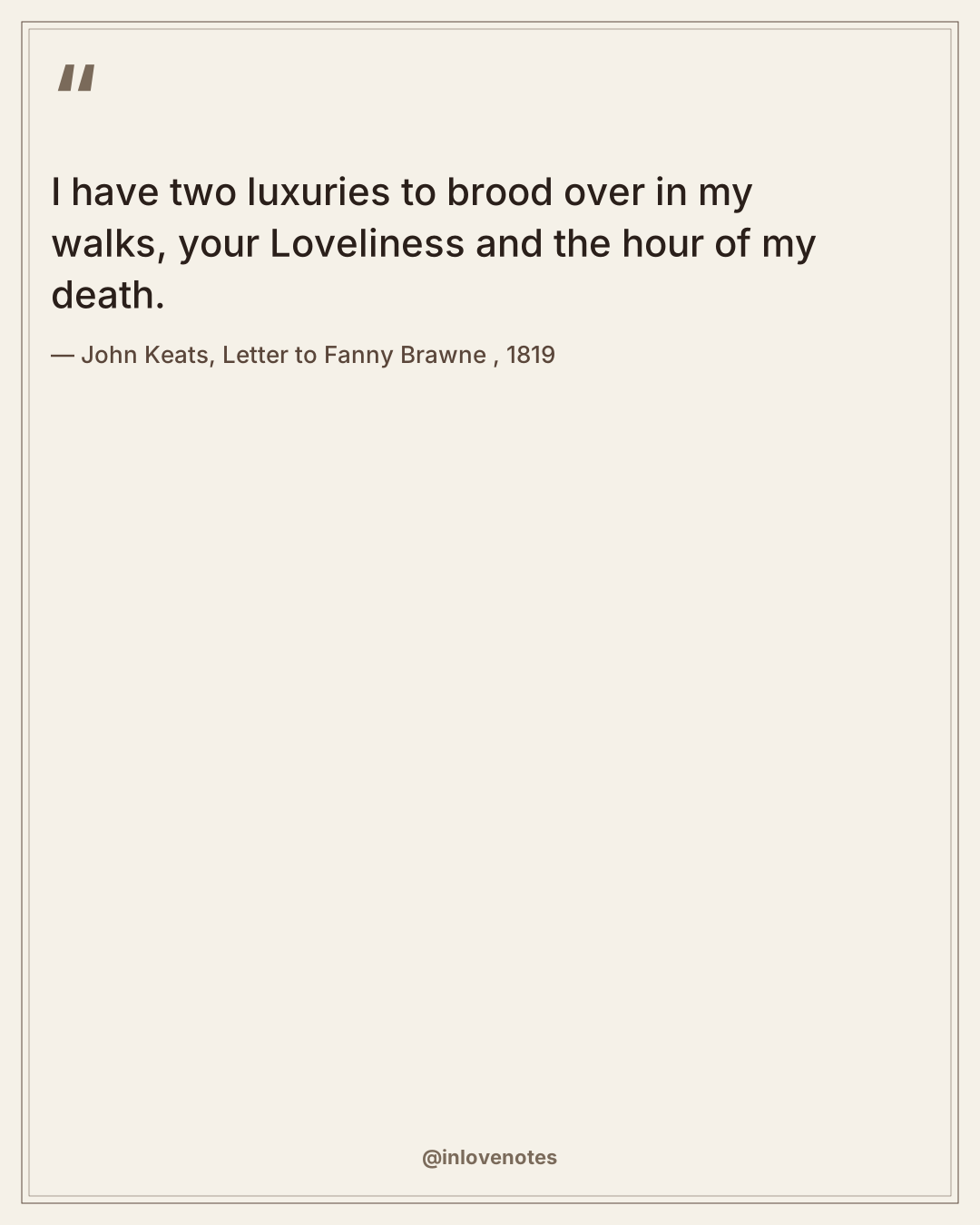
"I have two luxuries to brood over in my walks, your Loveliness and the hour of my death." — John Keats, Letter to Fanny Brawne, 1819
Keats wrote this line shortly after arriving at the coastal village of Shanklin, where the damp sea air was supposed to cure his tuberculosis. The stark juxtaposition of Brawne's vitality against his own impending mortality creates a startling image of devotion. He does not offer a cheerful promise of the future. He anchors his affection in the immediate, inescapable reality of his physical decline at the lodging house on the High Street.
This refusal to sugarcoat his circumstances gives the declaration its power. Modern readers often look for expressing profound emotional weight in grand gestures, but Keats locates it in a solitary walk along the cliffs. The sentence structure itself balances the two concepts perfectly on either side of the conjunction. He treats his affection and his mortality as equal companions on the Isle of Wight.
The July 8 Confession
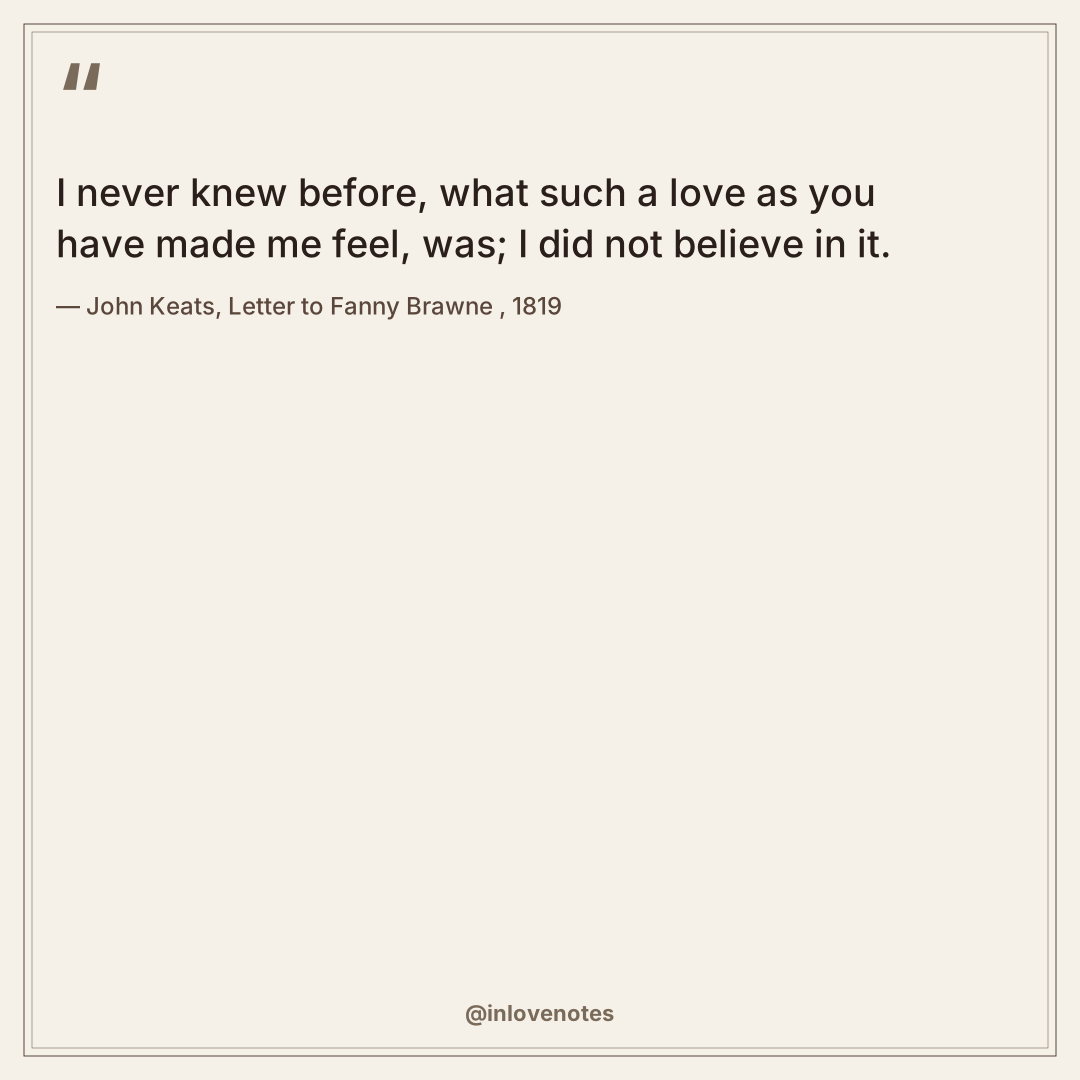
"I never knew before, what such a love as you have made me feel, was; I did not believe in it." — John Keats, Letter to Fanny Brawne, 1819
A week later, the tone shifts from morbid romanticism to absolute surrender. Keats admits that his previous understanding of romance was entirely theoretical, built from the literature he consumed rather than lived experience. He dismantles his own intellectual arrogance in a single, breathless sentence. The punctuation—the halting commas and the hard pivot of the semicolon—mirrors the hesitation of a man admitting he was wrong about the fundamental nature of human connection.
This kind of admission often appears when examining the ways partners resolve quiet friction through total honesty. Keats strips away his identity as a learned poet to stand before Brawne simply as a man overwhelmed by a reality he previously dismissed. He sent this letter via the Newport post, ensuring it would reach her hands at Wentworth Place within days.
The July 25 Letter on Devotion
"You have absorb'd me." — John Keats, Letter to Fanny Brawne, 1819
Four words constitute the entirety of this specific thought before Keats moves on to describe his surroundings. It is perhaps the most direct statement in the entire correspondence. He does not compare her to a summer's day or a celestial body. He uses the language of physics and dissolution to explain how his independent identity has vanished into hers.
The brevity of the statement makes it devastating. When composing private messages for her, Keats understood that excessive adjectives would only dilute the impact of the verb. The word "absorbed" implies a complete loss of boundaries, a terrifying prospect for a writer whose entire livelihood depended on his unique individual voice. He mailed this absolute surrender from a tavern in Winchester.
The August 16 Misquotation
"My love has made me selfish. I cannot exist without you." — John Keats, Letter to Fanny Brawne, 1819
Social media platforms frequently circulate the second half of this quote while entirely erasing the first sentence. Removing the admission of selfishness fundamentally alters the historical context of the letter. Keats was apologizing for his intense jealousy and his unreasonable demands on Brawne's time while he remained isolated in the country. He recognized that his consuming passion was not entirely noble.
Restoring the full context reveals a man grappling with the ugly side of devotion. He knew his demands were unfair to a young woman living a vibrant social life in Hampstead. The complete passage serves as a reminder that historical letters contain flawed human beings, not just pristine sentiments suitable for brief notes left on kitchen counters. Keats owned his possessiveness right there on the stationary.
The October 13 Return to London
"I am forgetful of every thing but seeing you again." — John Keats, Letter to Fanny Brawne, 1819
By October, Keats had returned to London, taking lodgings at College Street before eventually moving next door to Brawne at Wentworth Place. This line captures the singular focus that dominated his mind as the physical distance between them closed. The sprawling philosophical musings of the summer letters give way to a singular, immediate objective. He dismisses his poetry, his financial worries, and his health in favor of a single anticipated meeting.
The phrasing abandons the heavy metaphors of his earlier Shanklin letters. He writes with the exhausted clarity of a traveler who has finally reached the end of a long journey. The ink on this particular manuscript at the Keats House museum shows a hurried, desperate hand. Keats would only live for another sixteen months after writing this sentence.
Questions Readers Send In
Why did Keats write so many letters in the summer of 1819?
Keats left London for the Isle of Wight and later Winchester to focus on his writing and improve his failing health. The physical separation from Fanny Brawne, who remained at Wentworth Place in Hampstead, forced him to channel his intense emotional attachment entirely into his correspondence during those months.
Are the original letters to Fanny Brawne still intact?
Yes, many of the original letters survived and are preserved. A significant portion of the Keats-Brawne correspondence is held at the Keats House museum in Hampstead, London, where visitors can see the actual faded ink and folded paper from 1819.
Did Fanny Brawne write back to John Keats?
She did write back frequently, but Keats destroyed her letters at her request to protect her privacy. We only know the contents of her replies through the specific references and reactions Keats included in his surviving responses to her.