a note on
How Do Two Lives Actually Merge? 12 Love Quotes for Couples
Examining historical letters and literature reveals how partners articulate the shared weight of a life built in tandem across decades.
penned by Erdi Dogan

The Unspoken Rhythms of Long-Term Alignment
Sitting at the scarred oak table in my aunt's kitchen in Savannah, Georgia, in 2006, I watched her wordlessly hand her husband the exact wrench he needed before he even asked. They were fixing a leaking pipe under the sink. Neither of them spoke for twenty minutes, yet the communication was absolute. That kind of synchronized machinery does not happen by accident. It requires years of observation, a willingness to study another person's subtle shifts in posture, and a mutual agreement to share the mundane burdens of a household. When we look for language to describe this phenomenon, we often turn to writers who have spent their lives dissecting human connection.
The historical record offers a fascinating window into how people have attempted to put words to the experience of coupling. Early diaries and letters often focus on duty and survival, while later romantic periods emphasize emotional enmeshment. Tracing this lineage requires looking past the greeting card aisles and into the actual correspondence of people who lived alongside one another through wars, famines, and the quiet attrition of ordinary time. A deeper dive into tracking how literary devotion shifted over centuries reveals that the most enduring sentiments often focus on partnership rather than pure infatuation.
The Architecture of Shared Solitude
Coupling is rarely about erasing the self. The most compelling writers on marriage and partnership argue that a healthy union actually protects the individual. This paradoxical idea—that two people come together to guard each other's independence—runs counter to the modern narrative of finding a "better half" who completes a missing piece.
"A good marriage is that in which each appoints the other guardian of his solitude." — Rainer Maria Rilke, Letters to a Young Poet, 1929
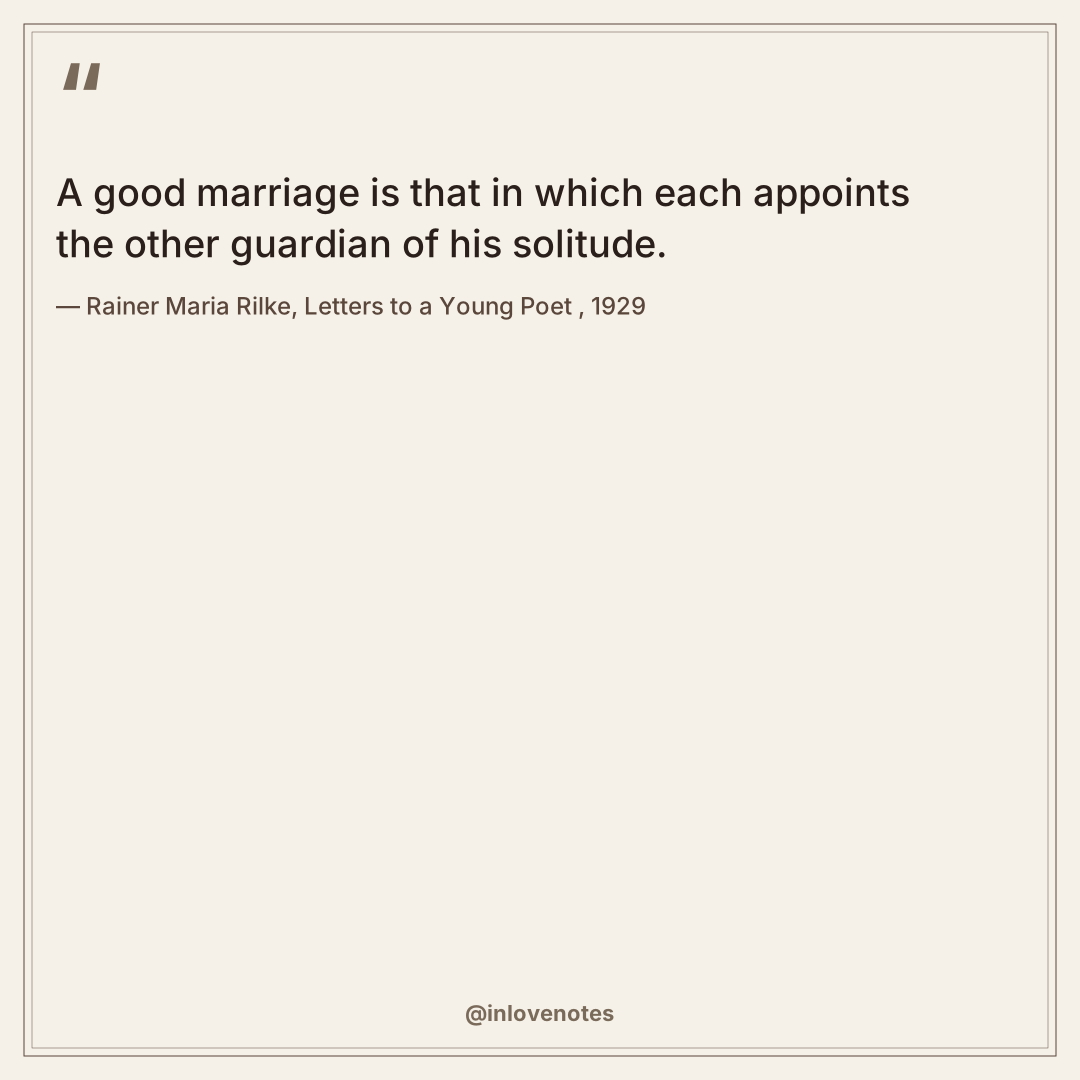
Rilke wrote these words to Franz Xaver Kappus, emphasizing that true connection requires vast expanses of personal space rather than constant, suffocating proximity.
"What greater thing is there for two human souls, than to feel that they are joined for life—to strengthen each other in all labor, to rest on each other in all sorrow, to minister to each other in all pain, to be one with each other in silent unspeakable memories at the moment of the last parting?" — George Eliot, Adam Bede, 1859
Eliot grounds the concept of union not in abstract feelings, but in the physical realities of labor, sorrow, and the eventual inevitability of death.
"I love you not only for what you are, but for what I am when I am with you." — Roy Croft, The Family Book of Best Loved Poems, 1952
Though often misattributed to a variety of historical figures, this line from a mid-century poetry anthology perfectly captures the transformative nature of a supportive partnership. Those exploring romantic lines pulled from historical correspondence frequently encounter this exact sentiment of mutual elevation.
"To get the full value of joy you must have someone to divide it with." — Mark Twain, Following the Equator, 1897
Twain recorded this observation during his grueling worldwide lecture tour, reflecting on the necessity of a witness to make fleeting moments of happiness feel permanent.
The Accumulation of Ordinary Days
The daily mechanics of living together require a specific kind of endurance. It is one thing to declare devotion in a dramatic moment; it is entirely another to maintain it while paying taxes, navigating illness, and managing a household. The literature of partnership often elevates these quiet, repetitive acts of care.
"There is no more lovely, friendly, and charming relationship, communion or company than a good marriage." — Martin Luther, Table Talk, 1566
Luther's reflections, recorded by his students, highlight the radical idea for his time that marriage was a space for genuine companionship rather than mere social utility.
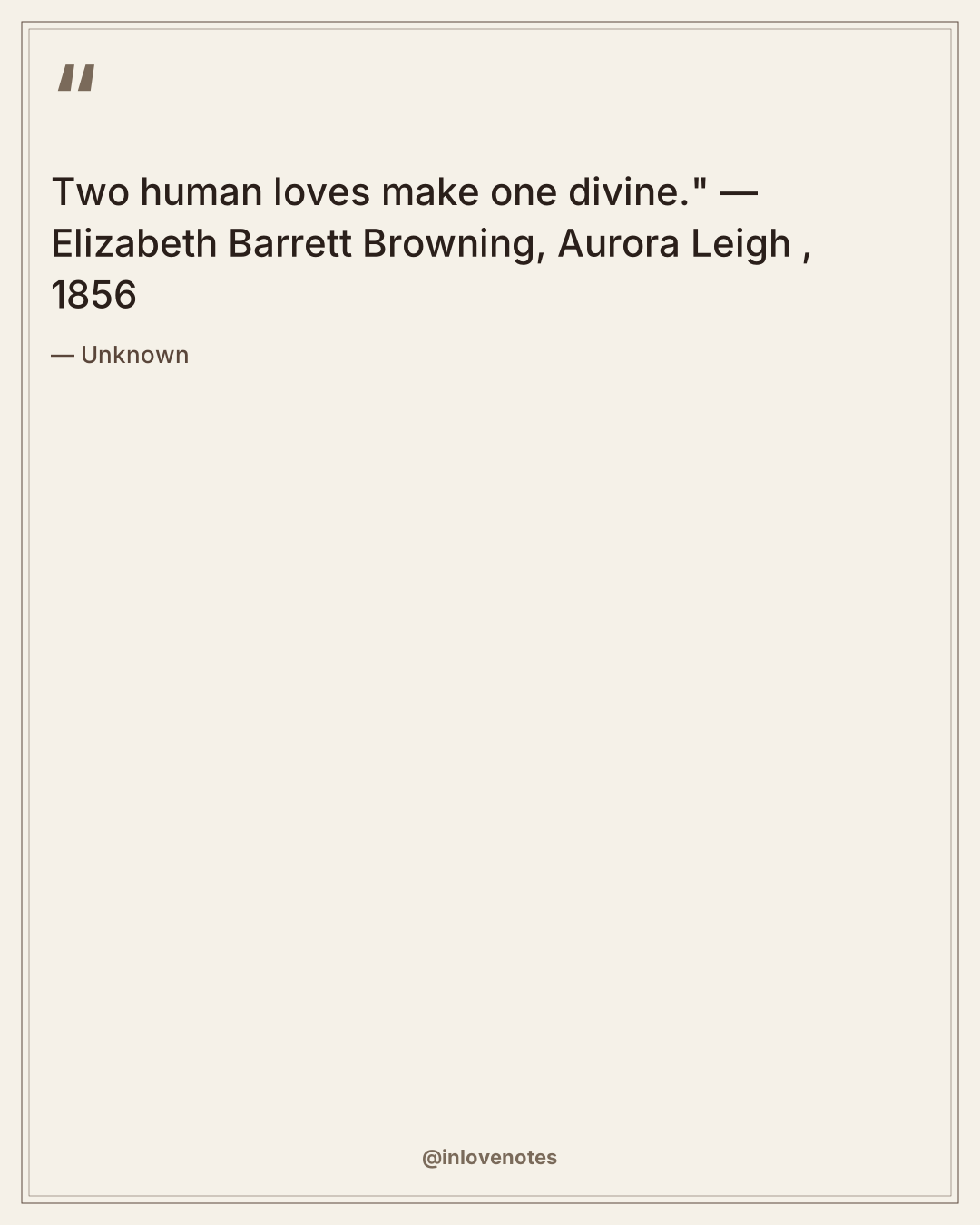
"Two human loves make one divine." — Elizabeth Barrett Browning, Aurora Leigh, 1856
Browning's epic poem explores the intersection of art and domestic life, suggesting that human partnership is a necessary bridge to higher spiritual understanding. Readers interested in framing spiritual views on enduring relationships will recognize this blending of the sacred and the domestic.
"To love or have loved, that is enough. Ask nothing further. There is no other pearl to be found in the dark folds of life." — Victor Hugo, Les Misérables, 1862
Hugo positions love as the ultimate protective talisman against the brutal realities of poverty and political upheaval depicted throughout his massive novel.
"A successful marriage requires falling in love many times, always with the same person." — Mignon McLaughlin, The Neurotic's Notebook, 1960
McLaughlin, a journalist and playwright, understood that static affection is a myth, and that long-term couples must actively choose to reconnect across different phases of their lives.
Enduring the Fraying Edges
No honest examination of couples can ignore the friction of proximity. The strongest testaments to partnership acknowledge the difficulty of maintaining a bond when external pressures or internal resentments threaten to sever it. The words that resonate most deeply during difficult seasons are those that validate the struggle.
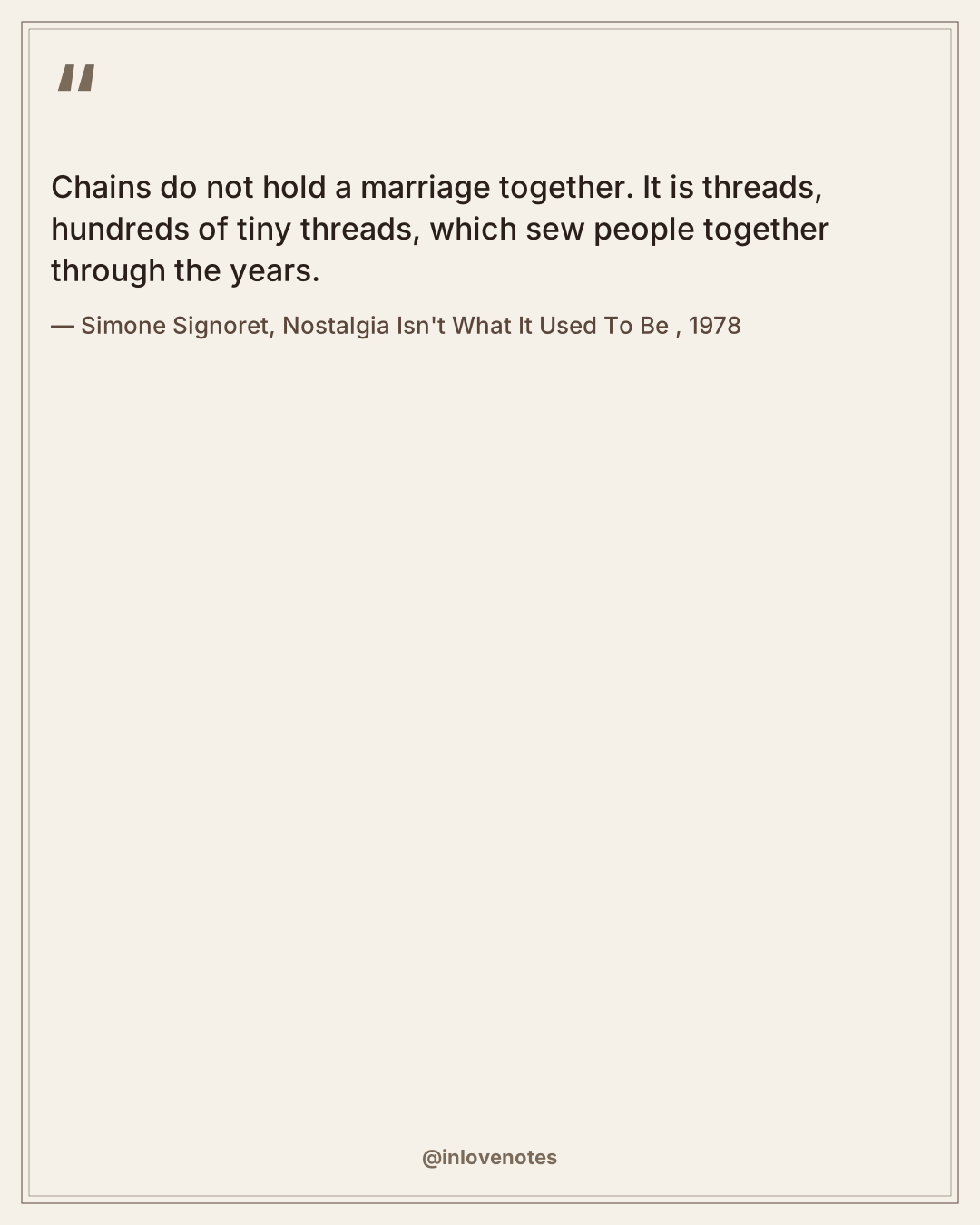
"Chains do not hold a marriage together. It is threads, hundreds of tiny threads, which sew people together through the years." — Simone Signoret, Nostalgia Isn't What It Used To Be, 1978
The French actress wrote candidly about the complexities of her long, tumultuous marriage to Yves Montand, emphasizing the fragile but resilient nature of shared history. People finding resonance in quiet anniversary letters often rely on this imagery of woven threads to describe their own longevity.
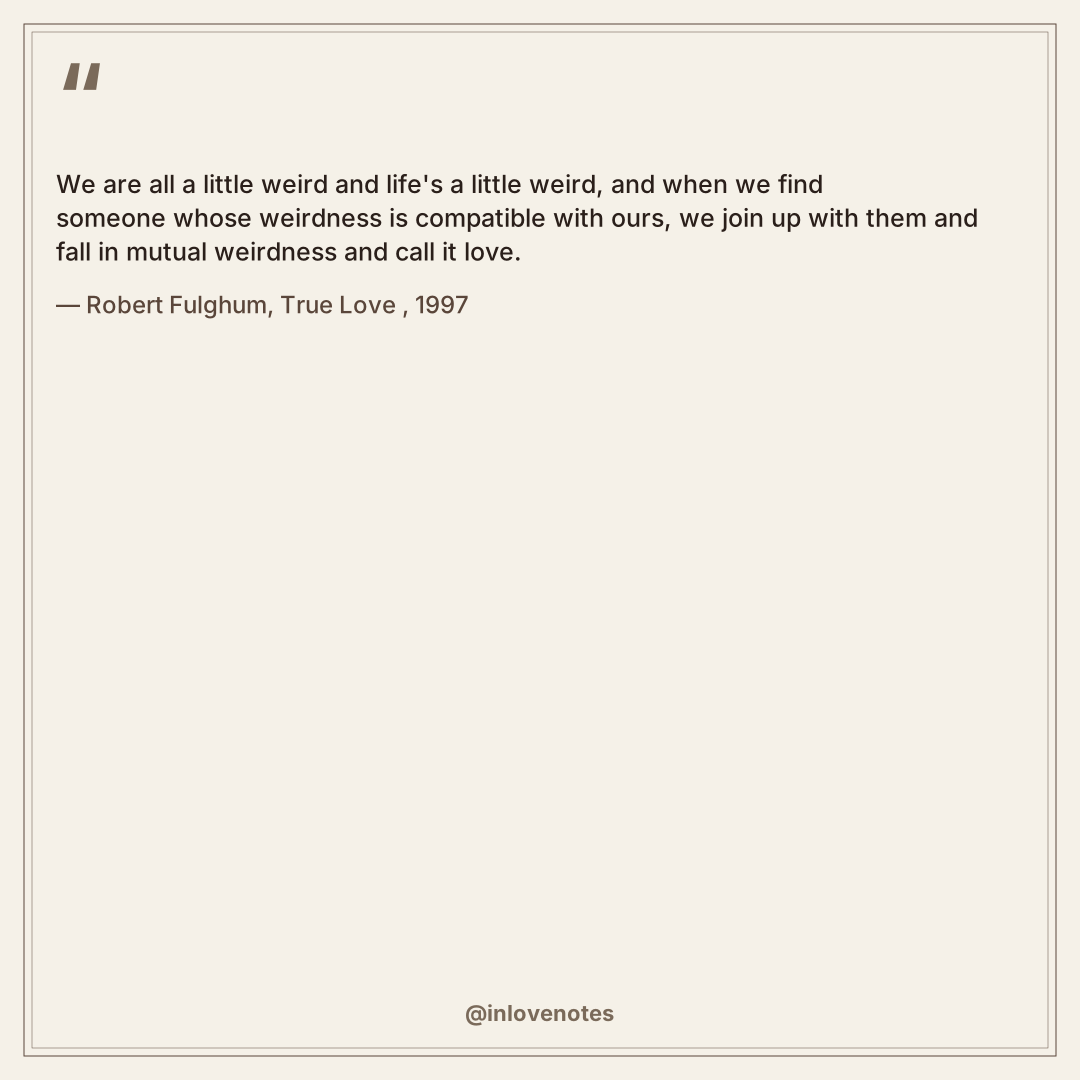
"We are all a little weird and life's a little weird, and when we find someone whose weirdness is compatible with ours, we join up with them and fall in mutual weirdness and call it love." — Robert Fulghum, True Love, 1997
Fulghum strips away the polished veneer of romance to celebrate the idiosyncratic, often strange behaviors that couples tolerate and eventually cherish in one another.
"I love you as certain dark things are to be loved, in secret, between the shadow and the soul." — Pablo Neruda, 100 Love Sonnets, 1959
Neruda captures the private, almost subterranean language that develops between two people, inaccessible to the outside world. This hidden architecture is a common theme when seeking out profound messages of deep affection for significant milestones.
"We loved with a love that was more than love." — Edgar Allan Poe, Annabel Lee, 1849
Poe's final complete poem frames a bond so intense that it transcends mortality, reflecting the human desire to believe that our specific partnerships carry cosmic weight. Those examining Renaissance perspectives on human existence will note how this echoes older philosophies regarding the eternal nature of true connection.
The wrench handed across a silent kitchen table carries the weight of thousands of preceding days. It is the physical manifestation of the threads Signoret described, woven so tightly they become invisible.
Where Conventional Wisdom Slips
Common claim: Perfect couples never experience profound loneliness
Closer to the evidence: Historical diaries reveal that even the most devoted partners experienced acute periods of isolation within their marriages. The expectation that one person can fulfill every emotional need is a relatively recent, industrialized concept that sets couples up for inevitable disappointment.
Common claim: Passion must remain constant for a union to survive
Closer to the evidence: Literature and psychological records show that long-term couples operate in cycles of proximity and distance. Forcing a state of perpetual intensity often leads to burnout, whereas allowing the relationship to breathe creates the necessary space for McLaughlin's concept of falling in love multiple times.
Common claim: True partnership requires complete transparency
Closer to the evidence: Rilke's assertion about guarding solitude highlights the necessity of private internal lives. Maintaining personal boundaries and unshared thoughts actually strengthens the foundation of the relationship by preserving the distinct identities of both individuals.