Richard Feynman's Letter to His Wife Arline (1946): What It Says and What the Retellings Get Wrong
Feynman's October 1946 letter to his late wife Arline: key lines in context, a timeline, two transcriptions compared and the sealed-envelope myth, sourced.
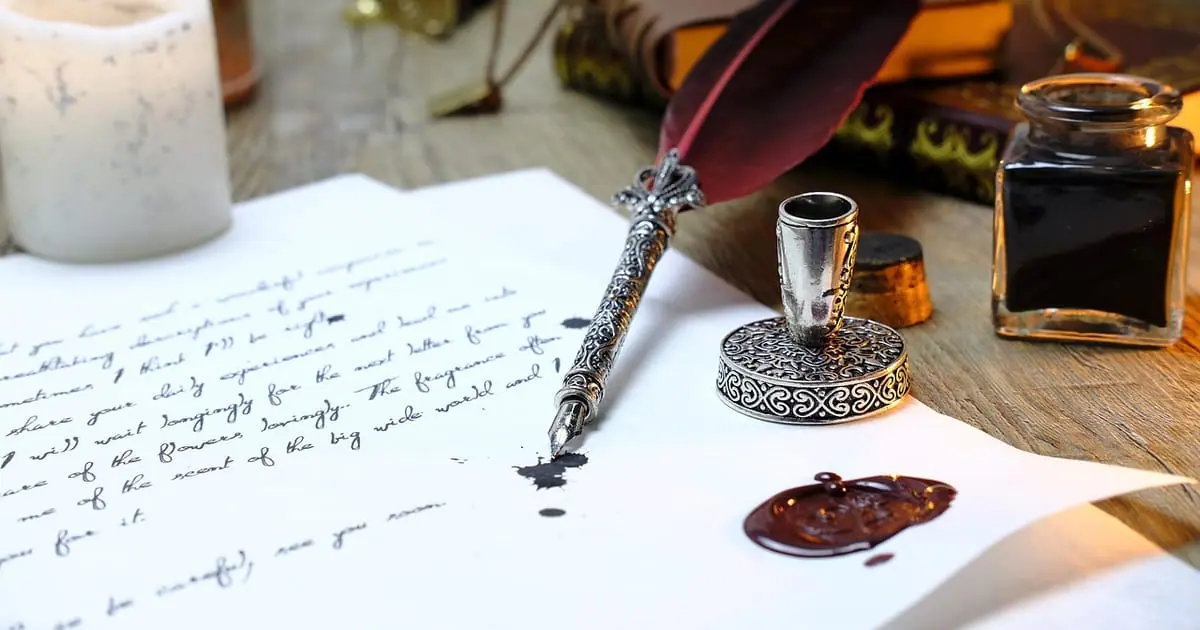
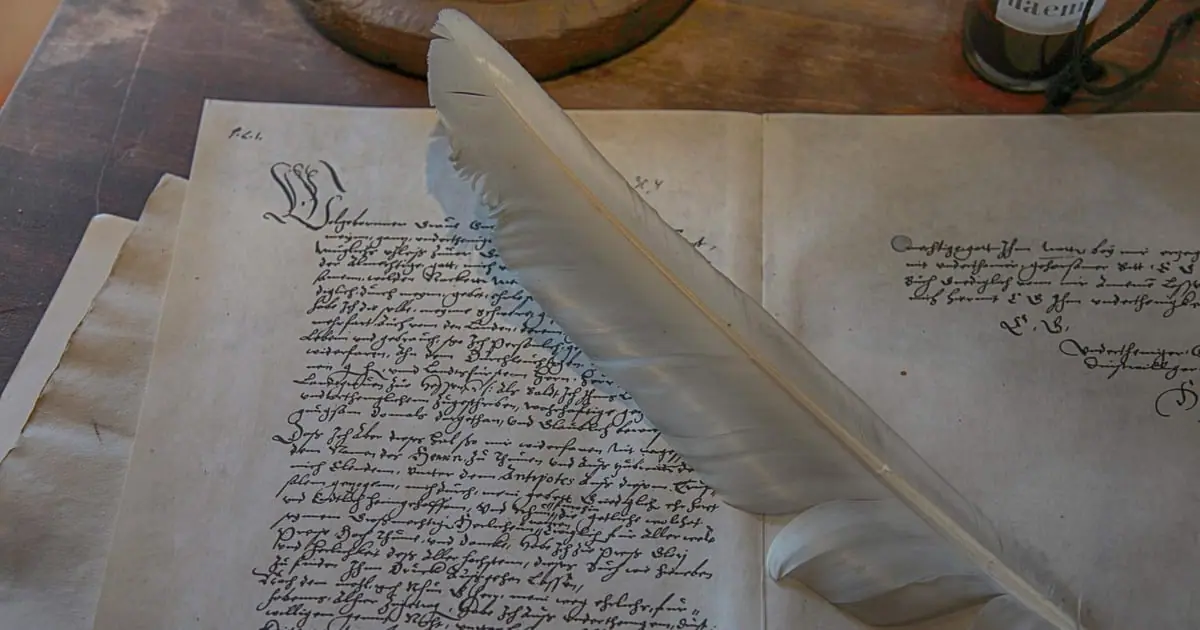
On Thursday 17 October 1946, the physicist Richard Feynman sat down in Ithaca, New York, and wrote a two-page love letter to his wife, Arline. She had died sixteen months earlier, on 16 June 1945, of tuberculosis, aged 25. He signed it "Rich", added a postscript apologising for not mailing it because he did not know her new address, and kept it. The letter was first printed in 2005, in Perfectly Reasonable Deviations from the Beaten Track: The Letters of Richard P. Feynman (Basic Books), edited by his daughter Michelle Feynman, on pages 68–69.
Below are the letter's key lines with what was happening around them, a timeline of the marriage, the two published transcriptions side by side, the "sealed envelope" story that most retellings repeat (and what the people who held the paper actually wrote), and what this letter can teach anyone writing to a person they have lost. The full text is copyright Michelle and Carl Feynman, so we quote it in parts and link to where you can read it whole.
The letter at a glance
- Date: headed "Thursday, Oct. 17, '46" in the transcription published by Sotheby's; "October 17, 1946" in the book's version as reprinted by Letters of Note.
- Place: Ithaca, New York, where Feynman was then teaching at Cornell. The auction catalogue gives the place in square brackets, meaning it is inferred, not written on the page.
- Form: an autograph letter, 2 pages, 10¼ × 6¼ inches, on plain white paper, signed "Rich" and addressed "D'Arline".
- Length: about 470 words, ending with the line "I love my wife. My wife is dead." and a one-line P.S.
- Sent? No. The postscript says so.
- First printed: 2005, in Perfectly Reasonable Deviations from the Beaten Track, pp. 68–69.
- Where to read it in full: Letters of Note, which reprints it by permission of Basic Books.
Arline and Richard, in dates
The letter makes more sense once you know how short the marriage was, and how much of it was spent apart. Every date below comes from the sources listed at the end of this page.
| When | What happened | Source |
|---|---|---|
| 1930s | Richard Feynman and Arline Greenbaum meet as teenagers in Far Rockaway, Queens. | Sotheby's article, 2025. |
| 1941 | Arline is diagnosed with lymphatic tuberculosis. | Sotheby's article, 2025. |
| 29 June 1942 | They marry in a city office on Staten Island. No family or friends attend; two strangers are the witnesses, and he can kiss her only on the cheek. | Wikipedia, Richard Feynman. |
| 1943–1945 | He works on the Manhattan Project at Los Alamos; she lives at the Presbyterian Sanatorium in Albuquerque. He writes her about 40 letters that survive as one archive. | Sotheby's catalogue, 2023. |
| 16 June 1945 | Arline dies, aged 25. Sotheby's gives the time as 9:21 pm. | Sotheby's catalogue and article. |
| 16 July 1945 | The Trinity test, the first atomic detonation, one month later. | Sotheby's catalogue, 2023. |
| 17 October 1946 | He writes the letter, sixteen months after her death. | The letter. |
| 1952 and 1960 | He marries Mary Louise Bell (divorced 1958), then Gweneth Howarth, who stays his wife until his death. | Wikipedia, Richard Feynman. |
| 1988 | Feynman dies. What Do You Care What Other People Think?, whose title is a question Arline used to ask him, comes out the same year. | Wikipedia. |
| 1996 | The film Infinity, directed by Matthew Broderick, who plays Feynman, with Patricia Arquette as Arline. | Wikipedia, Infinity (1996 film). |
| 2005 | The letter is first published, in the collection edited by Michelle Feynman. | Letters of Note; Sotheby's. |
| December 2023 | Sotheby's New York offers the original, consigned by the Feynman family, with an estimate of $80,000–120,000. | Sotheby's lot 13. |
The lines people quote, and what sits around them
The opening: saying it because it warms him
I adore you, sweetheart. I know how much you like to hear that — but I don't only write it because you like it — I write it because it makes me warm all over inside to write it to you.
Richard Feynman, letter to Arline Feynman, 17 October 1946
The salutation runs "Dear" and her name together into "D'Arline", and the first thing he does is explain himself. That is very Feynman: even in grief he wants the reason on the table. The reason he gives is not duty or memory but pleasure. Writing the words still does something to him, which is the first hint of what the whole letter is about: love that keeps working after the person has gone.
The gap: "stubborn and realistic"
It is such a terribly long time since I last wrote to you — almost two years but I know you'll excuse me because you understand how I am, stubborn and realistic; and I thought there was no sense to writing.
Richard Feynman, letter to Arline Feynman, 17 October 1946
"Realistic" is the key word. A man who spent his life refusing explanations that could not be checked tells his dead wife that writing to her made no sense, then writes to her anyway. The "almost two years" doesn't quite match the sixteen months since her death; either he rounded up, or his last letter to her was written some months before she died. The sources don't say which.
The middle: the plans they never finished
I find it hard to understand in my mind what it means to love you after you are dead — but I still want to comfort and take care of you — and I want you to love me and care for me.
Richard Feynman, letter to Arline Feynman, 17 October 1946
This is the sentence that turns the letter from a tribute into an argument with himself. He then lists the ordinary projects they had started, "to make clothes together — or learn Chinese — or getting a movie projector", and calls her the "idea-woman" and "general instigator of all our wild adventures". The details are small and specific, which is why they hurt: nobody grieves for an abstraction.
The turn: why no one else will do
You, dead, are so much better than anyone else alive.
Richard Feynman, letter to Arline Feynman, 17 October 1946
Just before this line he admits that his love for her now stands in the way of loving anyone else, and that he wants her to stand there. Just after, he tells her he has met "many girls and very nice ones" but that after two or three meetings "they all seem ashes". It is the most quoted line of the letter, and it is worth reading in that context: it is not a vow of eternal loneliness but a report, made sixteen months in, of how things stood. He did remarry, twice.
The ending: the plainest sentence in the letter
My darling wife, I do adore you. I love my wife. My wife is dead.
Richard Feynman, letter to Arline Feynman, 17 October 1946
Two sentences of four words each, both true, set side by side without "but" between them. The postscript follows: "Please excuse my not mailing this — but I don't know your new address." It reads as a joke, and it is one, but it is also the last honest thing a realist can say. He wrote the letter knowing it could not be delivered.
Two transcriptions, seven small differences
The text most websites copy is the book's, as reprinted by Letters of Note. In 2023 Sotheby's printed its own transcription of the original in the auction catalogue. Comparing them word by word, we found seven places where they differ. Neither is a facsimile, and the Sotheby's text also has obvious typing slips (it prints "laving" for "loving"), so we can't say which wording matches the paper in every case. If you quote the letter, the book's version is the one to credit.
| Where in the letter | Book (Letters of Note) | Sotheby's catalogue (2023) |
|---|---|---|
| Date line. | "October 17, 1946". | "Thursday, Oct. 17, '46". |
| Why he stopped writing. | "no sense to writing". | "no sense in writing". |
| What he had delayed. | "and that [he has] done so much in the past". | "and what [he has] done so much in the past". |
| Doing things together. | "we can do that." | "we can do that together." |
| The question he answers himself. | "do something now?" with a question mark. | "do something now." with a full stop. |
| Who stands in the way. | He wants her ("you") to stand there. | He wants to stand there himself. |
| The famous line. | "so much better than anyone else alive". | "so much better that anyone else alive". |
The "stand there" row is the only one that changes the sense. In the book's version he wants Arline to keep standing between him and anyone new; in the catalogue's version the subject slips. The book reading fits the sentence before it, which is about her standing in his way.
Was it really sealed until he died?
Almost every retelling says the letter was sealed in an envelope and never opened until after Feynman's death in 1988. Letters of Note says so in its introduction; Wikipedia says it was "only opened after his death"; a 2025 Sotheby's article says it "remained sealed up and unknown" until a biographer found it among his papers. That makes a good story, but it doesn't fit the best evidence we found.
- The editor's note in the book. As quoted in Sotheby's own 2023 catalogue, Perfectly Reasonable Deviations (p. 68) notes that the letter "is well worn, much more than all the other letters written to Arline during this period, and it appears as if he reread it often."
- The condition report. The same catalogue describes the paper as having "creases where previously folded, some small tears to edges, one panel toned". That is a letter that was handled.
- The page count. The 2025 article calls it a "single-page letter"; the catalogue describes the object itself as 2 pages.
What we can say: the letter was private, unsent, and unknown to readers until after his death. What we cannot find is any first-hand source for an unopened envelope, and the people who had the paper in front of them describe the opposite: a letter its writer seems to have taken out and read many times. We would rather tell you that than repeat the tidier version. (We keep a running list of love lines and letters that get retold wrongly on our misattributed love quotes page.)
The man who explained the stopped clock
Part of why the letter moves people is who wrote it. Feynman was famous for refusing comforting stories. Arline's death came with exactly the kind of story he refused. James Gleick, in his biography Genius: The Life and Science of Richard Feynman (1992), tells how the clock in her room had stopped at the time of death:
He discovered, oddly, that the clock had halted at that moment — just the sort of mystical phenomenon that appealed to unscientific people.
James Gleick, Genius: The Life and Science of Richard Feynman, 1992
Feynman's own explanation, as Gleick tells it, was mechanical: he had repaired that clock more than once and knew it was fragile, and a nurse checking the time of death in the dim room had probably picked it up and stopped it. The same man who would not let a clock mean anything wrote, a year later, a letter to a woman who could not read it. He had no theory for that, and the letter admits as much.
He also described, in Surely You're Joking, Mr. Feynman! (1985), how long the grief took to arrive. He went straight back to work at Los Alamos and told colleagues who asked: "She's dead. And how's the program going?" The tears came later and somewhere else:
I didn't cry until a number of months later, when I was in Oak Ridge. I was walking past a department store with dresses in the window, and I thought Arline would like one of them. That was too much for me.
Richard Feynman, Surely You're Joking, Mr. Feynman! (1985), as quoted in the Sotheby's catalogue
Read next to the letter, the dress window is the same thing at a smaller scale: grief that arrives through an ordinary object (a dress, a movie projector, a Chinese lesson) rather than through the big facts. Both passages are worth knowing if you are looking for words about loss that don't sound like a sympathy card.
Writing to someone you have lost: what this letter shows
Many people who are grieving write a letter they never send. Feynman's is the best-known one, and its method is easy to borrow. Five things it does:
- It sounds like him. "D'Arline", not a formal "Dear Arline". Start with whatever you actually called them.
- It admits why you haven't written. His reason was being "stubborn and realistic". Yours might be that it felt pointless, or too hard. Saying so gets you past the first line.
- It names unfinished, ordinary plans. Sewing, Chinese, a projector. Pick two or three small things you were doing together or meant to do. These carry more than any adjective.
- It tells them how you are, honestly. He reports that new people "all seem ashes". You don't have to sound healed.
- It states the fact plainly. "I love my wife. My wife is dead." Putting the love and the loss in two short sentences is hard to write and, for many people, a relief once written.
A skeleton to fill in, written by our editors (replace the brackets; keep it short):
- [Their name or pet name],
- It has been [how long] since [they died / the last time you wrote], and [why you haven't written until now].
- We never finished [one small plan] or [another]. [What you would do about it now, if you could.]
- Here is how things are: [one honest sentence about your days].
- [A plain sentence of love.] [A plain sentence of the loss.]
- P.S. [Anything you would only say to them.]
You don't have to send it anywhere or show it to anyone. If you are writing to someone living, the same habits still work; our guide on how to write a love letter uses this letter as one of its models, and our love letter to my wife page sets it beside other husbands' letters, from Hamilton to Reagan. For another famous letter that was never posted, see Beethoven's Immortal Beloved letter, found in a drawer after his death in 1827.
Where to read, hear and see it
- The book: Perfectly Reasonable Deviations from the Beaten Track: The Letters of Richard P. Feynman, ed. Michelle Feynman (Basic Books, 2005), pp. 68–69.
- Online, in full: Letters of Note, with an audio reading by Toby Jones from the Letters of Note audiobook.
- Read aloud on stage: Oscar Isaac's reading at a Letters Live event is on YouTube under the title "Richard Feynman to Arline - Read by Oscar Isaac".
- On film: Infinity (1996), directed by and starring Matthew Broderick, with Patricia Arquette as Arline; the screenplay by Patricia Broderick draws on Surely You're Joking, Mr. Feynman! and What Do You Care What Other People Think?
Questions about Feynman's letter to Arline
What did Richard Feynman write to his wife on October 17, 1946?
A two-page love letter to Arline, who had died of tuberculosis sixteen months earlier. He tells her he adores her, that he can't understand what it means to love someone who is dead, that no one he has met since compares with her ("You, dead, are so much better than anyone else alive"), and ends "I love my wife. My wife is dead." with a P.S. apologising for not mailing it because he doesn't know her new address.
Was the letter ever sent?
No. The postscript says so. It stayed among his papers and was first published in 2005, seventeen years after his death.
Was it really sealed until after he died?
That is the popular version, but the editor's note in the 2005 book, as quoted by Sotheby's, says the letter is more worn than his other letters to Arline and looks as if he reread it often. We found no first-hand source for an unopened envelope.
Did Richard Feynman marry again?
Yes, twice: Mary Louise Bell in 1952 (they divorced in 1958), and Gweneth Howarth in 1960, who was his wife until his death in 1988.
Where can I read the full letter?
In Perfectly Reasonable Deviations from the Beaten Track (2005), pp. 68–69, or online at Letters of Note, which reprints it with permission.
Sources
- Richard Feynman, letter to Arline Feynman, 17 October 1946, in Michelle Feynman (ed.), Perfectly Reasonable Deviations from the Beaten Track (Basic Books, 2005), pp. 68–69; text as reprinted at Letters of Note.
- Sotheby's, History of Science & Technology, Including the World of Richard Feynman, and Natural History, lot 13 (New York, December 2023): description, condition, transcription, catalogue note.
- Sotheby's, "No Other Love: Heart-Wrenching Letters from Richard Feynman to His Late Wife, Arline" (2025).
- Wikipedia, "Richard Feynman" (marriages and dates), "What Do You Care What Other People Think?" and "Infinity (1996 film)".
- James Gleick, Genius: The Life and Science of Richard Feynman (Pantheon, 1992), the clock passage as quoted by Dan Nguyen.
- Richard Feynman (with Ralph Leighton), Surely You're Joking, Mr. Feynman! (W. W. Norton, 1985), the Los Alamos and Oak Ridge passage as quoted in the Sotheby's catalogue above.