What Does Scripture Reveal About Paternal Devotion? 11 Bible Verses for a Father's Sacrifice
The biblical narrative frames paternal devotion not as grand gestures, but through quiet acts of provision and steady endurance over long years.

How does the biblical text quantify a father's quiet surrender of his own ambitions? Where do we find the exact language for the long, unglamorous years of providing and protecting? The ancient texts rarely romanticize the role of a patriarch. They present fatherhood as a grinding, daily offering of one's own comfort for the survival of the next generation. The verses below are quoted from the English Standard Version. The biblical authors understood that true sacrifice is measured in decades of steady, unnoticed labor.
The Weight of Provision and Silent Endurance
Scripture establishes a father's primary sacrifice as the willing surrender of his own resources and energy. The ancient world offered no safety nets, making a father's daily labor the literal difference between life and starvation for his household. Paul of Tarsus addressed this directly when writing to the early church. He framed material provision not as a cultural expectation, but as a fundamental spiritual duty. A father's sacrifice often looks entirely ordinary. It is the decision to keep working when the body demands rest.
But if anyone does not provide for his relatives, and especially for members of his household, he has denied the faith and is worse than an unbeliever.
Paul the Apostle, First Epistle to Timothy, c. 62-64 AD
This stark directive from the Pastoral Epistles elevates the daily grind of providing food and shelter to an act of supreme theological importance.
For children are not obligated to save up for their parents, but parents for their children.
Paul the Apostle, Second Epistle to the Corinthians, c. 55-56 AD
Writing to a chaotic church in Corinth, Paul uses the natural, downward flow of a father's financial and emotional sacrifice as a metaphor for his own apostolic devotion.
For those navigating the exhaustion of these demands, finding anchor points during exhausting seasons provides necessary perspective.
And he arose and came to his father. But while he was still a long way off, his father saw him and felt compassion, and ran and embraced him and kissed him.
Luke the Evangelist, Gospel of Luke, c. 80-90 AD
In Jesus' parable of the lost son, the father does not wait for an apology. He runs to meet his son on the road, which the story presents as a father giving up his own dignity for the child's sake.
Abraham said, 'God will provide for himself the lamb for a burnt offering, my son.' So they went both of them together.
Moses (Traditional), Book of Genesis, c. 1440 BC
The agonizing ascent of Mount Moriah captures the ultimate tension of paternal sacrifice, as Abraham trusts the divine will while shielding his son from the immediate terror of the unknown.
The Sacrifice of Instruction and Discipline
Beyond physical provision, the biblical narrative demands the sacrifice of a father's time and attention for moral formation. Teaching requires immense patience. It demands that a father pause his own pursuits to correct, guide, and repeat fundamental truths to a child who may entirely resist the lesson. The ancient Israelites were commanded to weave this instruction into the very fabric of their daily routines. This relentless pedagogical duty leaves little room for a father's personal leisure.
This rigorous standard often mirrors the parallel demands of maternal devotion found throughout the wisdom literature.
And these words that I command you today shall be on your heart. You shall teach them diligently to your children, and shall talk of them when you sit in your house, and when you walk by the way, and when you lie down, and when you rise.
Moses (Traditional), Book of Deuteronomy, c. 1405 BC
Delivered on the plains of Moab, this foundational mandate requires fathers to sacrifice their quiet moments, turning every mundane activity into an opportunity for spiritual instruction.
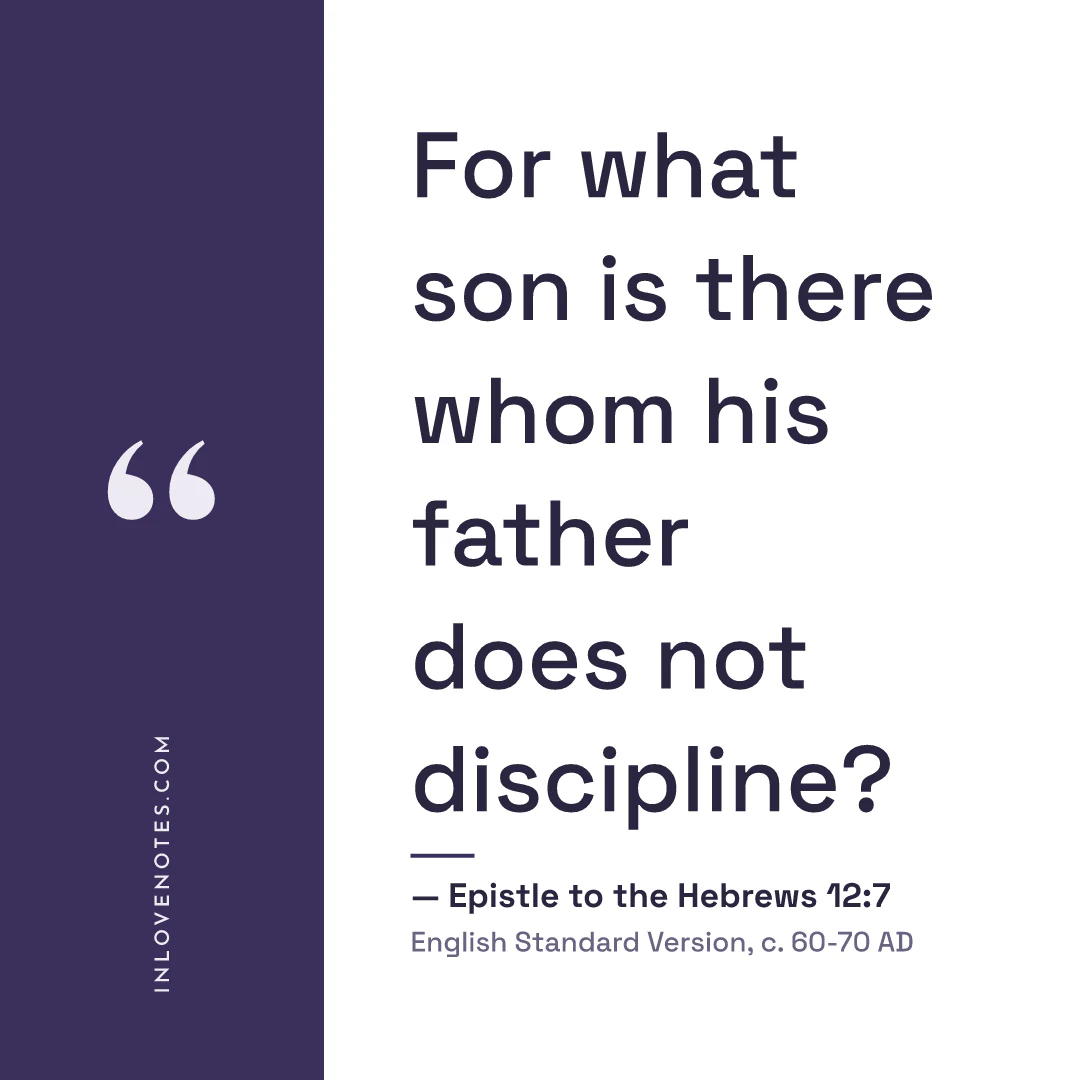
It is for discipline that you have to endure. God is treating you as sons. For what son is there whom his father does not discipline?
Unknown Author, Epistle to the Hebrews, c. 60-70 AD
The author of Hebrews acknowledges that administering discipline is a heavy, sorrowful burden for a father, yet it remains a necessary sacrifice for the child's ultimate character.
The weight of this guidance becomes clearer as we age, a reality reflected in words that grown children eventually understand.
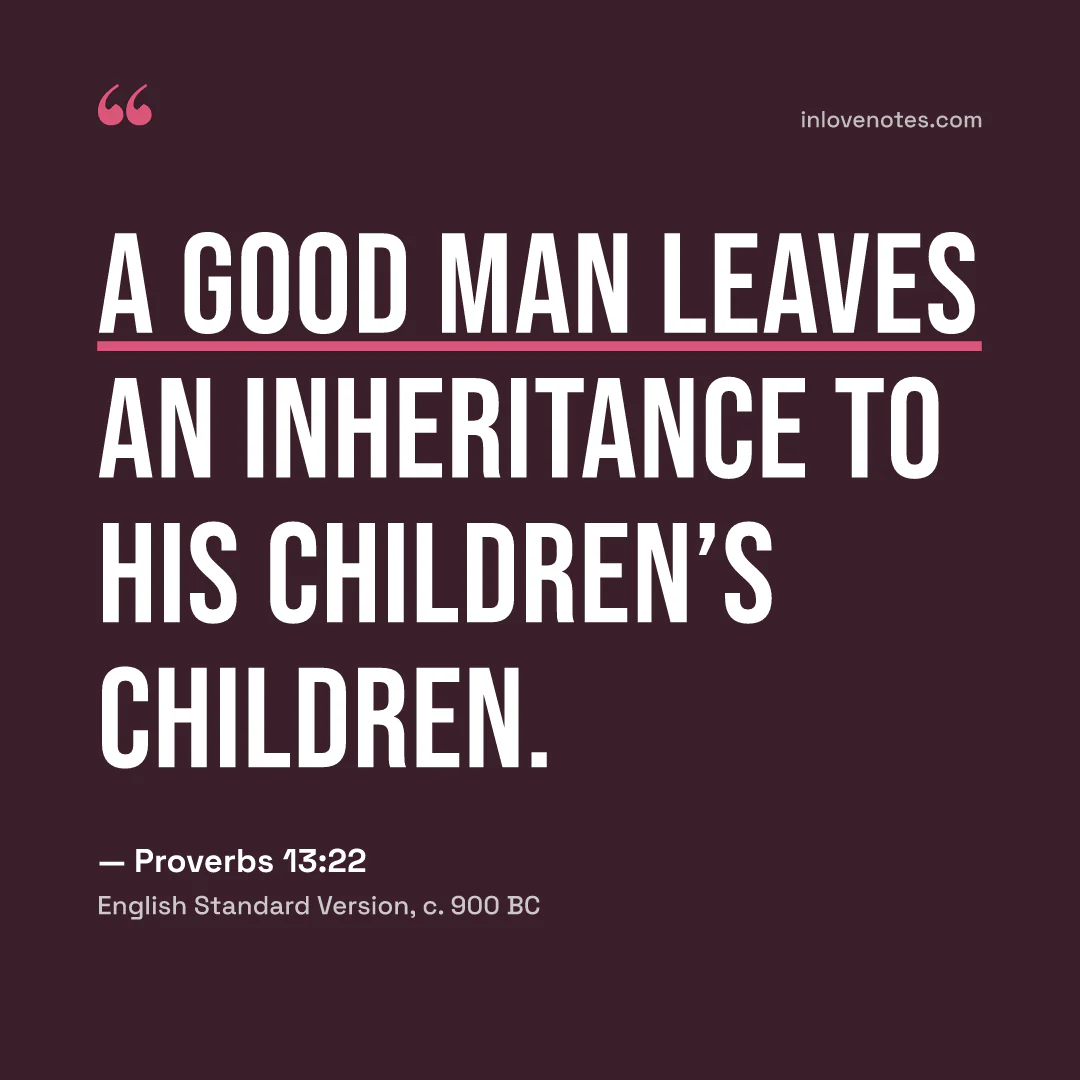
A good man leaves an inheritance to his children's children, but the sinner's wealth is laid up for the righteous.
King Solomon, Book of Proverbs, c. 900 BC
This proverb shifts the horizon of a father's sacrifice far beyond his own lifespan, demanding that he labor for a generation he will likely never live to see.
The Ultimate Model of Paternal Surrender
Human fatherhood in the biblical text is ultimately a shadow of divine fatherhood. The New Testament writers frame the crucifixion not merely as a transaction, but as the supreme agony of a Father sacrificing His beloved Son for the sake of a fractured world. This theological framework redefines the very nature of paternal love. It moves the concept of sacrifice from the margins of duty to the absolute center of the universe. The divine Father endures the ultimate loss.
For God so loved the world, that he gave his only Son, that whoever believes in him should not perish but have eternal life.
John the Apostle, Gospel of John, c. 90-100 AD
This central tenet of Christian theology positions the Father's willing surrender of Jesus as the definitive, cosmos-altering standard for all sacrificial love.
He who did not spare his own Son but gave him up for us all, how will he not also with him graciously give us all things?
Paul the Apostle, Epistle to the Romans, c. 57 AD
Paul uses the staggering magnitude of the Father's sacrifice at Calvary as absolute proof that God will continue to provide for His adopted children.
This steady, unwavering provision highlights our deep reliance on steady paternal presence in times of crisis.
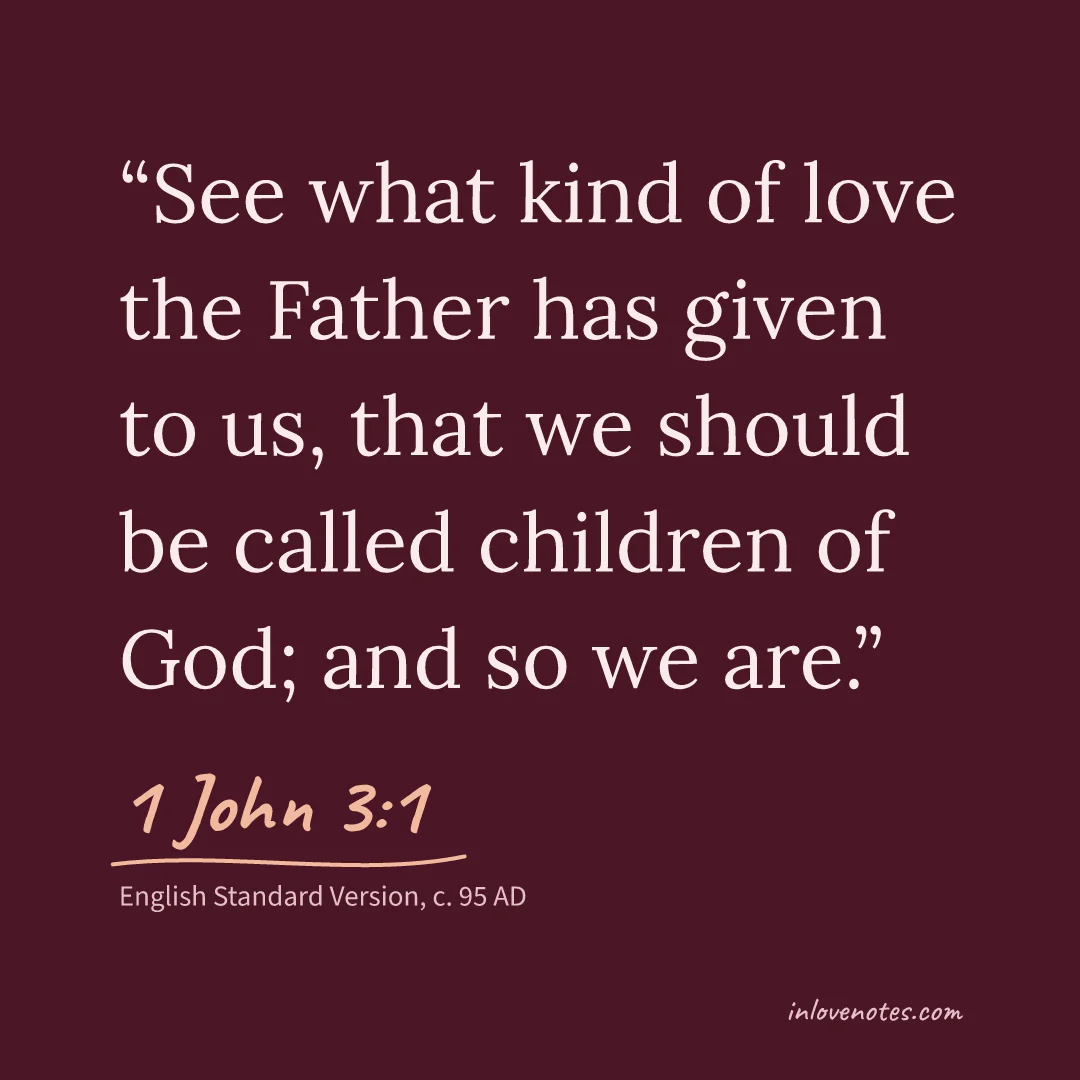
See what kind of love the Father has given to us, that we should be called children of God; and so we are.
John the Apostle, First Epistle of John, c. 95 AD
John marvels at the sacrificial adoption process, noting that the Father's love actively alters the identity and status of those He brings into His household.
Father of the fatherless and protector of widows is God in his holy habitation.
King David, Book of Psalms, c. 1000 BC
David's ancient lyric establishes that God steps in to provide the sacrificial protection and provision that earthly fathers are sometimes unable to give.
The biblical text does not shy away from the heavy toll that fatherhood demands. It acknowledges the late nights, the financial strain, and the emotional weight of guiding a family through a hostile world. The ancient writers understood that a father's true legacy is rarely built in moments of glory. It is forged in the quiet, uncelebrated decisions to put the needs of the household before his own.
If You Only Remember a Few Things
- The Apostle Paul equated a father's mundane financial provision with supreme theological obedience, making daily labor a spiritual act.
- In the parable of the lost son (Luke 15:20), the father runs to meet his returning son before the son can say a word.
- The Book of Deuteronomy demands that fathers surrender their leisure time, turning every daily routine into an active moment of moral instruction.
- Hebrews acknowledges that enforcing discipline is a painful, exhausting burden for a father, yet it is a necessary sacrifice for a child's character.
- The New Testament writers position God the Father's surrender of Jesus as the ultimate, defining template for all paternal sacrifice.