How Does Scripture Measure a Mother's Sacrifice? 11 Bible Verses
The biblical record frames maternal sacrifice not as a quiet loss of identity, but as a fierce reflection of divine love woven through history.
Updated

The Misunderstood Nature of Biblical Motherhood
Modern culture frequently paints maternal sacrifice as a quiet, martyrdom-laced surrender of self. We see endless depictions of women fading into the background of their own lives to push their children forward. Scripture actually frames this devotion as an active, sometimes fierce, theological foundation. The women populating the ancient texts did not just passively endure hardship. They negotiated with kings, hid infants from state-sanctioned violence, and stood at the foot of execution sites when all the men had fled.
A broader look at endurance in parenting can be found in verses that steady mothers through long seasons.
To understand the biblical concept of a mother giving up her own comfort, we have to look past the domesticated versions of these ancient stories. Relinquishing a child to a temple or hiding one in a river basket involved terrifying political and social calculations. These writers used the primal instinct of a mother protecting her young to explain how the divine relates to humanity. The sacrifice was never just about skipped meals or lost sleep. It involved a total reordering of one's survival instincts for the sake of another life.
Relinquishing Control to the Divine
For this child I prayed, and the Lord has granted me my petition that I made to him. Therefore I have lent him to the Lord. As long as he lives, he is lent to the Lord.
1 Samuel 1:27-28, English Standard Version, 2001
Hannah’s surrender of her long-awaited son to temple service represents one of the most profound biblical acts of relinquishing personal desire for a higher calling.
But when she could hide him no longer, she got a papyrus basket for him and coated it with tar and pitch. Then she placed the child in it and put it among the reeds along the bank of the Nile.
Exodus 2:3, New International Version, 1978
Jochebed's desperate act of letting go of Moses demonstrates how maternal protection sometimes requires pushing a child into the dangerous currents of the world.
For a deeper dive into theological definitions of care, explore this collection of scripture on maternal devotion from both testaments.
Then the woman whose son was alive said to the king, because her heart yearned for her son, 'Oh, my lord, give her the living child, and by no means put him to death.'
1 Kings 3:26, English Standard Version, 2001
Standing before King Solomon, this unnamed mother chose to lose her son to a rival rather than see him harmed, proving that true love prioritizes the beloved's survival over possession.
The Physical and Emotional Toll
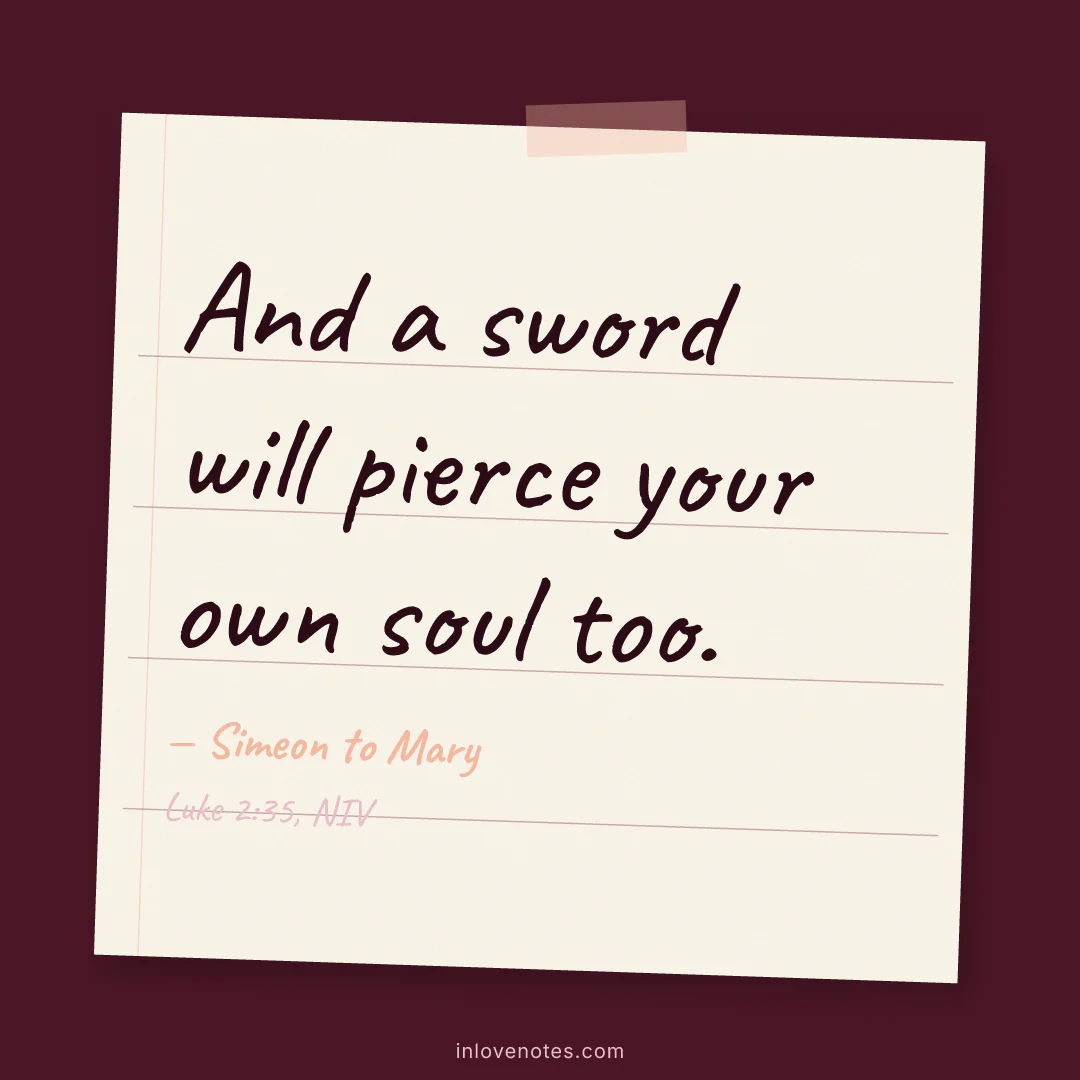
And a sword will pierce your own soul too.
Luke 2:35, New International Version, 1978
Simeon’s prophecy to Mary in the temple starkly acknowledges that loving a child guarantees profound future grief, a reality every parent implicitly accepts.
She rises while it is yet night and provides food for her household and portions for her maidens.
Proverbs 31:15, English Standard Version, 2001
The famous poem of the valiant woman highlights the literal, exhausting forfeiture of rest required to sustain a household.
Another perspective on sustaining grace is detailed alongside passages offering quiet strength for mothers.
Near the cross of Jesus stood his mother, his mother’s sister, Mary the wife of Clopas, and Mary Magdalene.
John 19:25, New International Version, 1978
Mary’s presence at the crucifixion remains the ultimate testament to a mother's willingness to endure the agony of bearing witness to her child's suffering.
Fierce Advocacy and Spiritual Inheritance
But she came and knelt before him, saying, 'Lord, help me.' And he answered, 'It is not right to take the children's bread and throw it to the dogs.' She said, 'Yes, Lord, yet even the dogs eat the crumbs that fall from their masters' table.'
Matthew 15:25-27, English Standard Version, 2001
The Canaanite woman swallowed her pride and argued with a rabbi to secure healing for her daughter, modeling the fierce advocacy inherent in maternal love.

I am reminded of your sincere faith, a faith that dwelt first in your grandmother Lois and your mother Eunice and now, I am sure, dwells in you as well.
2 Timothy 1:5, English Standard Version, 2001
Paul’s letter traces Timothy's theological bedrock directly to the unseen, daily spiritual instruction provided by the women who raised him.
If you want to put one of these lines into a note for your own mother, how to write a love letter walks through opening, middle and sign-off.
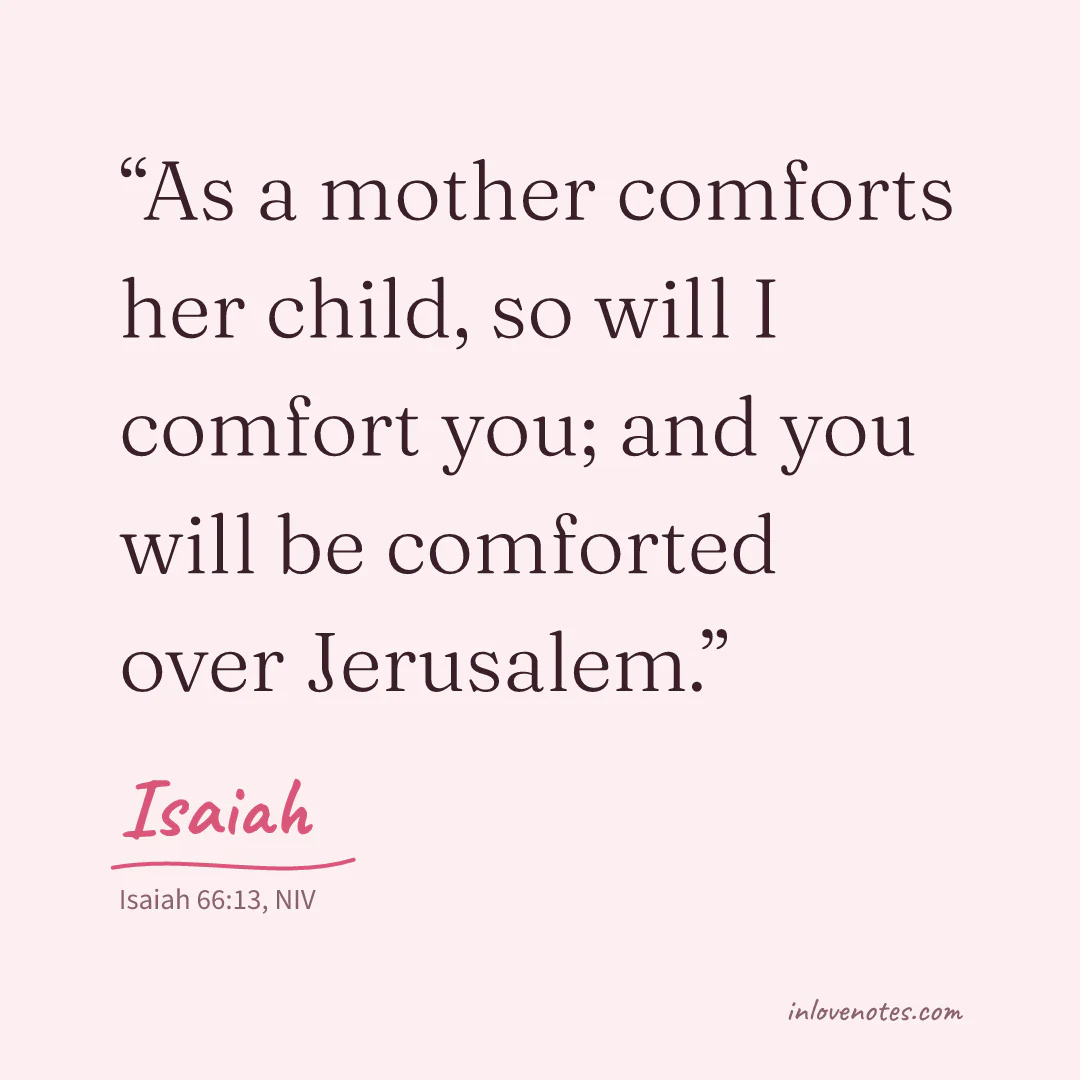
As a mother comforts her child, so will I comfort you; and you will be comforted over Jerusalem.
Isaiah 66:13, New International Version, 1978
The prophet elevates the specific, exhausting labor of maternal soothing to describe the very nature of God's relationship with a fractured nation.
The Daily Offering
But we proved to be gentle among you, as a nursing mother tenderly cares for her own children.
1 Thessalonians 2:7, New American Standard Bible, 1995
Paul uses the visceral, bodily sacrifice of nursing an infant to illustrate the depth of care required for true spiritual leadership.
I appeal to you therefore, brothers, by the mercies of God, to present your bodies as a living sacrifice, holy and acceptable to God, which is your spiritual worship.
Romans 12:1, English Standard Version, 2001
While not exclusively about parenting, this directive perfectly mirrors the daily, physical depletion mothers offer up in the maintenance of their families.
When we read these passages collectively, the narrative shifts away from passive suffering. The women in these ancient texts made active, difficult choices to preserve life and secure futures. The 1611 publication of the King James Bible codified many of these stories in English, cementing the cultural image of the self-sacrificing mother. Yet the original contexts reveal warriors, negotiators, and theologians. Instead of viewing maternal sacrifice as a loss of identity, these writers saw it as the highest expression of divine character. Write a short note to a mother figure in your life today, specifically acknowledging a hidden weight she carried for you.
If You Only Remember a Few Things
- Biblical maternal sacrifice is frequently portrayed as an active, strategic choice rather than passive suffering.
- The prophets frequently used a mother's fierce devotion as the most accurate metaphor for God's love.
- Relinquishing control, as seen in the stories of Hannah and Jochebed, is framed as a profound act of faith.
- The gospels highlight women staying near suffering when others fled, emphasizing the emotional endurance required in parenting.